Viet Nam hosts event of the Intergovernmental Hydrological Programme (IHP) for the Asia-Pacific region
On October 22, Vietnam hosted the 32nd Steering Committee meeting of the Intergovernmental Hydrological Programme (IHP) for the Asia-Pacific region.
The 32nd session provided an opportunity to review the 50-year journey of UNESCO’s IHP and the role and contributions of the Asia-Pacific region in promoting scientific cooperation on water. Member countries also discussed new directions under the IHP-IX Strategy for 2022-2029, focusing on research, innovation, and education for a water-secure world.
Viet Nam hosted this conference at a crucial time, as the region requires closer cooperation than ever to respond to climate change. In her address to the meeting, Lidia Brito, UNESCO Assistant Director-General for Natural Sciences, emphasized that water management is not only a matter of science or governance but also the foundation for cooperation, understanding, and peace. Vietnam has implemented this approach and has helped demonstrate the Asia-Pacific region’s pioneering role in realizing the IHP vision through science-based governance and collaboration.
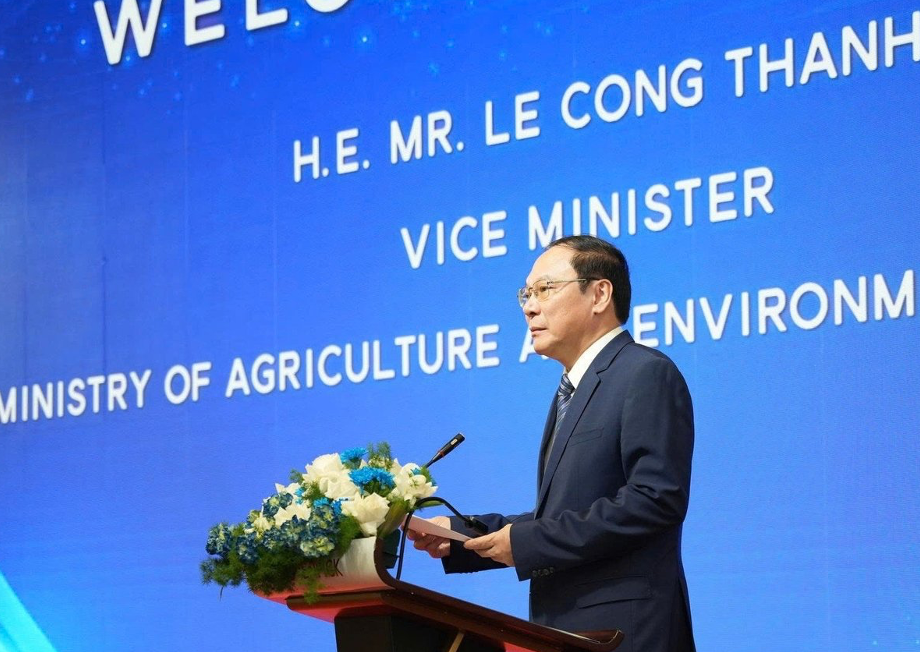
Deputy Minister Le Cong Thanh stated that water resources are not only essential for life but also form the foundation for socio-economic development, ensuring food security, energy security, and environmental security. However, we are facing numerous new challenges: climate change, increasingly complex and unpredictable floods and droughts, rapid urbanization, water pollution, and inequalities in access to clean water.
On this occasion, the Ministry of Agriculture and Environment leadership called on countries to cooperate more closely and take stronger actions based on scientific knowledge and modern technology. The Deputy Minister emphasized that Vietnam has always been an active member of the Intergovernmental Hydrological Programme, demonstrated through the implementation of numerous national programs on integrated water resource management, enhanced disaster monitoring and early warning, and the promotion of international cooperation in water science research and training.
Mr. Jonathan Baker, UNESCO Representative to Vietnam, emphasized that in recent years, Viet Nam has proactively invested in and prioritized water security for the benefit of its people. Notably, the 2023 Water Resources Law introduced a modern, integrated water governance model that balances economic growth, social inclusion, and ecosystem health. This approach also reflects the principles of IHP-IX: “Science for a water-secure world in a changing environment.”
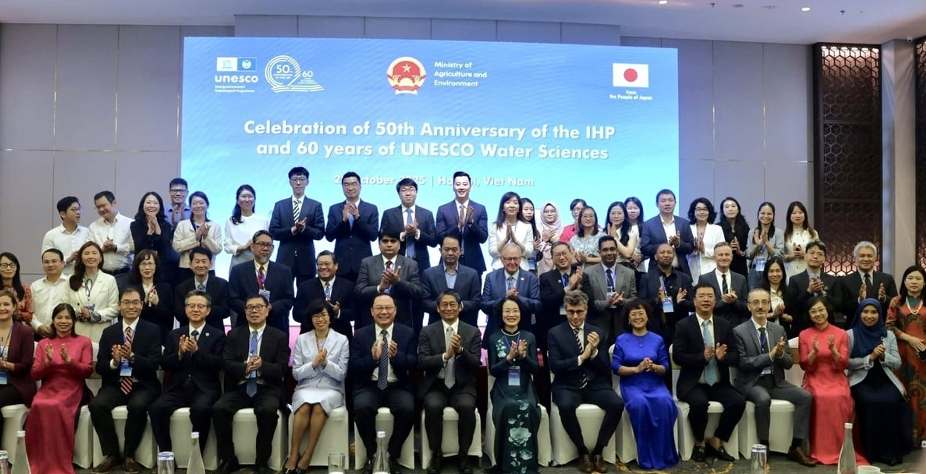
The UNESCO representative reaffirmed the organization’s commitment to supporting Viet Nam and other countries in the region to invest in science, technology, and innovation, as well as to promote international cooperation to address emerging challenges and proactively safeguard water resources for future generations.
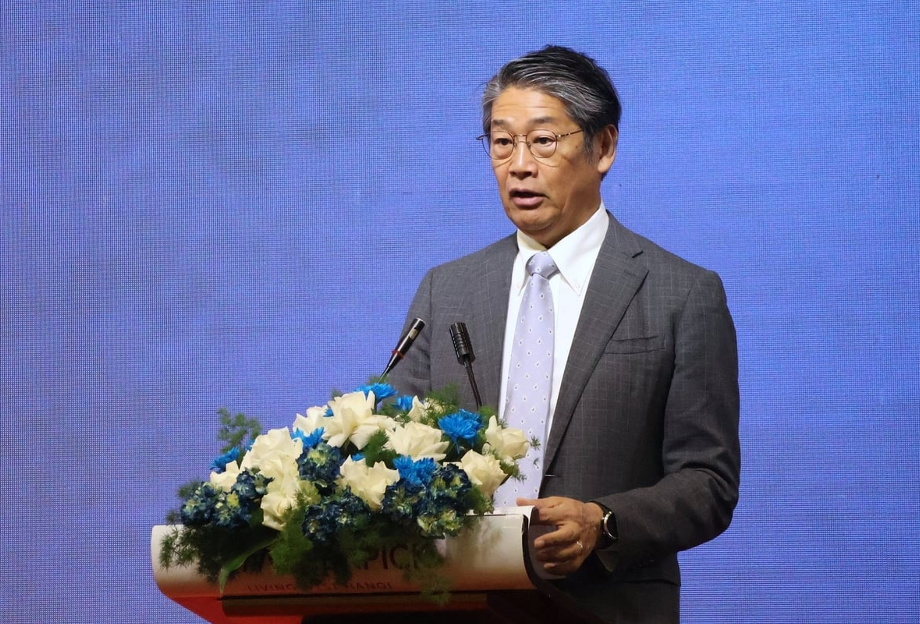
Regarding the impacts of climate change, Japanese Ambassador Ito Naoki highlighted the growing role of IHP in analyzing water cycles affected by climate change and identifying evidence-based solutions for water resource management and flood control. This, he noted, will contribute to reducing risks from future water-related disasters.
Over the three-day event (October 21–23), international and Vietnamese experts shared and discussed at multiple sessions and scientific workshops on topics such as global and regional water challenges, sustainable water management solutions, scientific and technological advances in water science, the specialist meeting on the Hydrological Analysis Catalogue (CHA), and the 32nd Steering Committee meeting of the IHP Asia-Pacific region. The final day focused on national reports, knowledge sharing from the UNESCO Water Family network, and future cooperation directions. The event concluded with visits to the National Water Resources Monitoring Center (Ministry of Agriculture and Environment) and the Tan Lap Monitoring Station in Hanoi.
On the sidelines, the science exhibition showcased outstanding initiatives in water resource protection and management in the region, including three projects by the Young Vietnamese Scientists Group, which won the UNESCO Water Challenge 2025. This highlighted the creativity and active engagement of the younger generation in addressing water issues.
UNESCO’s Intergovernmental Hydrological Programme (IHP), established in 1975, is the United Nations’ only intergovernmental programme promoting international cooperation in hydrological research, water resource management, education, and capacity-building for water assessment, management, and sustainable development.
Khanh Ly