Viet Nam to Chair the Mekong River Commission Council in 2026
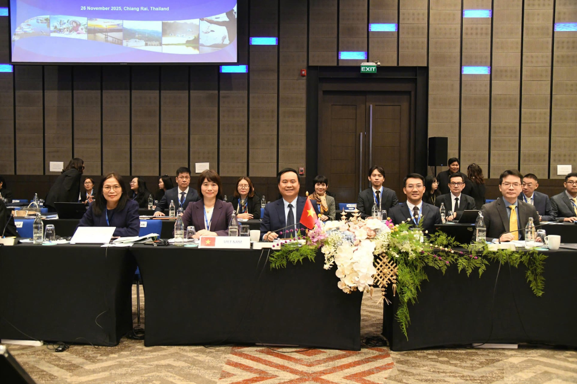
On November 26 in Thailand, the 32nd meeting of the Mekong River Commission (MRC) Council took place, chaired by the Thai Minister of Culture. The Vietnamese delegation was represented by Deputy Minister of Agriculture and Environment Vo Van Hung and representatives from the Ministry of Foreign Affairs, the Government Office, the Ministry of Agriculture and Environment, and the Viet Nam Mekong Committee.
At the meeting, the MRC Council approved the Strategic Plan for 2026–2030, with a focus on people-centered development. It was also agreed that Viet Nam will serve as Chair of the MRC Council in 2026. Accordingly, the 33rd Council meeting is expected to be held in Viet Nam at the end of 2026.
During the meeting, Deputy Minister Vo Van Hung, on behalf of Viet Nam, formally received the MRC Council Chairmanship for 2026 from the host country, Thailand, and congratulated Thailand on successfully completing its term as Chair in 2025.

Deputy Minister Vo Van Hung highlighted important progress made by the MRC in sustainable water resource management, including the transparent sharing of near real-time hydropower operation data, marking a milestone in building mutual trust among member countries. He noted that enhanced forecasting, early warning systems, and hydrological and environmental monitoring have also contributed to disaster risk reduction efforts across the region.
The Deputy Minister emphasized that the Mekong Basin and the Mekong Delta continue to face severe challenges from drought, saline intrusion, sediment depletion, land subsidence, and riverbank and coastal erosion, directly affecting the livelihoods of millions of people.
Referring to the arsenic contamination incident in the Kok River, which impacted the Mekong mainstream near the Thailand–Lao border, Deputy Minister Hung described it as a strong reminder that a small risk in one part of the basin can create systemic effects, highlighting the need for enhanced monitoring, data sharing, and coordinated cross-border responses.
To guide future cooperation, Deputy Minister Vo Van Hung proposed strategic directions, including: enhancing monitoring of water quantity and quality across the basin with a focus on near real-time data; establishing early warning mechanisms and rapid response systems for unusual events; strengthening disaster forecasting and warning capacities; applying advanced technology; and synchronizing hydrological data sharing to mitigate the impacts of floods, droughts, and climate change at both national and basin-wide levels.
Additionally, he emphasized that comprehensive basin-wide hydropower and sediment management, including pilot sediment management models, will support coordinated hydropower generation, flood control, and sediment flow maintenance. Sustainable financial autonomy for the MRC will be ensured through member contributions, development partner support, and mobilization of resources from global climate funds. Viet Nam also proposed promoting cross-border projects, prioritizing green growth, circular economy, water efficiency, and emission reduction programs, contributing to national objectives and commitments under COP30.
Development partners and dialogue partners attending the meeting praised the MRC’s efforts in implementing strategic priorities and reaffirmed their commitment to supporting the successful implementation of the 2026-2030 Strategic Plan.
Kieu Chi