Addressing data and green finance bottlenecks for Viet Nam's fisheries sector
Viet Nam's fisheries sector is on the verge of a historic milestone, with expectations of reaching $10.7 billion in 2025. But behind these ambitious growth figures lies a "mandate" from the ocean: It must transform into a green system to survive and thrive.
Regarding this issue, Mr. Vu Thai Truong – Head of the Climate Change, Energy and Environment Unit (UNDP in Viet Nam) – believes that the future of Viet Nam's fisheries depends on the ability to harmoniously combine economic growth and ocean protection.
Three major bottlenecks in the fisheries industry
In the agricultural economic landscape, aquaculture has always been considered a solid "pillar". At the Conference on Environmental Protection in Aquaculture Activities 2025 (November 26, 2025), Deputy Minister of Agriculture and Environment Phung Duc Tien affirmed that the aquaculture sector continues to be a pillar of the economy, with export turnover reaching US$9.5 billion in the first 10 months of 2025, a 16% increase compared to the same period.
This figure is expected to reach $10.7 billion by the end of 2025, contributing 27-28% of the total value of the entire agriculture, forestry, and fisheries sector. This is a testament to the persistent hard work and aspirations of millions of Viet Namese fishermen.
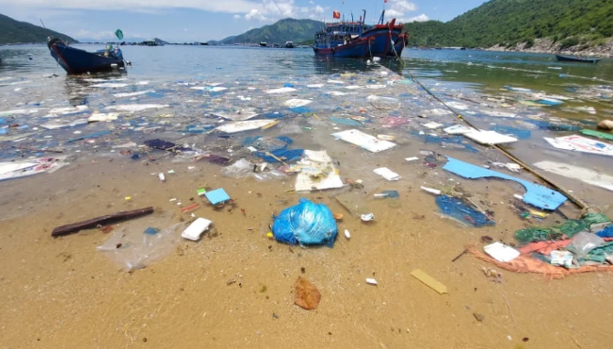
However, climate change, with its extreme weather events, is creating invisible barriers to production. More seriously, the marine environment itself is being "damaged" by pollution. According to data, Viet Nam releases approximately 1.8 million tons of plastic annually, of which about 0.73 million tons are dumped into the sea, directly threatening the purity and sustainability of each shrimp and fish.
During the implementation of international environmental standards, the UNDP representative in Viet Nam pointed out three major bottlenecks facing the sector, including: a lack of technical capacity and a standardized data system; the burden of investment costs, while green capital flows have not yet been effectively unlocked; and a lack of truly coordinated and synchronized inter-sectoral cooperation.
To address the resource constraints faced by seafood businesses, Mr. Vu Thai Truong proposed the need to design an effective green finance mechanism based on building a diverse green finance ecosystem, ranging from preferential credit and environmental funds to international climate capital flows.
Specifically, this mechanism should prioritize projects that reduce emissions and promote the circular economy; and link with the carbon market to create carbon credits. Mr. Truong particularly emphasized the encouragement of investment projects dubbed "blue carbon." He stressed that encouraging such investment projects not only generates economic profits but also protects, restores, and enhances marine and coastal ecosystems such as mangrove forests, seagrass beds, and tidal wetlands.
To achieve this, administrative procedures need to be simplified, becoming a foundation for small and medium-sized enterprises to easily access. In the digital age, international market trust is built on a data-driven foundation. The UNDP recommends that Viet Nam should create a unified MRV (measure, report, and evaluate) system.
Mr. Truong suggested a specific approach: Pilot projects should begin in a specific location or region, for example, the Mekong Delta with shrimp and the Red River Delta with pangasius, before expanding nationwide. Applying digital technology and transparent emission data is the way for Viet Namese seafood to confidently enter the most demanding markets.
The ocean – an indispensable pillar of climate solutions
Mr. Vu Thai Truong emphasized a consistent message: there can be no effective climate solutions without strong action on the ocean. Currently, UNDP is implementing many support programs in Viet Nam, notably the "Smart Coastal Communities Adapting to Climate Change" (VN-CSCC) project funded by the Canadian government, along with projects to reduce ocean plastic waste, restore mangrove forests and coral reefs, and promote community-based resource management models.
Initial results show that 20 communities have jointly managed over 7,000 hectares of marine ecosystems; 26 coastal communes are implementing waste management models to reduce ocean plastic. In addition, UNDP supports Viet Nam through the BIOFIN Project, the Global Environment Fund's Small Grants Programme (GEF/SGP), and the Norwegian-funded Marine Spatial Planning Project.
Mr. Vu Thai Truong affirmed that UNDP will continue to work alongside Viet Nam in developing and updating the implementation plan for the Nationally Determined Contribution (NDC) 3.0, the Kunming-Montreal Biodiversity Framework, and post-COP30 commitments. The ultimate goal is to protect marine ecosystems while ensuring sustainable livelihoods for millions of coastal residents – so that the green transition is truly inclusive and no one is left behind.
Hong Ngoc