Viet Nam needs $8.5 billion to address plastic-related issues.
On December 16, the 7th Working Group Meeting of the Viet Nam National Plastic Action Partnership (NPAP) was held. Within the framework of the meeting, NPAP announced the Finance Roadmap for Plastic Action to 2030.
Speaking at the event, Deputy Minister of Agriculture and Environment Le Cong Thanh, Chair of NPAP, emphasized the need to mobilize and use financial resources effectively for plastic-related actions, with a focus on strengthening connectivity, encouraging private sector participation, and creating favorable conditions for both domestic and international capital to be channeled into concrete projects and initiatives.
After five years of operation, through NPAP, Viet Nam has proactively adopted a preventive and transformative approach rather than merely focusing on managing consequences. Plastic pollution is not simply an environmental problem; it is a socio-economic development challenge closely linked to production and consumption models, market structures, and the way society mobilizes resources.
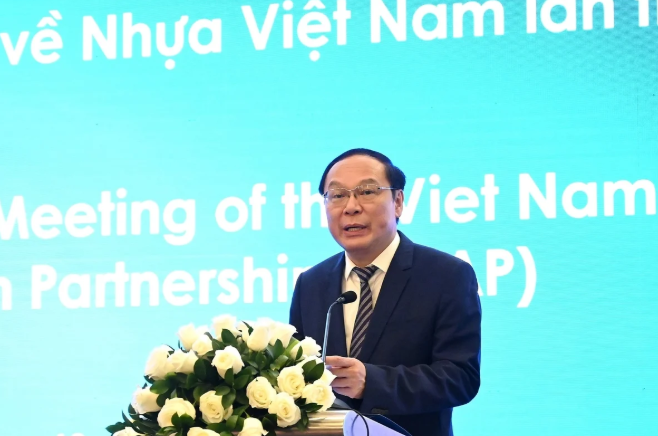
The Deputy Minister stressed that solutions to plastic pollution cannot stop at collection and treatment alone. A systemic approach is needed, grounded in appropriate policies, market mechanisms, innovation, and multi-stakeholder cooperation.
Sharing this view, Ms. Ramla Khalidi, UNDP Resident Representative in Viet Nam, highlighted NPAP’s impressive achievements over the past five years. To date, NPAP has brought together 200 member organizations, mapped more than 160 plastic pollution projects, and catalyzed over 570 innovative solutions. Private sector participation has been increasing, driven by green credit products and growing investment flows in start-ups.
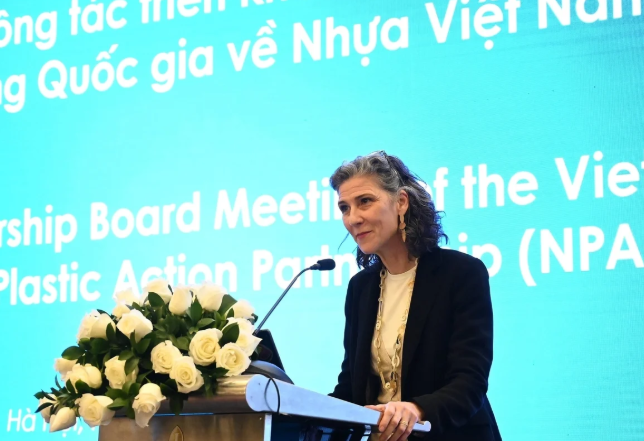
The Finance Roadmap for Plastic Action to 2030 represents a major step forward in resource mobilization and in accelerating the transition toward a circular plastics economy. According to the roadmap, Viet Nam will need USD 7.5-8.5 billion by 2030 to comprehensively address plastic pollution, covering both upstream measures such as reduction and substitution of plastic use, and downstream interventions including collection systems and waste treatment infrastructure.
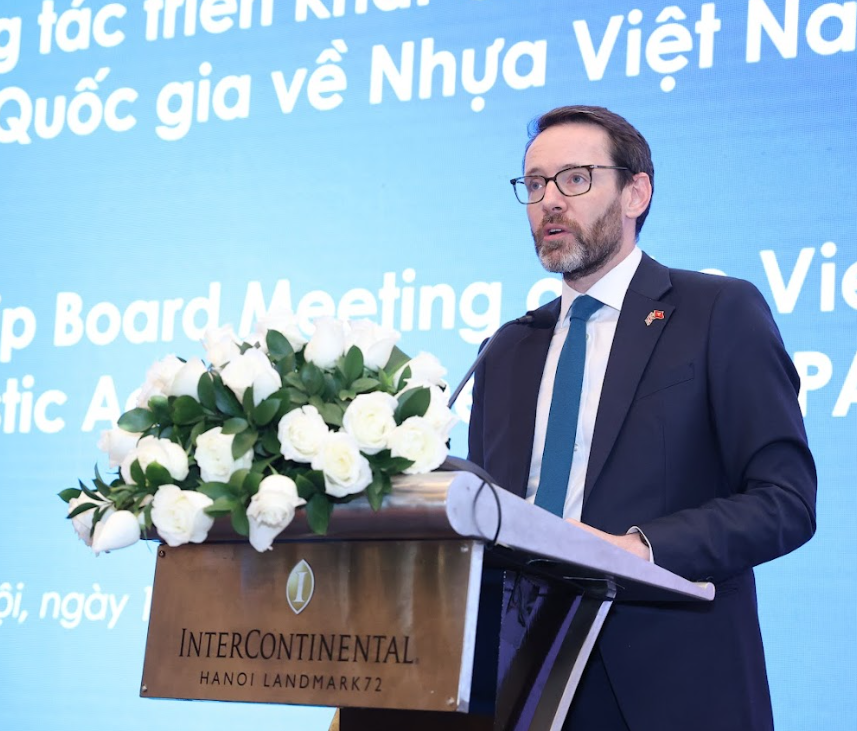
Mr. Iain Frew, Ambassador of the United Kingdom to Viet Nam and Co-Chair of the NPAP Working Group, notes that the roadmap identifies two key priorities: Securing sustainable financing for NPAP activities; and Scaling up pilot projects into large-scale initiatives. This is particularly crucial as addressing plastic pollution in Viet Nam requires coordinated involvement from central and local governments, businesses, communities, and academia. From 2026 onward, Viet Nam and its partners will expand initiatives, transforming proven models into large-scale actions that create tangible impact in practice.
The report also recommends developing standards for recycled plastics, expanding financial instruments to attract private investment, and strengthening the integration of the informal sector. It further calls for developing the recycling market and enhancing waste management capacity in urban and peri-urban areas through increased local financing and public–private partnership (PPP) investment in infrastructure.
The 7th NPAP Working Group Meeting reaffirmed the shared commitment of 200 member organizations to addressing the growing challenges of plastic pollution through multi-stakeholder cooperation, resource mobilization, and stronger policy coordination. As an annual platform, NPAP continues to serve as a mechanism for technical support, knowledge sharing, and alignment of interventions, contributing to Viet Nam’s national goals, including reducing marine plastic waste by 75% by 2030, eliminating single-use plastics, and effectively implementing Extended Producer Responsibility (EPR) nationwide.
Kieu Chi