Vietnamese tea industry establishes a new global standing
Organic varieties, regional specialties, minimally processed products, and teas steeped in cultural narratives are experiencing rapid growth across numerous developed markets.
According to data from the General Department of Viet Nam Customs, Viet Nam exported 13,844 tons of tea in December 2025, generating nearly 24 million USD. This represents a 5.3% increase in volume and a 9.6% rise in value compared to the same period in 2024. For the full year 2025, total exports reached 136,952 tons with a value of nearly 238 million USD, marking a year-on-year decline of 7.1% in volume and 7.2% in value. The average export price for tea in 2025 stood at 1,737 USD per ton, a marginal decrease of 0.1% from the previous year.
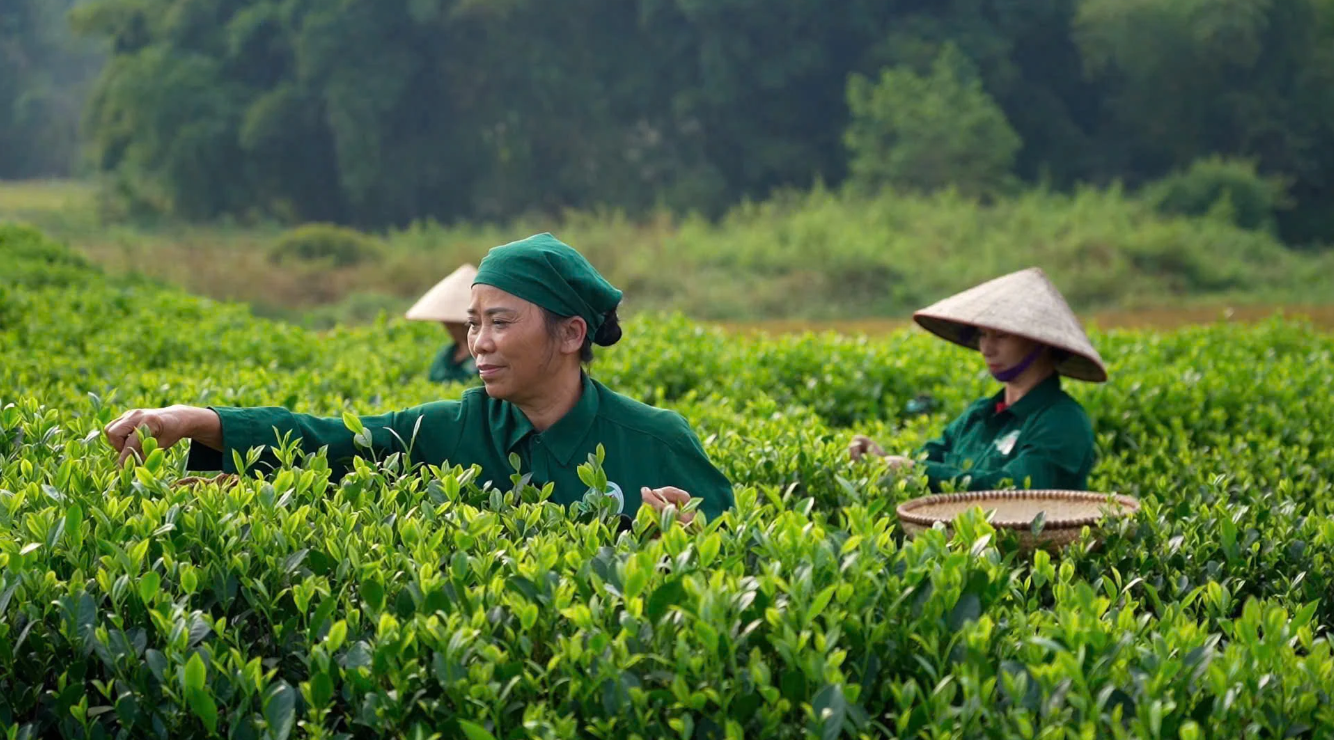
Tea exports to several alternative markets saw impressive growth in both volume and value throughout 2025, including Malaysia, India, the Philippines, and Iraq. The most significant surge was recorded in the Iraqi market, which saw a 51% jump in volume and a 49.8% increase in value compared to 2024. Conversely, export volumes to Vietnam's two primary markets, Pakistan and Taiwan, both declined. However, a divergence occurred in terms of value, as export turnover to Pakistan fell while the value of exports to the Taiwanese market actually increased.
In terms of market share by volume, Pakistan accounted for 30.1% of Viet Nam's tea exports in 2025, down from 35.2% in 2024. Meanwhile, Taiwan maintained a stable share of 10.2%. Several other markets, including China, Malaysia, Iraq, and India, saw an expansion in their respective market shares.
The year 2026 is poised to be a transformative period for the Vietnamese tea industry. The sector is currently presented with a prime opportunity to pivot from a focus on quantity to a focus on quality, transitioning from a raw material supplier to a creator of high-value, branded products. Amid rapid global market fluctuations, evolving consumer trends, and heightening quality standards, 2026 is regarded as a pivotal year for the industry to solidify its new standing.
A primary driver for the industry this year is the shift in global consumer behavior. Buyers are increasingly prioritizing health-conscious products that are naturally sourced, sustainably farmed, and transparently documented. Specialized segments such as organic tea, regional specialties, minimally processed leaves, and products tied to cultural heritage are growing quickly in developed markets, including Taiwan. This shift offers a significant opening for Vietnamese tea exports to accelerate in the coming months.
Based on these market signals, 2026 will serve as a critical turning point for the Vietnamese tea industry to restructure toward higher quality, brand building, and deeper penetration into sustainable consumer segments. Through these efforts, the industry aims to progressively assert its new position on the global tea map.
Phuong Ngoc