Ban Lien welcoming Spring: Building a new “bamboo rampart” to keep the land, the people, and their livelihoods
Spring mist drapes the Shan Tuyet tea hills, yet what the people of Ban Lien (Lao Cai, Vietnam) long for most remains grounded and tangible: less muddy roads, fewer leaking roofs, and fields that generate real value. From five-star OCOP organic tea and community-based tourism to palm-leaf conical hats and bamboo rows stabilizing stream banks, Ban Lien is pointing toward an integrated approach - on that strengthens livelihoods while safeguarding peace and resilience in this highland village.
Spring arrives in Ban Lien wrapped in mist. A thin veil settles over the hills, clings to ancient Shan Tuyet tea canopies, and drifts quietly along the Ban Lien stream. Inside kitchens, fires glow red; outside, footsteps heading to the market sound livelier than usual. In the highlands, spring does not begin with fireworks, but with very practical questions: Will the roads be less muddy? Will the houses leak less? Will the fields earn enough to keep children in school?
Ban Lien is home to multiple ethnic groups - Tay, Hmong, Nung, La Chi, Dao, and Kinh – with the Tay forming the majority. A way of life shaped by forests and mountains, stilt houses, and traditional customs and dress remains embedded in daily routines. Drawing on this cultural foundation, Ban Lien is undergoing a “soft” transition: villagers remain at the center, starting from what they know best and gradually transforming it into sustainable livelihoods.
_18f6a8d195.png)
Five-star OCOP organic tea: a foundation for staying on the land
In Ban Lien, tea is not merely a crop; it is a lifeline. According to local data, more than 1,144.5 hectares of Shan Tuyet tea have been certified organic and awarded five-star OCOP status. For tea growers, this recognition functions as a crucial “passport”: adhering to standards means accessing real value, avoiding the familiar cycle bumper harvests followed by price collapses, and reducing dependence on precarious transport routes during the rainy season.
Yet highland communities cannot rely on a single livelihood. Weather, infrastructure, and markets remain unpredictable variables. This is why the idea of “integration and multi-use” is not a slogan in Ban Lien, but a form of self-protection: the same land generates multiple income streams, increasing resilience over time.
The Thursday market and community tourism: selling experience, selling stories
Once a week, every Thursdays, Ban Lien’s periodic market comes alive. It is both a place of exchange and a shared cultural space for Tay, Hmong, Dao communities and neighboring communes. People come to trade goods, but also to meet, to check in on one another, and to share joys and sorrows. For visitors, the market serves as the most natural gateway into local life.
Community-based tourism has therefore emerged as a clear supplementary income source. Distinctly “Ban Lien” experiences are carefully preserved and shared: tea picking and pan-firing, palm-leaf hat making, preparing green rice flakes, wrapping black sticky rice cakes, brewing local liquor. When these everyday activities unfold within stilt houses, shared meals, and courtyard laughter, visitors are not merely sightseeing - they are temporarily living to a different rhythm.
Recently, Ban Lien has been described by young travelers as a “healing destination”, particularly after its appearance on the television program Gia dinh Haha. Locally managed homestays continue to expand, bringing with them service-based livelihoods such as cooking, guiding experiences, selling local products, and producing souvenirs. More importantly, community tourism provides young people with a reason to stay.
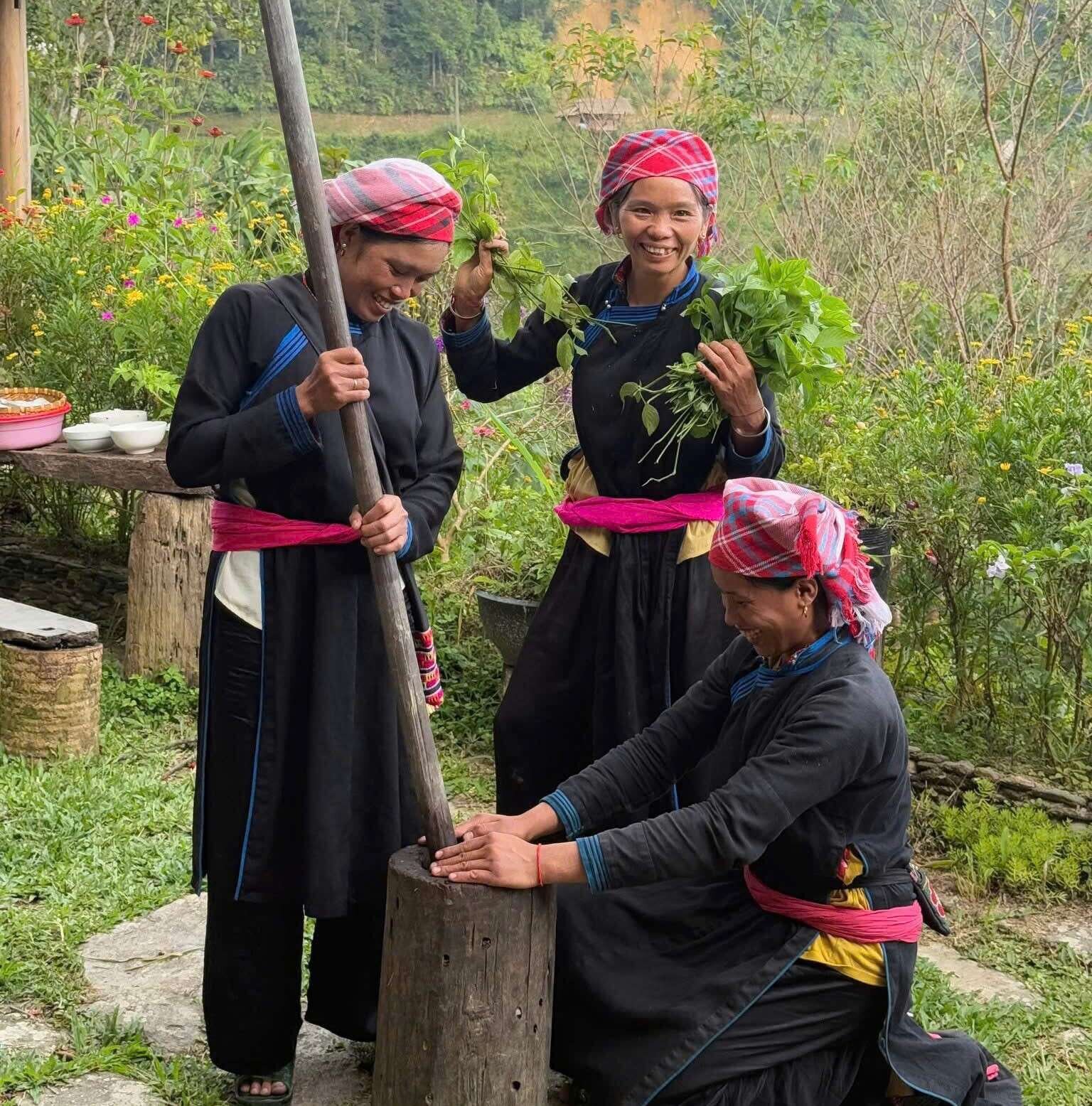
Palm-leaf conical hats: a “soft asset” of the Tay community
Among local crafts, palm-leaf conical hat making stands out as a distinctive Tay tradition in Ban Lien. Once a simple tool for sun and rain, the hat has become a tourism product. Visitors enjoy watching each step – splitting, layering, stitching – while listening to stories about palm leaves, stilt houses, and family life, before taking home a hat as a tangible memory of the village.
Such crafts are especially valuable: they preserve culture while generating income; they function as both commodities and experiences. When culture becomes embedded in livelihoods, its preservation becomes more durable.
Four seasons and “million-dollar views”, yet nature has its harsh side
Ban Lien is beautiful year-round: spring clouds drift softly over peach blossoms; summer brings cascading water over terraced fields; autumn turns the paddies golden. Tea hills remain lush throughout the year, creating so-called “million-dollar views”, while grasslands and fields attract weekend campers.
But highland communities never forget nature’s risks: flash floods, landslides, and dry-season water shortages. Beyond livelihoods, Ban Lien also needs a “shield” to protect everyday life.
A new “bamboo rampart”: protecting the land – and creating livelihoods
In mountainous regions, bamboo is not merely symbolic. It stabilizes stream banks and slopes, prevents erosion, and functions as a flexible yet durable form of ecological infrastructure. Bamboo is also highly versatile: it produces edible shoots, construction materials, handicrafts, and landscape value.
On July 30,2025, Ban Lien hosted the tree-planting program Gia dinh Haha - For a Happier Vietnam, coordinated by units under the Ministry of Agriculture and Environment, the Gia dinh Haha program, Timo Digital Bank, local authorities, and youth organizations. The initiative supported the planting of 20,000 trees (Luc Truc bamboo and Trung Khanh chestnut) across 11 villages. According to update figures, 10,500 Luc Truc bamboo plants have already been planted.
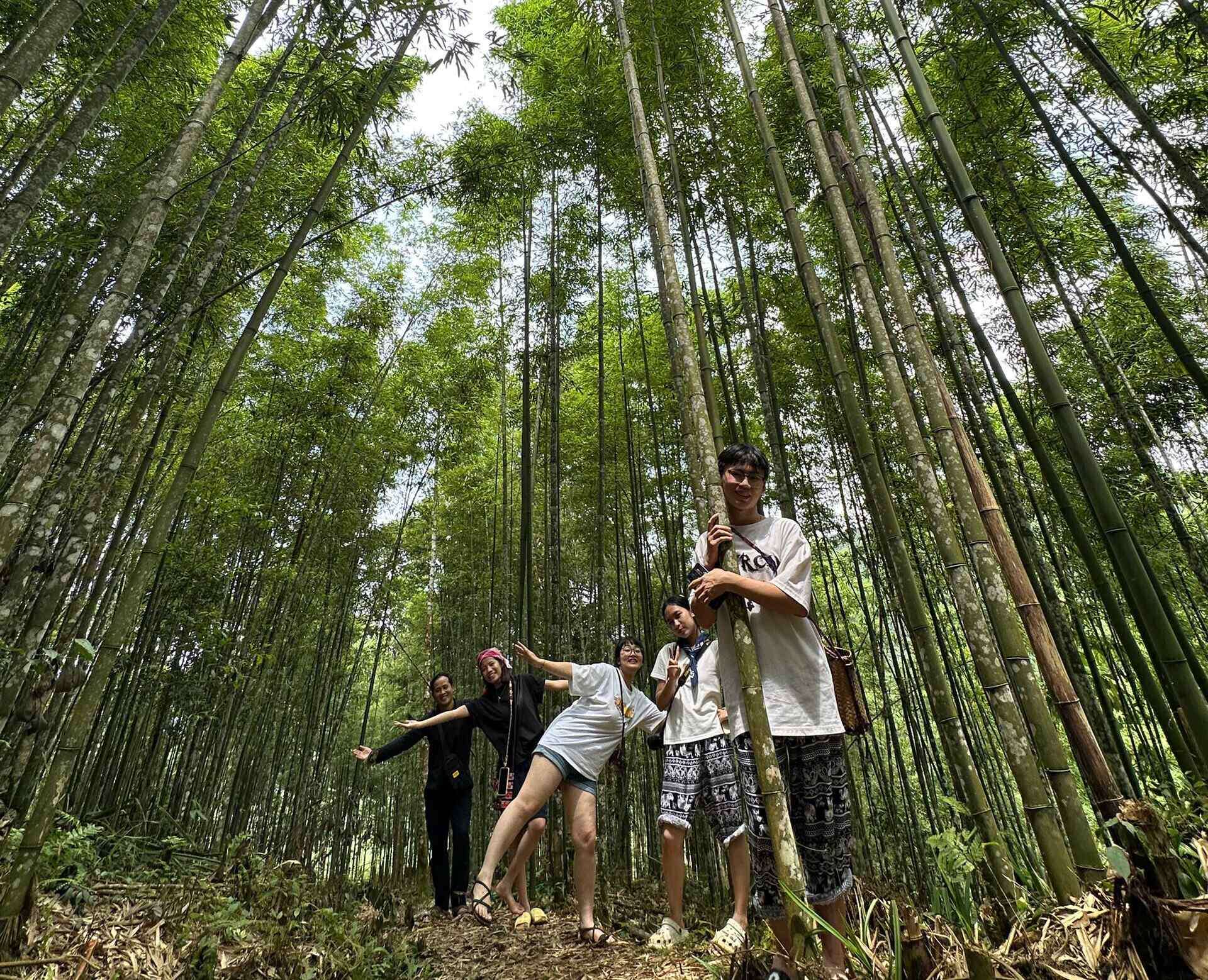
Luc Truc is a bamboo variety cultivated for its shoots, known for their large size, crisp texture, and economic value. Trung Khanh chestnut suggests a path toward agroforestry integration, diversifying seasonal income sources. When planted appropriately, bamboo serves both as a “green shield” against natural disasters and as part of an integrated livelihood system: shoots become commodities, bamboo culms become materials, and bamboo landscapes become visual highlights.
What makes Ban Lien noteworthy is not only its high-quality tea, scenic beauty, or fully booked homestays. It is the emerging clarity of vision: sustainable poverty reduction in highland areas cannot be piecemeal, nor can it depend on a single growth driver. It requires coordinated organization - clean, standardized livelihoods; tourism linked to traditional crafts; and green infrastructure such as bamboo belts to mitigate disaster risks.
During Tet in Ban Lien, standing on a high vantage point overlooking the valley, one sees mist like a thin scarf draped over the village. Beneath it lie green tea hills, warm stilt houses, echoes of the Thursday market, and young bamboo rows steadily growing. Bamboo planted in the right places holds the land through the rainy season. People with resilient livelihoods hold their villages through difficult years. Perhaps that is the sincerest New Year’s wish for a highland community: greater peace, greater prosperity, rooted firmly in its own homeland.
_aaa93f8064.png)
Pham Ngoc Anh - Dam Minh Khue