Denmark supports Viet Nam in developing green jobs statistical indicators
A set of statistical indicators on green jobs is being developed as an important tool to strengthen the national data system and support Viet Nam’s goals on green growth and sustainable development.
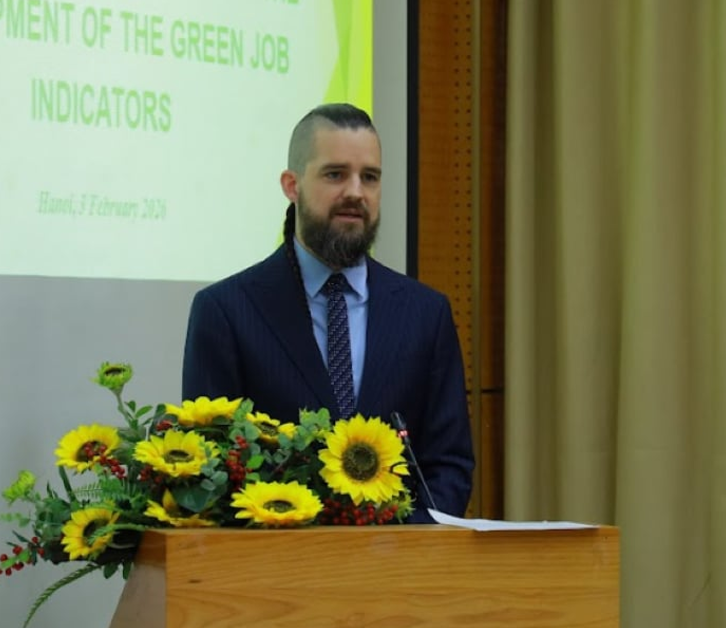
Speaking about Denmark’s cooperation with Viet Nam in developing the indicator framework, Mr. Jesper Blaabjerg Holm, counsellor at the Danish Embassy in Ha Noi, said a strong and reliable national data system is a key tool for Viet Nam to realise its green growth ambitions.
According to Mr. Holm, Viet Nam has made strong commitments to green growth and to achieving net-zero emissions by 2050. To meet these commitments, the country needs reliable, timely and integrated data that link environmental, economic, energy and labour market sectors.
Developing statistical indicators on green jobs also reflects Viet Nam’s efforts to translate global concepts into practical tools suited to national conditions, he added.
During the development process, NIEF worked closely with the General Statistics Office to define key concepts, scope and measurement methods, while ensuring alignment with international statistical standards.
Ms. Do Thi Ngoc, deputy director general of the General Statistics Office, highlighted the central role of statistics in supporting policymaking.

She noted that as Viet Nam accelerates the implementation of its National Green Growth Strategy and shifts its growth model toward sustainability while fulfilling international climate commitments, the statistical system must provide timely, comprehensive and reliable information to effectively support policy formulation, monitoring and evaluation.
Ngoc expressed confidence that once further refined, the green jobs indicator framework could be incorporated into the national statistical system, providing important data for research and for designing and adjusting policies related to labour, employment and human resource development in line with green growth and sustainable development goals.
Alongside developing the conceptual framework, the two agencies also tested the indicators through pilot surveys conducted in Quang Ninh and Phu Tho provinces.
Initial results suggest that the indicators are built on a solid methodology, broadly reflect Viet Nam’s economic reality and could be integrated into the national statistical system after further refinement.
The pilot phase also showed that green employment is expanding beyond traditionally “green” sectors, indicating broader labour market changes as the economy transitions toward a greener development model.
However, Ms. Ngoc stressed that further efforts are needed to move from pilot surveys to full institutional implementation, as measuring green jobs is a complex and evolving field. This will require continued methodological improvements, stronger data sharing and close coordination among relevant agencies.
Minh Hanh