Nghe An cracks down on illegal wildlife hunting
Tackling violations related to wildlife protection and fisheries conservation has become a key priority for Nghe An province.
As part of a joint plan by the Ministry of Agriculture and Environment and the Ministry of Public Security, the Nghe An province has rolled out a wide range of measures to curb violations linked to wildlife protection and fisheries conservation. The province has mobilised the whole political system, with close coordination among police, forest rangers, fisheries inspectors and local authorities.
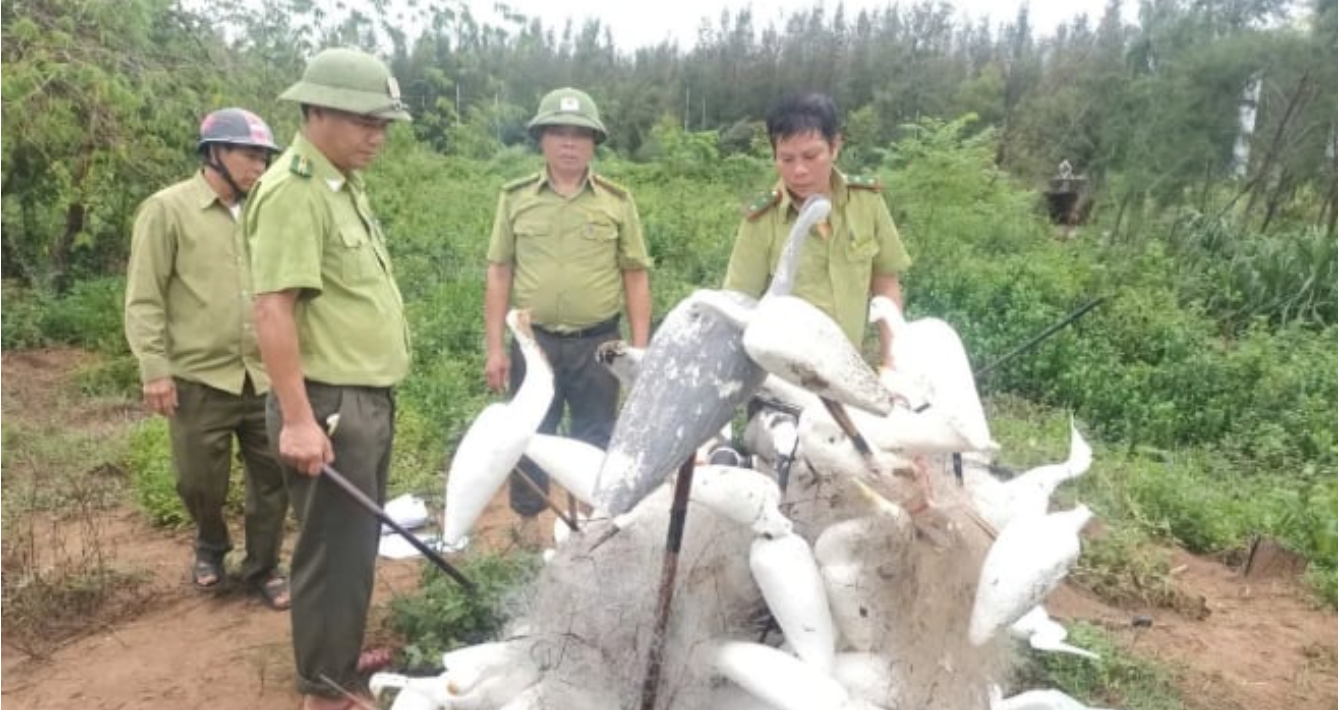
To strengthen enforcement, the Nghe An provincial People’s Committee issued Plan No. 937 and Decision No. 3490, setting up a provincial steering committee and three inter-agency task forces to inspect key areas. All communes and wards across the province have also formed their own teams to carry out the work.
The steering committee said public awareness has improved thanks to outreach efforts. Many people have voluntarily handed over more than 350 wild animals, including rare species such as pangolins, lorises, monkeys, turtles, pythons and pheasants. They have also given up 81 hunting guns, 1,200 pellets, 59 traps, 18 electric shock devices and other hunting tools.
During a peak crackdown, authorities uncovered 129 violations. Ten of these led to criminal charges, while 62 received administrative fines, and the rest are still under review. Officers seized 498 wild animals along with many illegal hunting tools and equipment. They also destroyed more than 29,000 metres of bird nets, over 1,800 stakes and thousands of trapping devices, and released 486 birds back into the wild.
Despite these results, challenges remain. The area is large and the terrain is complex, while some people still hunt. Resources for local patrols and inspections are also limited.
In the coming time, Nghe An will strengthen cooperation among police, forest rangers, fisheries officers and local authorities to spot and tackle violations. The province will increase outreach, especially in coastal areas, river mouths and forest border zones. It will also explore policies to support sustainable livelihoods for people living near forests and the coast, helping reduce pressure on natural resources.
Viet Khanh