Viet Nam, Russia open market for meat and livestock production
Both Ministries emphasized the need to strengthen technical coordination to facilitate more balanced agritrade cooperation.
On March 23 (local time), as part of Prime Minister Pham Minh Chinh's high-level visit to the Russian Federation, Deputy Minister of Agriculture and Environment Vo Van Hung held a working meeting with the Deputy Minister of Agriculture of the Russian Federation, Maxim Markovich.
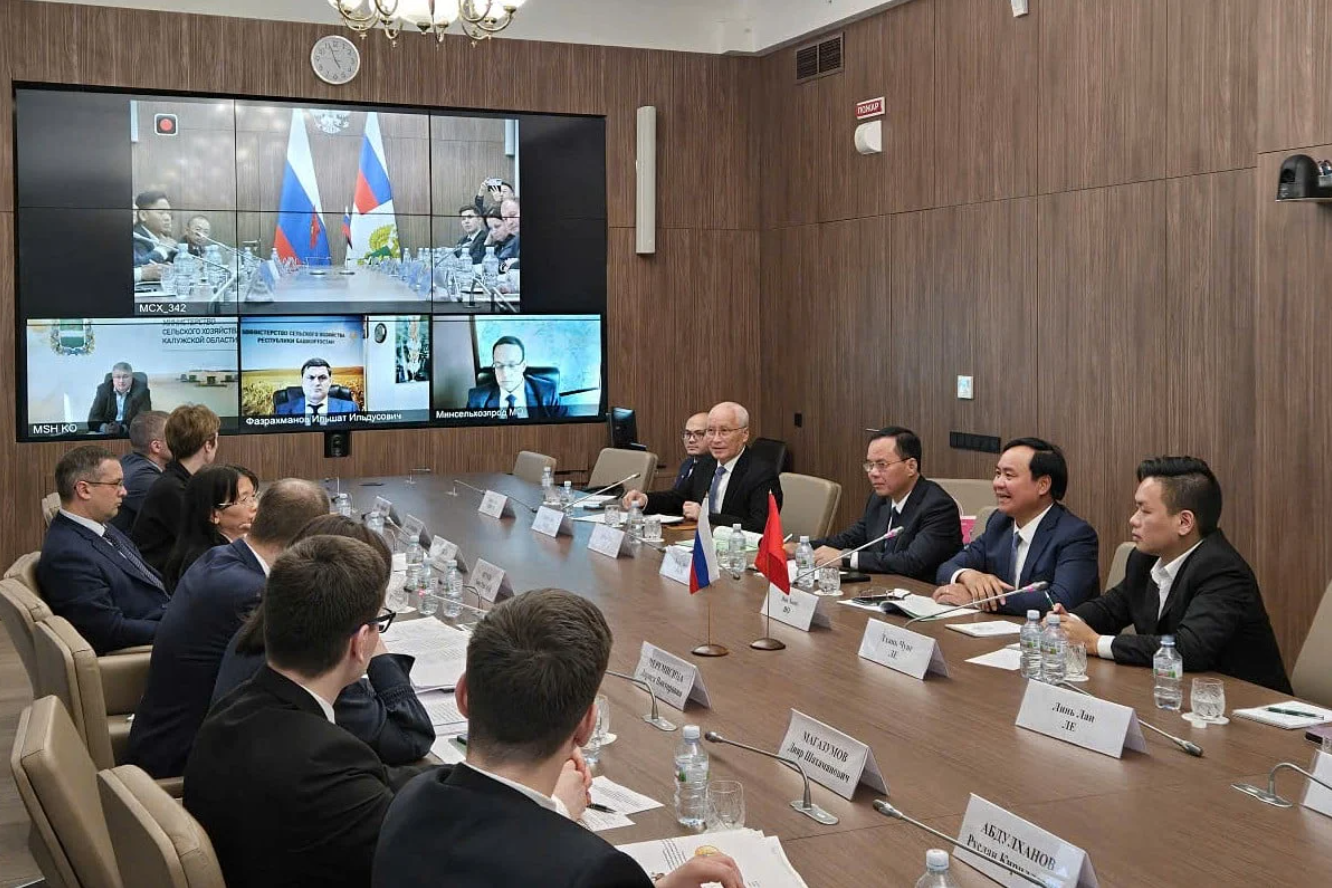
Deputy Minister Vo Van Hung emphasized that agricultural cooperation between Viet Nam and Russia is an important pillar of bilateral economic relations, reflecting the strong complementarity between the two agricultural sectors, which differ in natural conditions and production structures.
In recent years, cooperation between the two countries has been strongly promoted thanks to favorable legal frameworks, particularly the Free Trade Agreement between Viet Nam and the Eurasian Economic Union, which has expanded market access for many agricultural products.
In addition to trade, the two countries have begun expanding into investment and production cooperation, with several Vietnamese enterprises implementing crop cultivation and livestock projects, notably TH True Milk in Russia’s Far East. The potential for cooperation in this area is considered very large, as Viet Nam has advantages in tropical products and agricultural labor, while Russia possesses land resources, a temperate climate, and large-scale production technology.
Agricultural cooperation between the two countries has established a solid foundation and shows positive long-term prospects, especially as both sides continue to improve the legal environment, logistics infrastructure, and financial mechanisms.
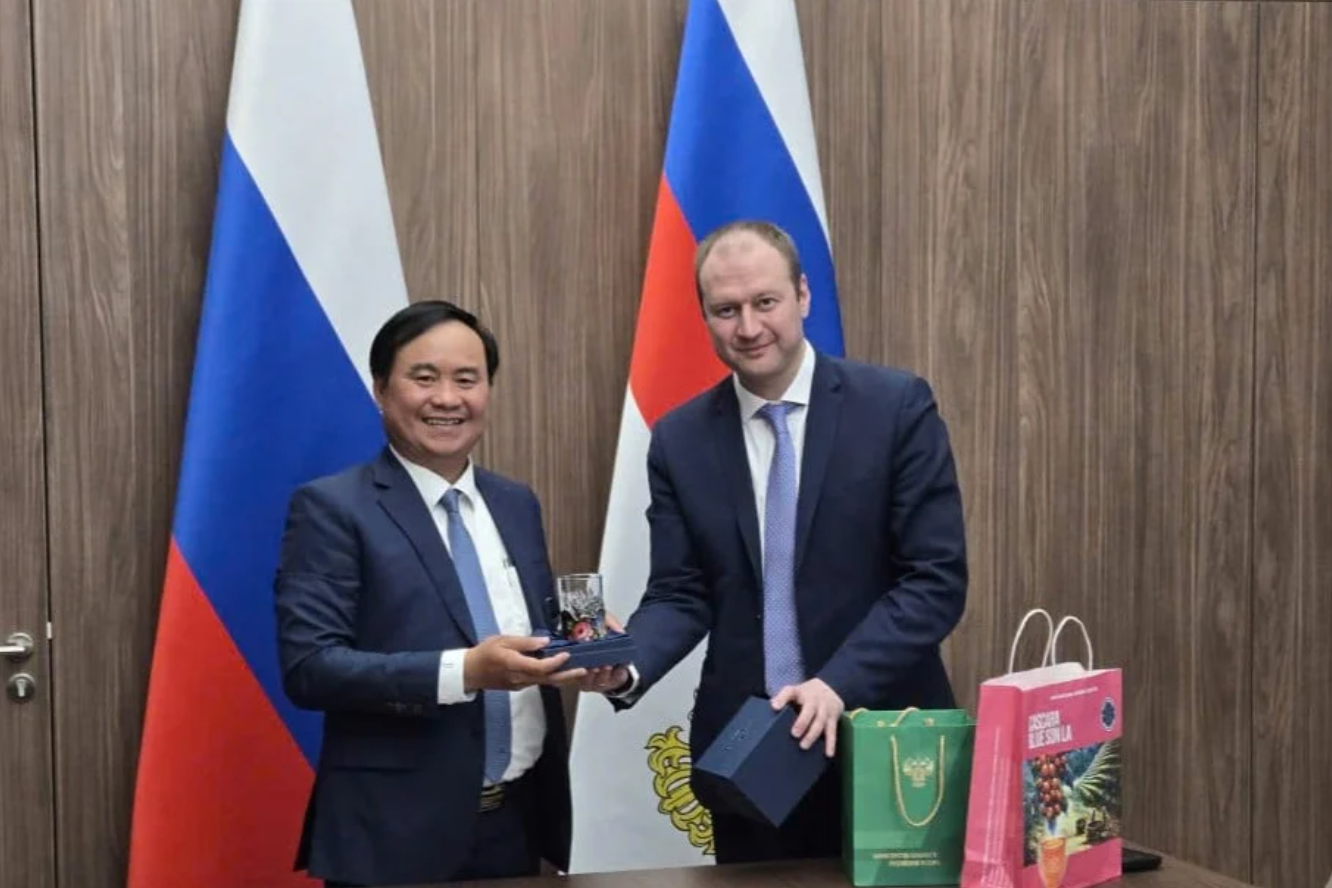
At the meeting, Pham Kim Dang, Deputy Director General of the Department of Livestock Production and Animal Health, proposed that Russia’s Federal Service for Veterinary and Phytosanitary Surveillance (FSVPS) accelerate the licensing process for Vietnamese meat enterprises, following Russia’s authorization for exports of chicken, pork, and beef, as well as facilities producing animal protein meal used as feed ingredients.
Regarding the proposal to export meat and meat by-products, the leadership of the Department of Livestock Production and Animal Health responded that Viet Nam has not granted permission to any country to export white offal to Viet Nam, while affirming that it would provide maximum support to Russian enterprises in registering and exporting products that are on the list of permitted items.
Currently, Viet Nam has opened its market to 373 Russian enterprises and production facilities exporting seafood, livestock products, and animal feed. The Russian Deputy Minister of Agriculture agreed to cooperate and provide maximum support for the registration of additional products for Vietnamese seafood enterprises that are already exporting, and to consider newly registered enterprises.
Both sides also agreed to support research into next-generation medicines and vaccines to prevent and control animal diseases. In response to the proposal from Vietnam’s Ministry of Agriculture and Environment, Deputy Minister Maxim Markovich also agreed to study the possibility of exporting several potential products, such as animal feed and mineral fertilizers.
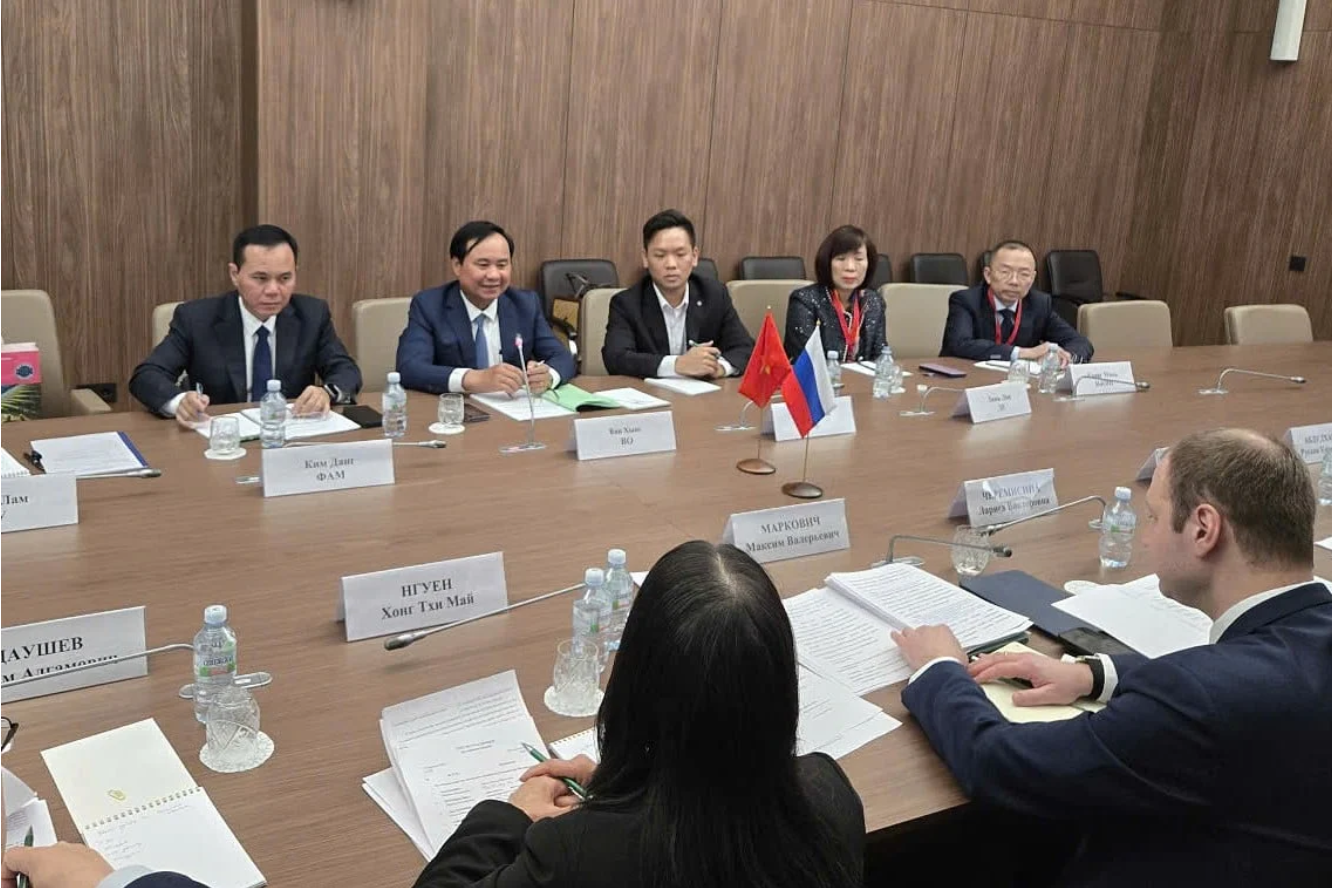
Regarding rice cooperation, Deputy Minister Vo Van Hung proposed to Deputy Minister Maxim Markovich that both sides jointly study and implement rice cultivation projects to enhance food security in the region and worldwide.
“Viet Nam has many advantages in organizing rice production in Russia, from its capacity to research and develop short-duration, high-quality rice varieties to its experience in organizing a fully integrated rice value chain. The traditional, trusted political and diplomatic relationship between the two countries also provides favorable conditions for investment cooperation, technology transfer, and market access,” the Deputy Minister suggested, highlighting opportunities for rice production cooperation in Russia.
The two sides also agreed to continue promoting the sharing of experience in quality management, quarantine, food safety, scientific research, technology transfer, climate change adaptation, and environmental protection.
The discussion took place in a friendly, frank, and constructive atmosphere, contributing to strengthening and deepening agricultural cooperation between Viet Nam and the Russian Federation, in line with the Viet Nam - Russia Comprehensive Strategic Partnership.
Kieu Chi