A woman’s persistent journey for the environment
With her love for the environment and unwavering determination, Ms. Le Thi Mui (47 years old) has discovered a precious, yet long-forgotten resource.
Turning waste into resources
Since childhood, Ms. Mui, from Ha Dong Ward in Hanoi, has had a deep concern for the environment. Before committing to her current work, she held various jobs, ranging from office work to small-scale business activities. However, a major turning point in her life came in 2014, when two of her close friends passed away from cancer within just one week.
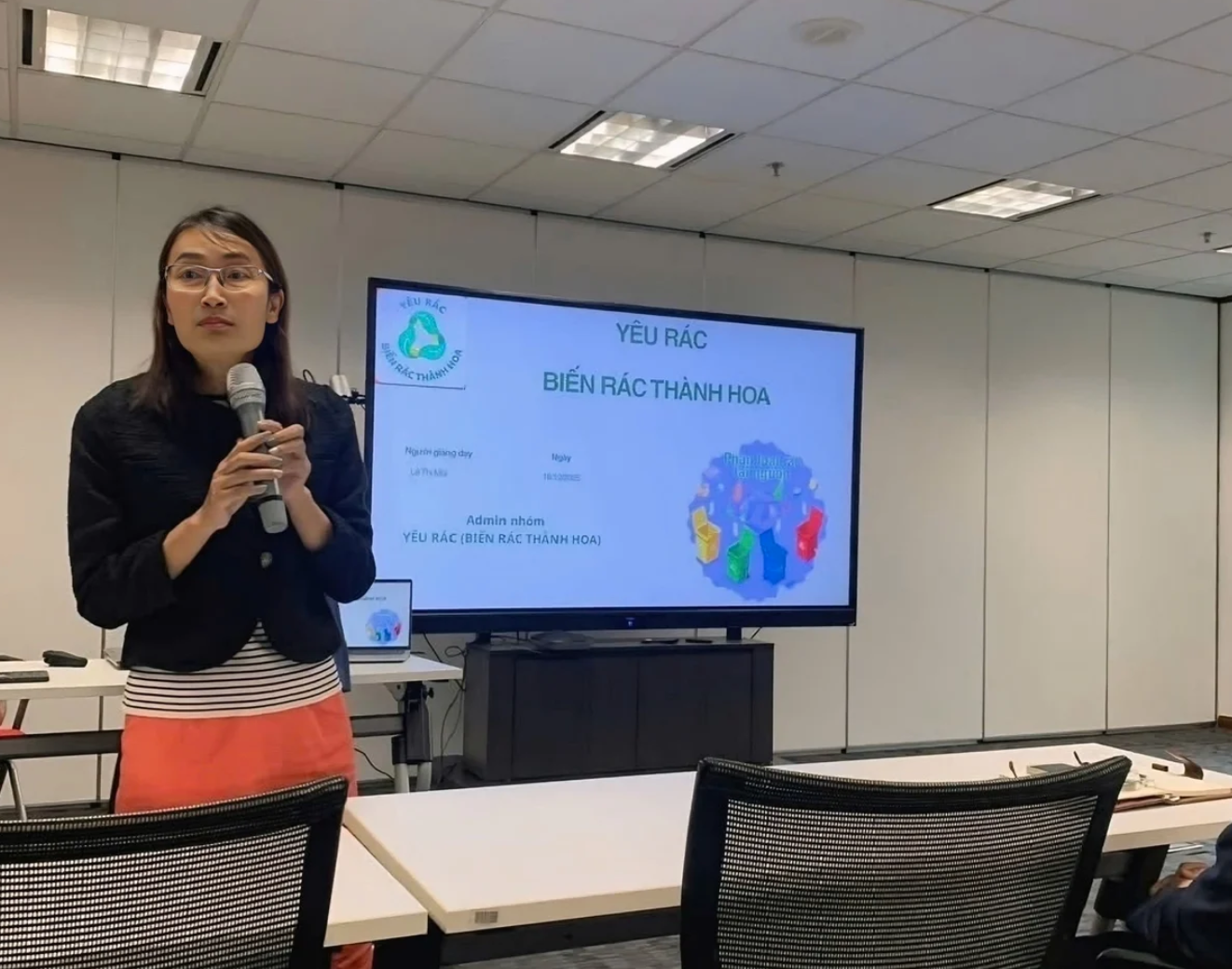
The loss prompted her to reflect deeply on life, raising questions about the environment and human health. She decided to leave her stable job and return to farming, hoping to live closer to nature.
At first, she focused on planting and soil care. However, the more she worked, the more she realized the crucial role of microorganisms in soil improvement and environmental purification. From these practical observations, she began researching and experimenting, gradually developing her own method for processing organic waste.
She describes it as “an accidental invention,” as it all stemmed from hands-on experience and persistence. Using familiar materials such as fruit peels, leftover rice, and food waste combined with microbial cultures, she can create a nutrient solution for plants in just two days. Within about five days, plants show noticeable growth.
This solution not only shortens waste treatment time but also delivers tangible benefits: reducing environmental waste, cutting fertilizer costs, and producing natural nutrients for crops. Notably, the model is suitable for both urban residents with limited space and rural communities.
According to Ms. Mui, the most important factor is not waste treatment itself, but reducing waste from the very beginning. “Sorting or recycling is only the next step, the core issue is changing habits to protect the environment,” she emphasized.
In practice, when organic waste is properly treated, people can not only save on daily expenses but also reuse it to produce fertilizers for agriculture. Some have even scaled this into larger production models. “A friend of mine produces microbial fertilizer with quality reaching about 70% of imported chicken manure from Japan,” she shared.
However, for Ms. Mui, this journey is more than just a job - it is a challenging personal choice. She openly admits being drawn to difficult paths: “I will continue this work until people can do it well without me. If that happens and many others are already doing it, I may change direction. But as long as there are things no one has done yet, and I’m capable of doing them, I will still choose to take them on, as a way to challenge myself and keep this journey meaningful.”
It is precisely this willingness to take the “hard path” that has enabled Ms. Le Thi Mui to gradually spread a sustainable and responsible lifestyle within the community.
Connecting communities through reused clothing
Beyond organic waste treatment, Ms. Mui has expanded her efforts to collecting and freely distributing used clothing. However, what sets her approach apart is her focus on changing community perceptions.
According to her, many people have long assumed that used clothing is only for the poor, unintentionally creating psychological barriers for both donors and recipients. Instead of emphasizing charity, she promotes the value of reuse and its economic benefits, helping people see second-hand clothing as a practical, sustainable choice rather than a symbol of need.
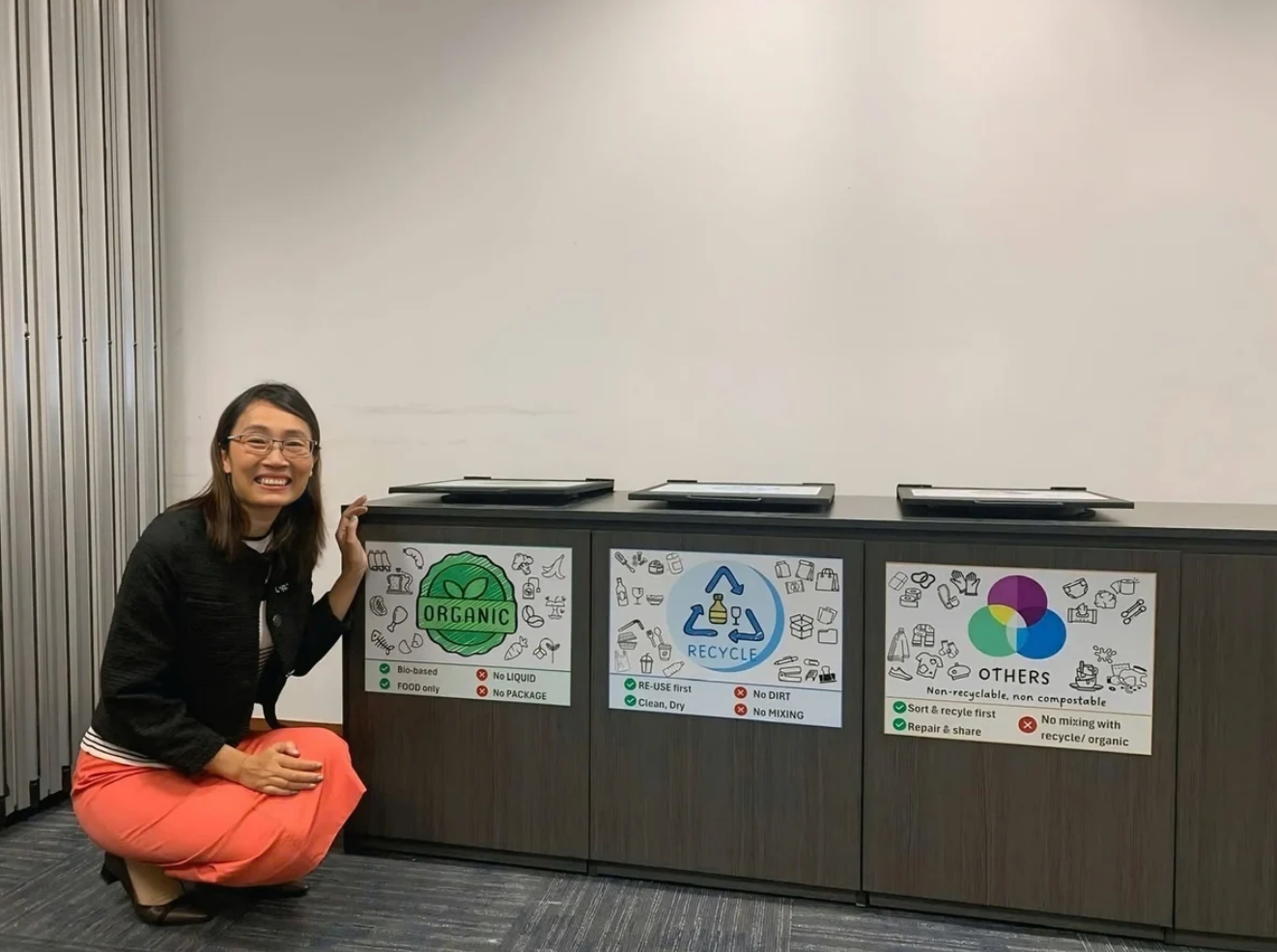
“Used clothing is not just for the poor. It is a smart consumer choice - saving money while reducing waste,” she said.
Her initiative is mainly carried out through social media and community groups. People can donate clothes, those in need can come and take them, and some even both give and receive. Everything happens naturally, without distinctions based on circumstances.
During peak periods, she can receive 2 - 3 tons of clothing. In addition to direct distribution, she also connects with other groups and communities to further circulate these items to a wider audience.
Notably, she chooses to work independently, with support from volunteers rather than being tied to any specific organization. This allows her to remain flexible in her approach and stay true to her original goal: serving users and promoting reuse, rather than framing the activity purely as charity.
According to her, effective outreach requires a shift in communication. Instead of focusing too much on environmental messages, which can feel abstract to many people, she chooses to highlight economic benefits.
“When we talk about savings and practical advantages, people are more receptive. They see that it benefits them personally while also helping protect the environment, and naturally they want to take part,” Ms. Mui shared.
This approach also helps alleviate the self-consciousness some people may feel when receiving donated items. It is no longer seen as a one-way act of charity, but as part of a sustainable consumption cycle where everyone can participate equally.
From processing organic waste to connecting communities through reused clothing, the journey of Ms. Le Thi Mui is quiet yet persistent. It is the journey of someone willing to change, to do things differently, and to stay committed to her choices. At a time when environmental pressures are mounting, such models not only deliver practical value but also open new pathways toward a greener and more sustainable lifestyle.
Thuy Dung