Parched fields beside the Uar irrigation project
After nearly 30 years, the Uar diversion dam in Uar Commune, Gia Lai Province, has become heavily silted, leaving it unable to supply sufficient irrigation water for the commune’s 590ha of farmland.
Nearly three decades without dredging
The Uar diversion dam, located in Uar Commune, Gia Lai Province, was built in 1998. With a storage capacity of 250,000 cubic meters, the project was designed to irrigate 300 hectares of farmland for local residents.
Since its completion and operation in 1998, the Uar dam has been considered a key infrastructure project for the commune, helping transform the local landscape and improve livelihoods. It provided water for agriculture, domestic use, and environmental improvement. With irrigation secured, rice fields and tobacco crops thrived, yields increased, and cultivated areas steadily expanded.
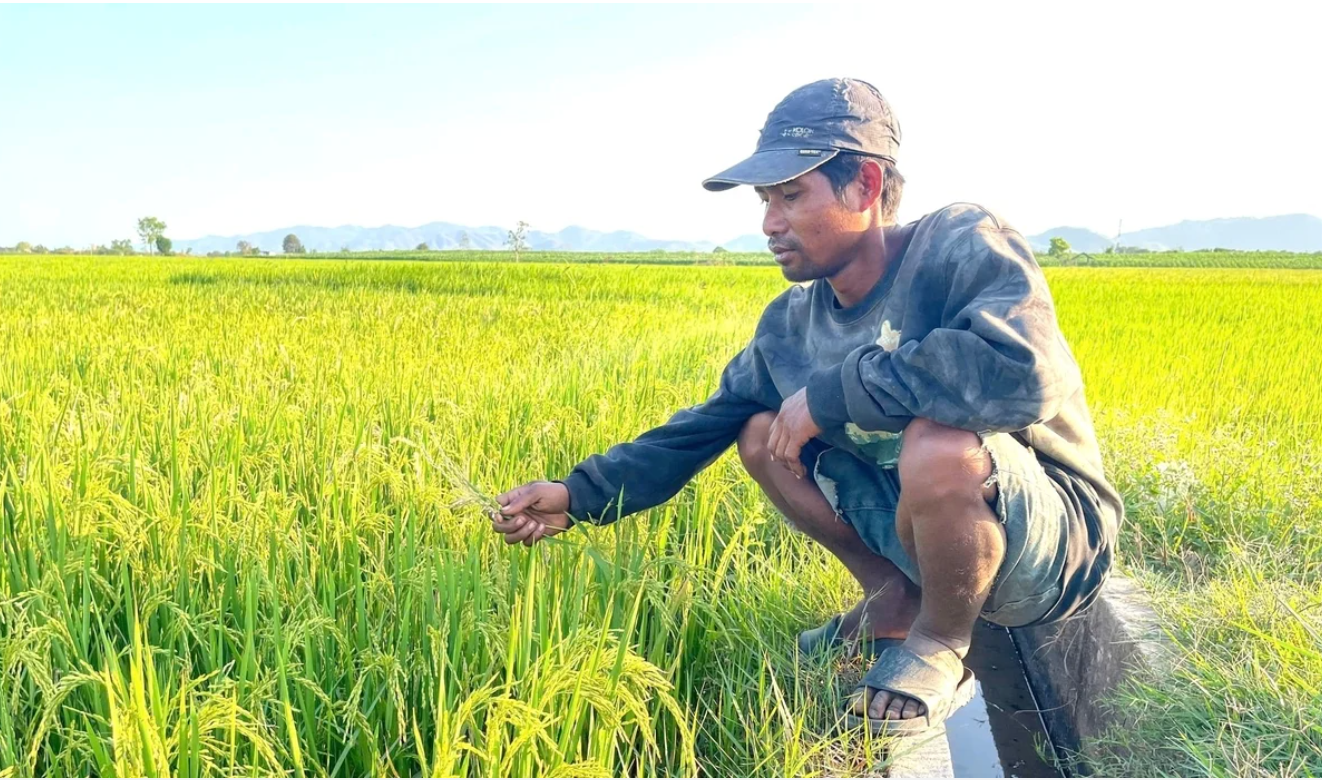
However, nearly 30 years after its operation began, the dam has never been dredged. As a result, the reservoir has become heavily silted, and the discharge gates are clogged with sediment. Irrigation capacity has declined significantly, while the cultivated area has nearly doubled to around 590 hectares, far exceeding the original design capacity.
Despite the existence of a canal system, the rice fields of farmer Ro Mah Thiem in Ngol Village remain dry. Thiêm said that since the dam was built, local residents no longer feared hunger, as irrigated farming enabled two rice crops per year along with tobacco and other crops.
“However, for the past three years, water from the Uar dam has barely reached our 2 hectares of paddy fields. The rice and tobacco fields of other households in the village are also without irrigation water,” he said.
To maintain production, Thiem invested 45 million VND to drill a nearly 100-meter-deep well at the corner of his field. During the peak dry season, he must pump water every 15 days, with electricity costs for pumping reaching nearly 1 million VND per month.
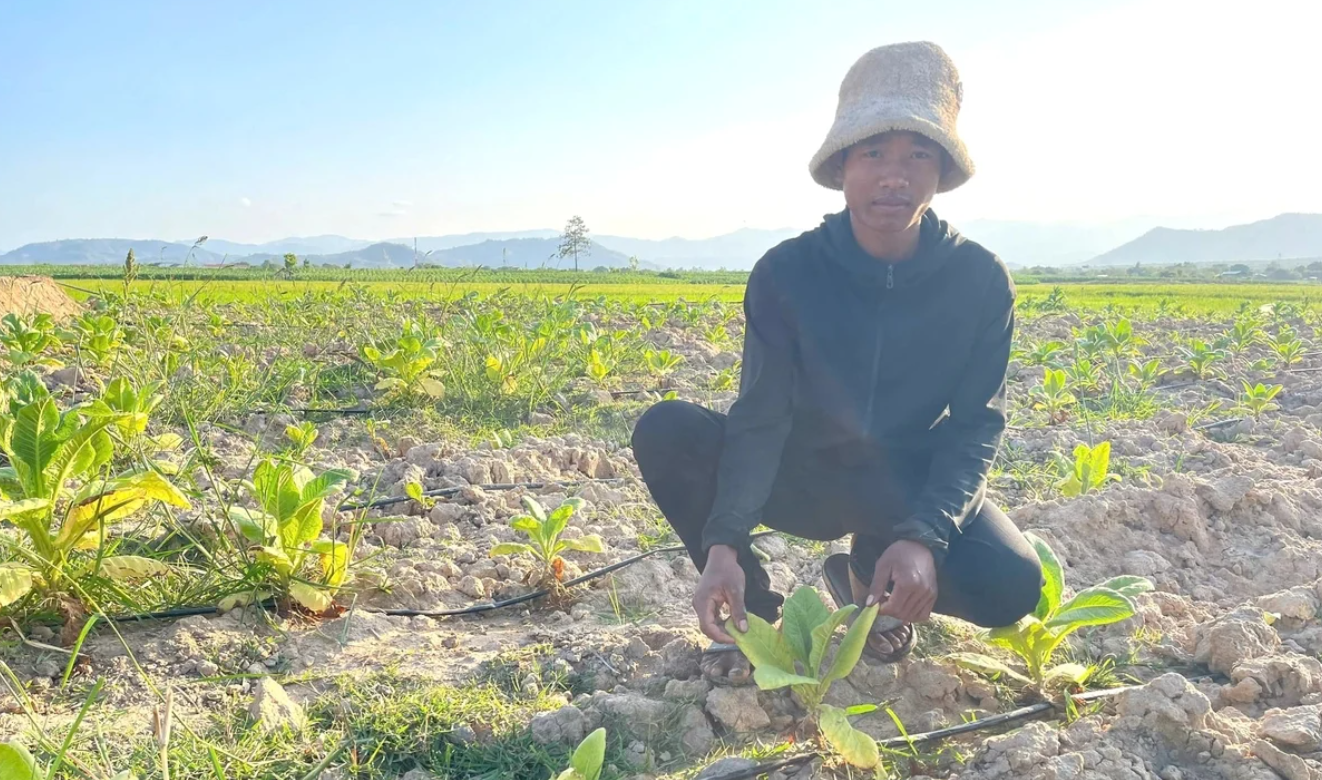
In previous years, when water from the dam was abundant, his family cultivated two rice crops annually and rotated to other crops in between, generating higher income. “Due to water shortages in recent years, we can only manage two rice crops and dare not switch to other crops. After expenses, the profit is minimal,” he added.
Similarly, in Ngol Village, five sào (approximately 0.5 hectares) of tobacco fields belonging to Ro Cham Tieu suffer severely during the dry season. Unable to watch his crops wither, Tieu hired workers to dig a pond in the middle of his field for irrigation. “But in this heat, the pond water dries up quickly, and the tobacco plants wilt due to insufficient water,” he said.
K’sor Mrok, Party Cell Secretary and head of Ngôl Village, said that in recent years, water from the Uar dam has not reached local farmland. “Fields located right next to the irrigation project still lack water. Many areas have cracked soil, affecting crop yields,” he noted.
Calls for urgent upgrades
Ngôl Village has about 100 hectares of farmland within the irrigation zone of the Uar dam. In recent years, water has rarely reached these fields, forcing residents to drill wells or dig ponds. High investment costs combined with unstable agricultural prices have left farmers with limited profits.
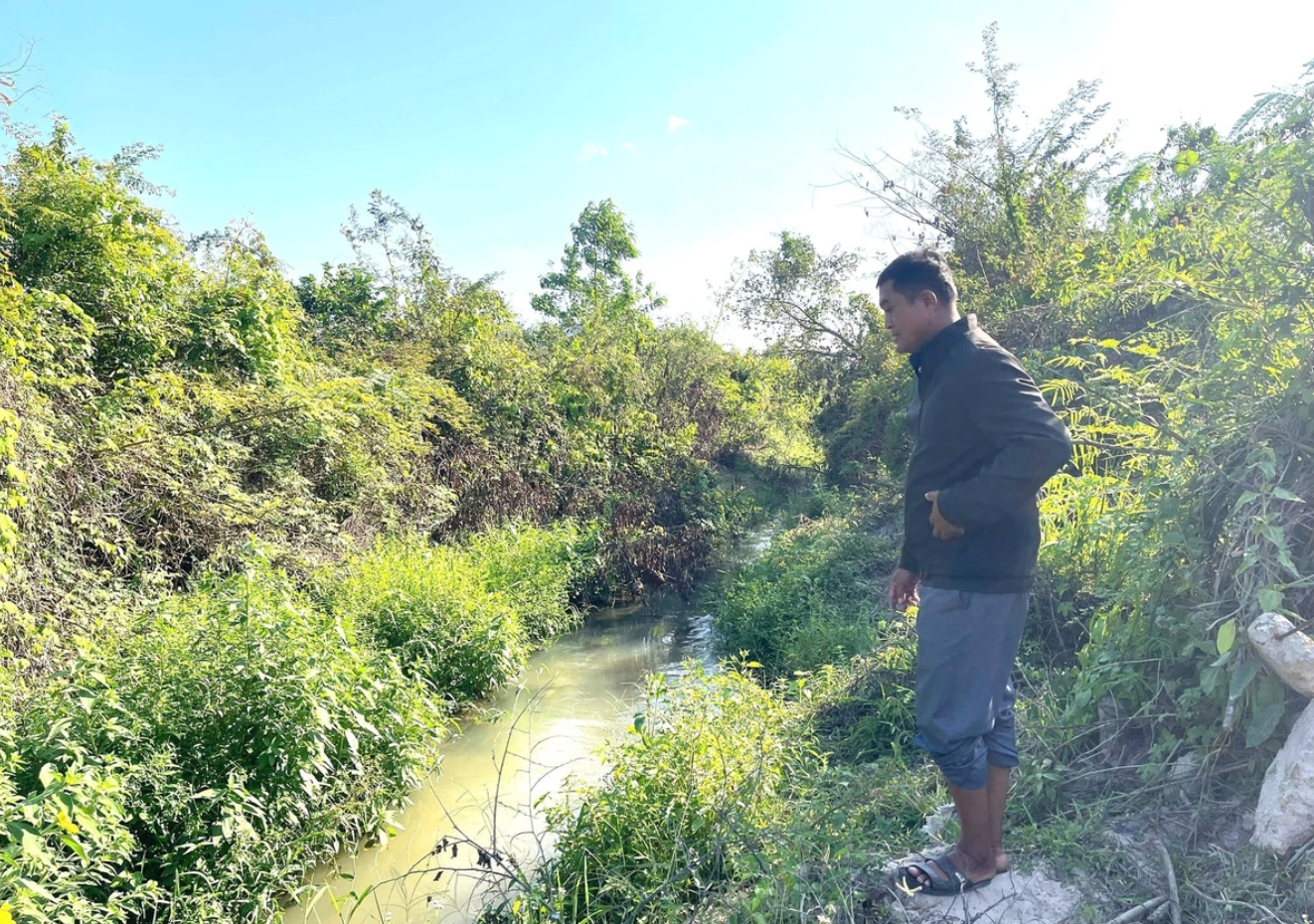
According to village leaders, agriculture remains the main source of income for local residents. People are calling on authorities to invest in upgrading the Uar dam so they can stabilize production.
“With a stable water supply, farmers would be more confident in switching crops, improving economic efficiency, and applying scientific and technological advances to increase productivity,” Mrok said.
In addition to reservoir sedimentation, the long-neglected canal system has also contributed to water shortages. In Thanh Binh hamlet, a 500-meter section of canal has collapsed and eroded, causing water loss and obstructing flow to fields. Two major floods in late 2025 alone damaged about 1.5 kilometers of canals in Uar Commune.
Nguyen Thanh Van, Vice Chairman of the Uar Commune People’s Committee, said the commune has submitted proposals to the managing unit - Gia Lai Irrigation Works Exploitation One-Member Co., Ltd., to dredge the reservoir and raise the dam by about one meter to increase storage capacity.
The commune has also proposed funding for repairing and upgrading the canal system to ensure water can reach fields without significant losses, thereby meeting irrigation needs across the entire agricultural area.
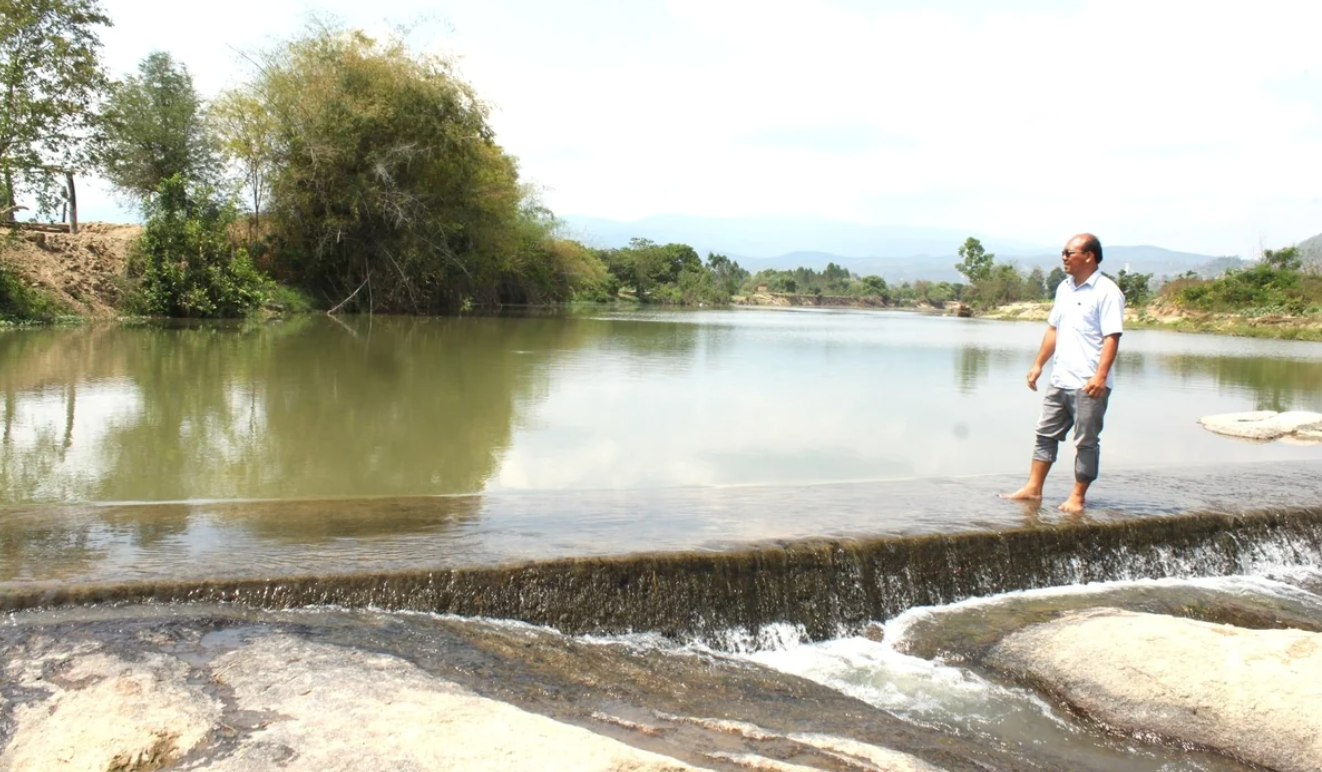
“For now, farmers are using temporary earthen canals to bring water to their fields. But in the long term, people hope the province will allocate funds to repair the system and reduce water loss so they can stabilize production,” Van said.
He added that the province has provided 200 million VND to repair about 200 meters of damaged canals. The remaining sections have been temporarily reinforced by residents using earthen channels. “However, water loss along the canals means downstream fields still lack sufficient irrigation,” he said.
Lam Giang