Cutting livestock production costs with net energy systems
Feed accounts for up to 70% of production costs in livestock farming. Shifting to a net energy system is emerging as a key solution to reduce costs and improve efficiency across the industry.
Industry restructuring and rising competitive pressure
Olmix Asialand Viet Nam held a seminar on March 26 titled “From Net Energy Evaluation to Precision Nutrition,” bringing together experts, businesses and pig and poultry farmers to discuss how the livestock industry can optimize feed efficiency amid rising costs and intensifying competition.
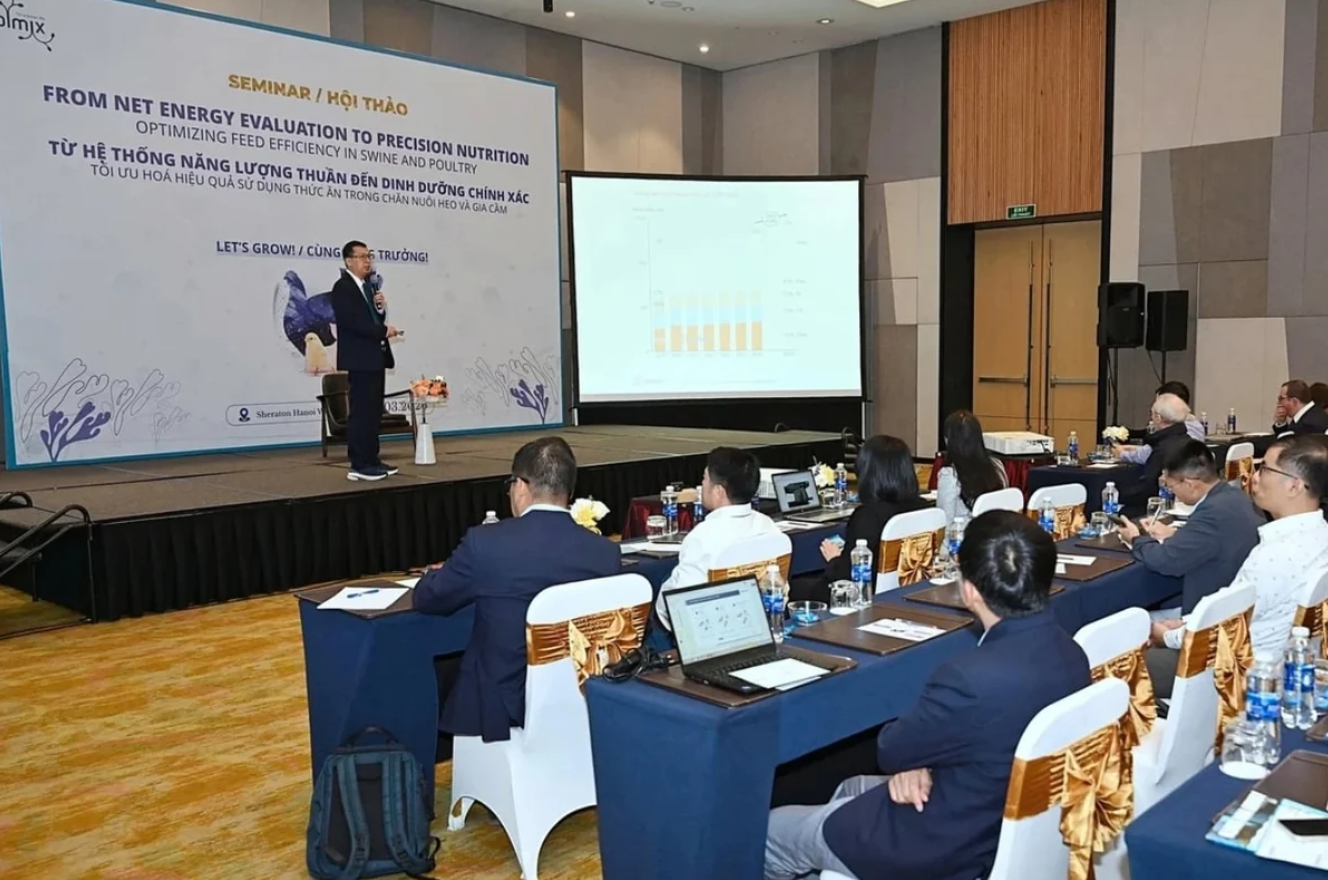
Discussions focused on energy systems in precision nutrition, technologies to improve livestock productivity, insights from international experts, and practical challenges for the poultry sector.
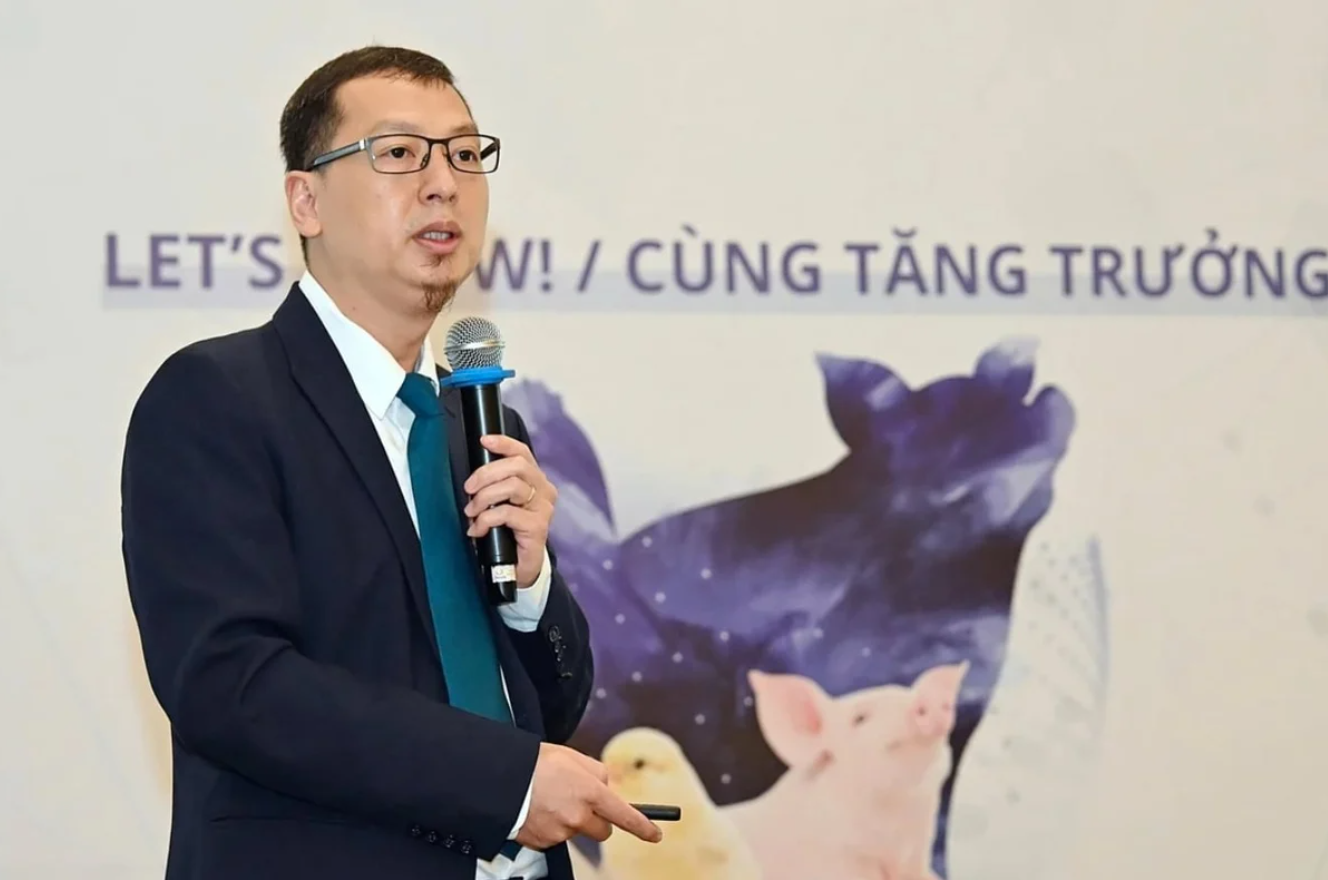
Mr. Trinh Quang Thanh, Asia Director of Olmix, said the global economic landscape is creating both opportunities and challenges. According to international institutions such as the World Bank and the International Monetary Fund, global economic growth in 2025 is forecast at around 3%, while the United States is expected to grow by about 1.5-2.1% and Europe by 1-1.7%.
Emerging economies, meanwhile, remain key drivers of global growth, with expansion projected at around 4% or higher. Viet Nam is among the region’s faster-growing economies, supported by a young population, rapid urbanization and rising consumer demand.
However, geopolitical uncertainties - particularly in the Middle East - are still putting pressure on energy prices, logistics costs and global supply chains. These factors directly affect the food and livestock industries, where profit margins have already been narrowing.
In the global feed market, production remains concentrated in several major regions. According to a report by Alltech, China accounts for about 23-25% of the global market, the United States around 14-15%, and Europe roughly 11-13%. Asia, however, continues to lead growth, particularly in poultry, aquaculture and dairy - sectors closely linked to rising demand for animal protein.
According to Mr. Thanh, China offers a typical example of the transition toward industrial livestock production. Over the past decade, the share of industrial farming in the country has increased significantly, now exceeding 70%, while small-scale farming has declined sharply.
Competition in the sector is becoming increasingly intense, especially in terms of costs. Some large enterprises have managed to reduce production costs to around 11-13 RMB per kilogram (equivalent to 1.6-1.8 USD/kg), approaching or even at times falling below market prices. This has squeezed profit margins, forcing companies to optimize operations across the board, particularly feed costs.
“Scale and technology are no longer advantages; they have become prerequisites for survival,” Mr. Thanh noted.
In Viet Nam, the transition is also underway, though at an earlier stage. According to the Ministry of Agriculture and Environment, industrial livestock farming currently accounts for around 55-65% of the sector, a significant increase compared with a decade ago.
Major companies such as Dabaco and Vissan are expanding integrated production chains. However, the market remains fragmented, with small-scale farming still representing a considerable share.
Export capacity remains a limitation. According to the USDA, Viet Nam’s pork exports account for less than 1% of total production, reflecting constraints related to quality standards, traceability and processing capacity.
In the poultry sector, consumption demand is expected to continue rising. OECD data suggest that per-capita consumption in Viet Nam could increase from around 24 kg to nearly 27 kg between 2019 and 2029. However, the country still imports about 200,000-300,000 tons of poultry meat each year, according to the General Department of Viet Nam Customs.
Net energy and the challenge of cost optimization
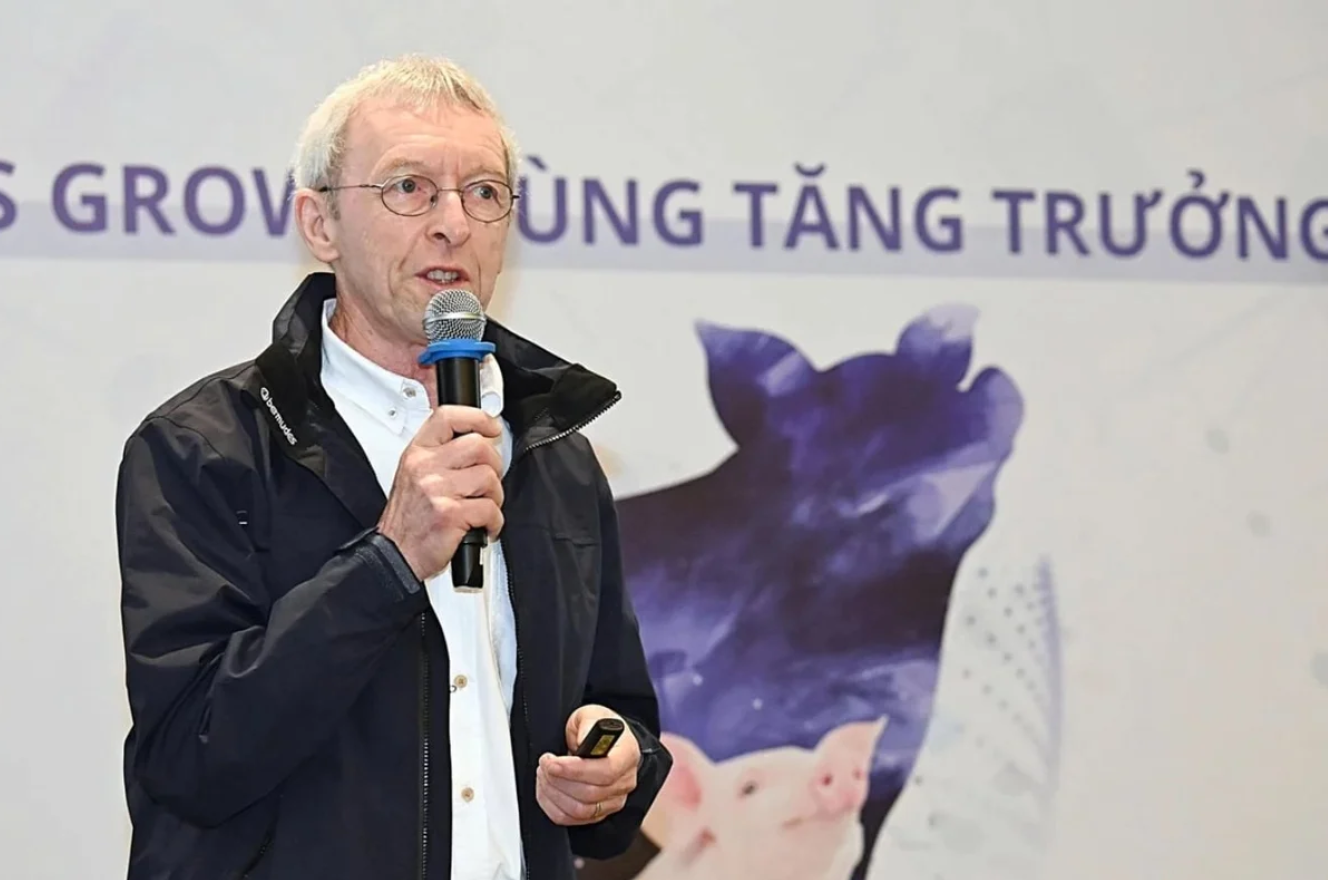
Against this backdrop, the net energy approach has drawn increasing interest. Dr. Jean Noblet, a specialist in livestock energy nutrition, has carried out extensive research on the subject.
According to him, feed accounts for about 60-70% of the total cost of producing meat and eggs, while energy alone represents roughly 70-80% of feed costs. As a result, inaccuracies in energy evaluation can lead to significant economic losses.
Currently, the livestock industry commonly relies on systems such as digestible energy (DE) or metabolizable energy (ME). However, these indicators do not fully reflect the amount of energy animals can actually use, as they do not account for energy lost as heat during metabolic processes.
The net energy (NE) is considered a more accurate approach, as it measures only the energy remaining after losses through feces, urine, gases and heat have been deducted. Studies show that on average, only about 70-75% of metabolizable energy is ultimately converted into usable energy for digestion and production.
Notably, energy utilization efficiency varies depending on nutrient composition. Fats have the highest efficiency, at around 85-90%, followed by starch at about 80%, while protein and fiber are much lower, at roughly 55-60%. This means that the same unit of energy can produce different outcomes depending on its source.
Applying a net energy system is not only an academic concept but also has direct implications for feed formulation. By doing so, companies can increase the proportion of ingredients with higher energy efficiency, reduce excess protein and optimize costs per unit of weight gain.
Energy value also depends on a range of factors, including animal species, age, feed ingredients and processing technologies. Techniques such as pelleting or extrusion can improve digestibility, thereby enhancing feed efficiency.
Experts note that as input costs fluctuate and competition intensifies, the livestock sector is increasingly being pushed to improve efficiency.
The shift from traditional energy systems to net energy is no longer merely a research option but is becoming an inevitable trend to improve productivity, reduce costs and move toward more sustainable development.
In the long term, opportunities for Viet Nam’s livestock sector remain significant, particularly as demand for animal protein continues to grow. However, to seize these opportunities, the industry needs to accelerate industrialization, raise quality standards and more strongly apply scientific advances - among which precision nutrition will play a central role.
Linh Linh - Bao Thang