Closed-loop tech shapes modern livestock farming
GREENFEED Viet Nam Joint Stock Company is recognized as a leading domestic enterprise pursuing a technology-integration strategy across the livestock value chain.
Focusing on technology and the 3F Plus model
As Viet Nam's livestock industry shifts strongly towards industrial and sustainable models, GREENFEED Viet Nam Joint Stock Company is recognized as a domestic enterprise pursuing a tech-integrated strategy across the value chain.
After over 20 years of development, the enterprise has built a production ecosystem based on the 3F Plus (Feed - Farm - Food) model, connecting raw material research, feed production and farm operations to food processing and distribution.
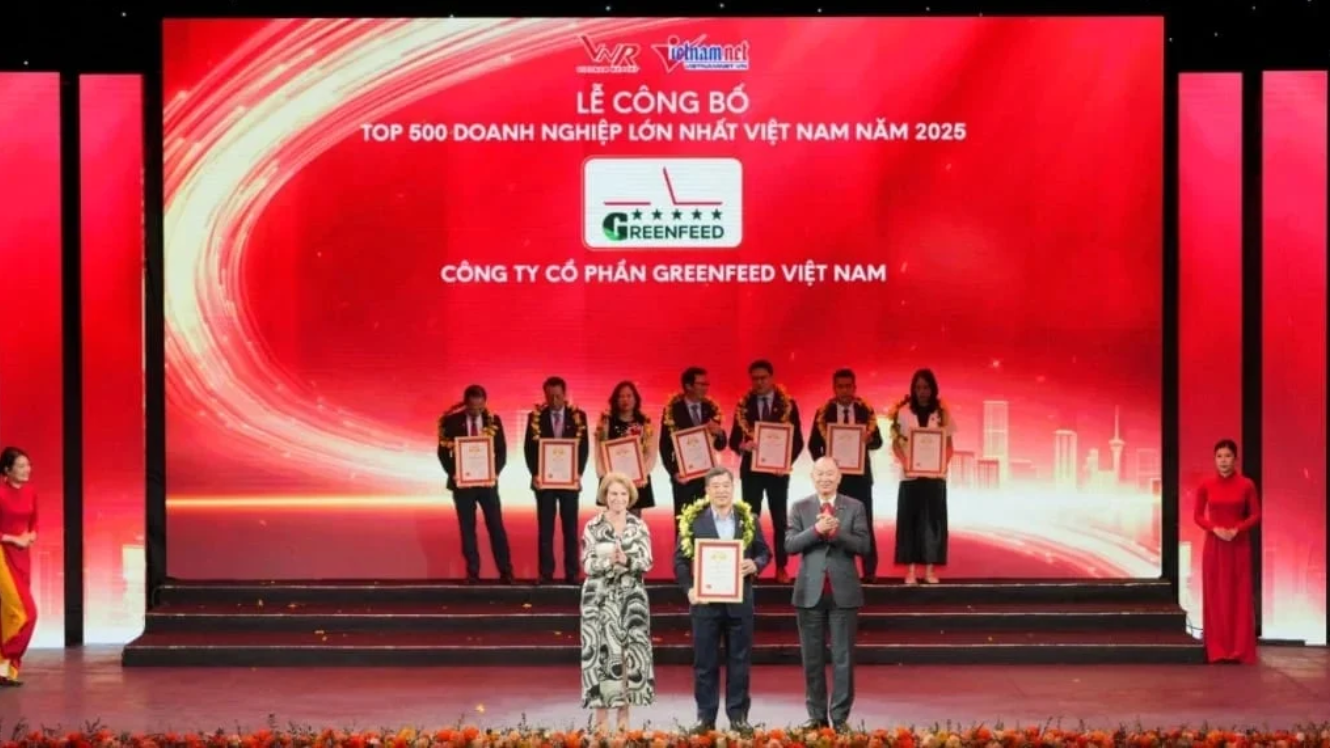
This model enables synchronized quality control while optimizing costs and enhancing traceability. GREENFEED currently operates a system of 9 animal feed mills, 47 internationally standardized farms, and a network of over 20,000 points of sale in Viet Nam and several Southeast Asian countries, supplying products to more than 20 domestic and foreign markets.
Its animal feed production capacity exceeds 2.5 million tons annually, reflecting industrialization in a sector previously heavily reliant on small-scale production.
Currently, the enterprise focuses on animal nutrition research as a technological pillar. Product lines are designed for each developmental stage, applying scientific advancements to optimize nutrient absorption and metabolism.
Prominent among these are micro-encapsulation and micro-emulsion technologies (Matrix Coat), synchronized nutritional balancing, and synbiotic microflora systems that increase absorption efficiency and balance amino acids and energy to improve growth. Simultaneously, they support the intestinal tract and enhance the herd's resistance. These solutions not only improve productivity but also contribute to reducing emissions and farming costs.
Regarding breeding, GREENFEED collaborates to develop highly productive breeds with good adaptability and effective disease control. The breeding process is conducted in accordance with international standards, from the nucleus to the commercial level, ensuring uniformity and input quality throughout the entire production chain.
Concurrently, the farm system is built in a modern and closed direction, with 47 internationally standardized farms as of 2025. The farming model uses technologies to control the environment, ventilation, temperature, and barn hygiene to ensure animal welfare and reduce disease. Biosecurity procedures are strictly implemented, minimizing antibiotic use and elevating output product quality.
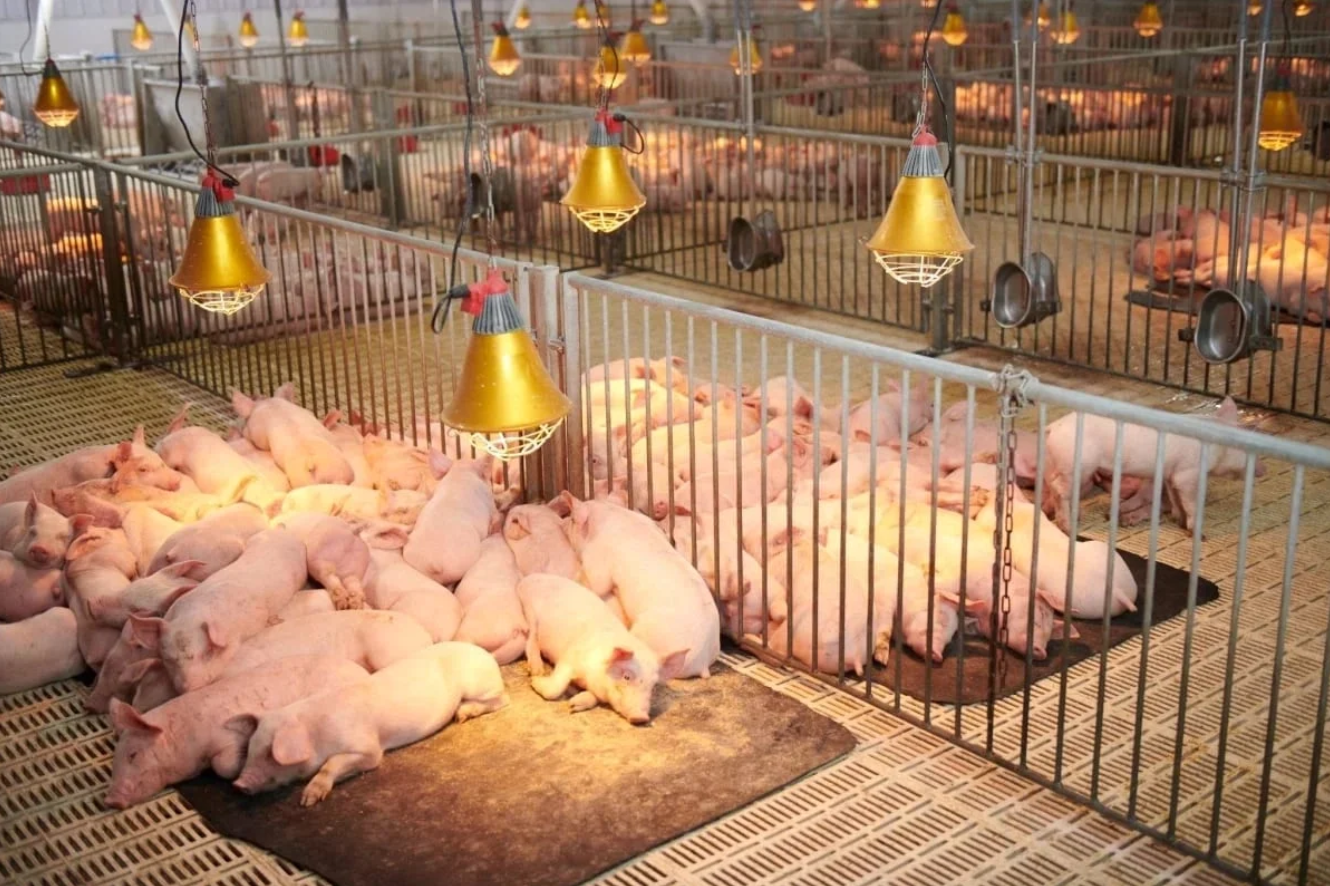
GREENFEED also accelerates digital transformation in farm operations. IoT technology is utilized to continuously monitor a range of environmental and animal health indicators. Data is updated in real-time and stored on a cloud computing platform. Data analysis systems help forecast growth, detect anomalies, and optimize care processes. The enterprise is deploying process automation and testing artificial intelligence applications in demand forecasting and supply chain management.
The synchronized application of international standards such as ISO 22000, HACCP, and Global G.A.P throughout the production chain enhances quality control capabilities and ensures food safety. A circular economy model featuring reuse and recycling activities is implemented to reduce environmental impacts and aim for sustainable development.
These foundations help position GREENFEED among the top 2 reputable animal feed companies in 2025, while maintaining its position among the major agricultural and food enterprises in Viet Nam.
Financial performance and technology's role in growth
Recent business results clearly reflect the impact of the technology and value chain integration strategy. According to published data, GREENFEED recorded an after-tax profit of approximately 1,700 billion VND in the first six months of 2025, a sharp increase over the same period, surpassing many large enterprises in the livestock industry.
This efficiency stems from the ability to control input costs, especially amidst fluctuating raw material prices. Proactively producing feed and optimizing nutritional formulas helps the enterprise reduce dependence on external markets while maintaining stable profit margins.

The large-scale, tech-operated farm system helps boost productivity, reduce loss rates, and effectively control diseases. The closed-loop farming model also creates an advantage in proactively managing supply, mitigating supply chain disruption risks, and securing output through the processing and distribution system.
In the food segment, GREENFEED has developed a portfolio of over 200 products, from fresh meat to processed foods, with a network of over 20,000 retail points nationwide. Expanding into the food sector helps the enterprise increase product value while leveraging the 3F chain's advantage to control quality from farm to table.
According to assessments from rating agencies, GREENFEED's growth is closely tied to its digital transformation and technological innovation strategy. Data is stored on cloud platforms, combined with automation tools (RPA) and AI testing in demand forecasting. This not only elevates operational efficiency but also helps the enterprise adapt swiftly to market fluctuations.
Facing pressures from diseases, input costs, and food safety requirements, the tech-integrated model is becoming a decisive factor in competitiveness. GREENFEED's approach demonstrates that domestic enterprises can leverage science and technology to scale up, enhance efficiency and gradually participate more deeply in the global agricultural value chain.
Bao Thang