USABC-MAE partnership accelerates green transformation
USABC will partner with Viet Nam in improving regulatory framework, enhancing the investment environment, and sustainable development initiatives.
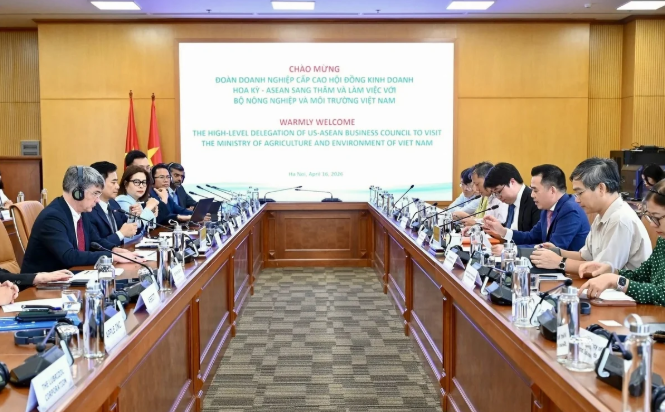
On April 16, Deputy Minister of Agriculture and Environment Dang Ngoc Diep received a senior business delegation from the US-ASEAN Business Council (USABC), led by Ambassador, President and CEO Brian McFeeters.
Improving investment environment, promoting PPP
According to Deputy Minister Dang Ngoc Diep, as Viet Nam advances digital transformation and promotes ecological, modern, and low-emission agricultural innovation, U.S. businesses are trusted and important partners.
“Many exemplary cooperation models have delivered clear results, such as Cargill’s modern animal feed mill in Dong Nai and PepsiCo’s sustainable potato value chain development programs,” the Deputy Minister said.
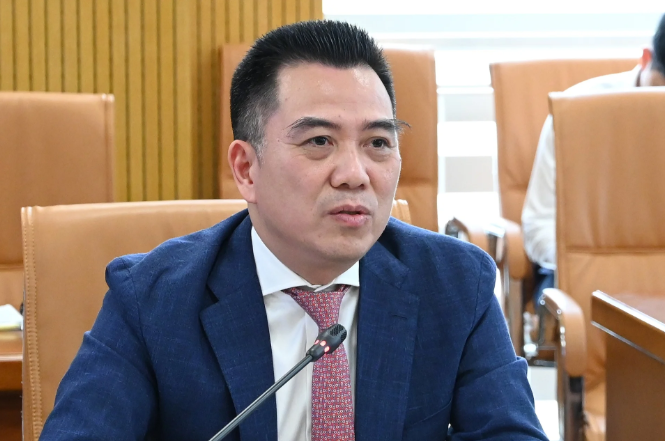
He affirmed that the Government is committed to further improving the investment environment, refining the regulatory framework, promoting innovation, and facilitating cooperative initiatives in agriculture, environmental protection, and climate change response.
The Ministry’s leadership expressed its hope that U.S. businesses will continue to partner in implementing public-private partnership models, transferring technology, developing high-quality human resources, and strengthening value chain governance capacity.
Deputy Minister Dang Ngoc Diep noted that the MAE has committed to cutting more than 30% of administrative procedures under its management. At present, most procedures have been decentralized to local authorities, with only about 25-30% remaining under the direct management of the Ministry.
USABC delegation, comprising 52 corporations with around 120 senior executives attending this visit, all expressed strong confidence in Viet Nam’s development potential, particularly in agriculture, food technology, and green transformation.
USABC highlights Viet Nam’s market potential
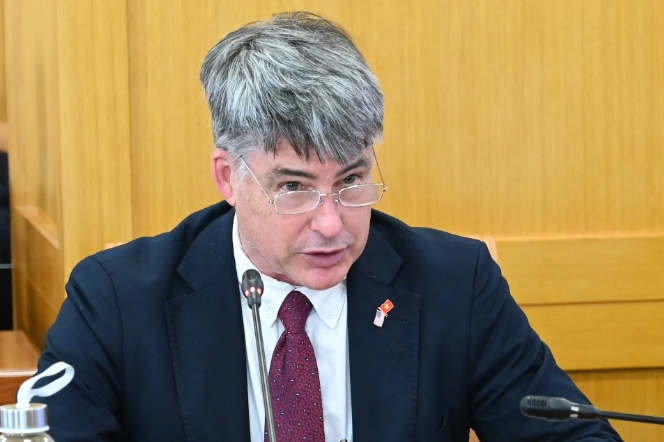
At the meeting, Ambassador, President and CEO Brian McFeeters emphasized that Viet Nam is currently one of the most dynamic markets in the ASEAN region, offering numerous opportunities for expanded investment and long-term cooperation.
U.S. companies showed particular interest in areas such as natural resource management, ecological agriculture, circular economy, and climate change response.
For example, PepsiCo proposed expanding imports of potato seed to meet production demand, while also developing sustainable potato value chain models and reusing beverage wastewater for crop irrigation. Department of Crop Production and Plant Protection noted that seed importation is necessary to supplement domestic seed sources, alongside a long-term orientation to strengthen local seed production in order to enhance autonomy and value addition.
Mondelez expressed interest in the trend toward cage-free egg products. This is recognized as a global trend, and Viet Nam has already issued several animal welfare standards and is encouraging businesses to self-declare baseline standards and implement traceability systems to ensure transparency and fair competition.
In discussions on environment and sustainable development, representatives of Mondelez and Coca-Cola proposed that Viet Nam continue to refine EPR regulations, promote the use of recycled materials, develop collection and recycling infrastructure, and ensure a stable policy roadmap.
In addition, Citibank and several international financial institutions expressed interest in Viet Nam’s progress in developing a carbon market, including its orientation toward international linkage and mechanisms for carbon credit exchange and offsetting.
Strengthening cooperation for sustainable development goals
Deputy Minister Dang Ngoc Diep acknowledged the contributions and recommendations of corporations and businesses and suggested several new approaches to refine policies and improve management efficiency across the Ministry’s sectors.
"We are ready to cooperate with the U.S. business community on the principle of mutual development and mutual benefit. Areas such as ecological agriculture, natural resource management, digital transformation, circular economy, and climate change response will continue to be key pillars of cooperation in the coming period," the Deputy Minister said.
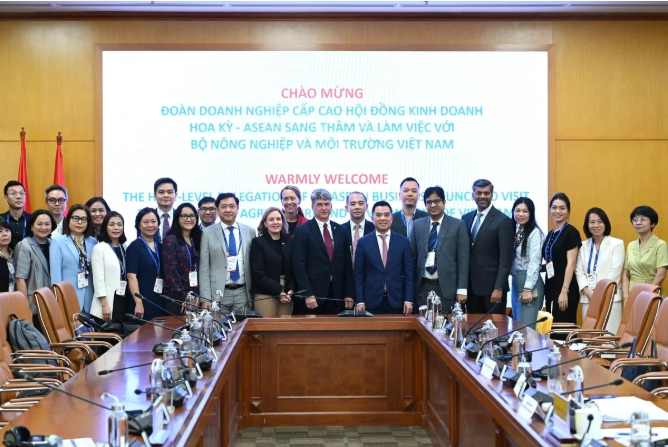
The large-scale presence of the USABC business delegation demonstrates strong interest from the U.S. private sector in the Vietnamese market and opens broader opportunities for deeper cooperation in the next phase of development between the two countries.
The visit and working session of the USABC delegation took place in the context of continuously strengthening Viet Nam - U.S. economic cooperation. Shared priorities in sustainable agriculture, green transition, natural resource management, and climate change adaptation highlight the alignment between the two sides, particularly in pursuing ecological growth models, circular economy approaches, and emission reduction.
Kieu Chi