Removing procedural bottlenecks for JICA3 Project
Deputy Minister Nguyen Hoang Hiep proposed 5 recommendations to address procedural and procurement bottlenecks in order to accelerate the implementation of the JICA3 Project.
On the afternoon of April 20, in Hanoi, Deputy Minister Nguyen Hoang Hiep met and worked with Mr. Kenichi Kobayashi and Mr. Chihiro Fukuda, Deputy Representatives of the Japan International Cooperation Agency Office in Viet Nam (JICA).
The meeting focused on discussing solutions to remove bottlenecks, accelerate the implementation of the Ben Tre Water Management Project (JICA3), and strengthen cooperation in disaster risk management.
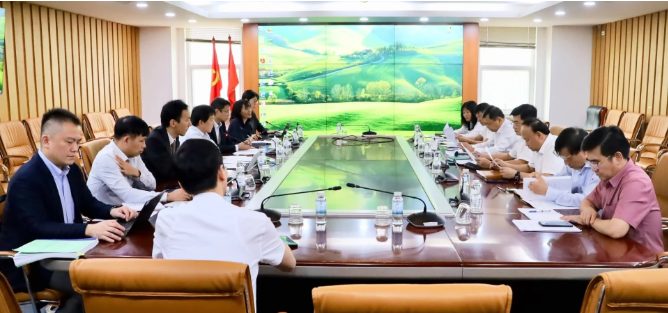
Shortening procedures and removing bottlenecks to accelerate project implementation
Regarding the JICA 3 Project, Deputy Minister Nguyen Hoang Hiep proposed that JICA consider shortening the review period for key documents, including bidding documents, bid evaluation reports, and contracts, to approximately 15 days, rather than the current minimum of 1 month.
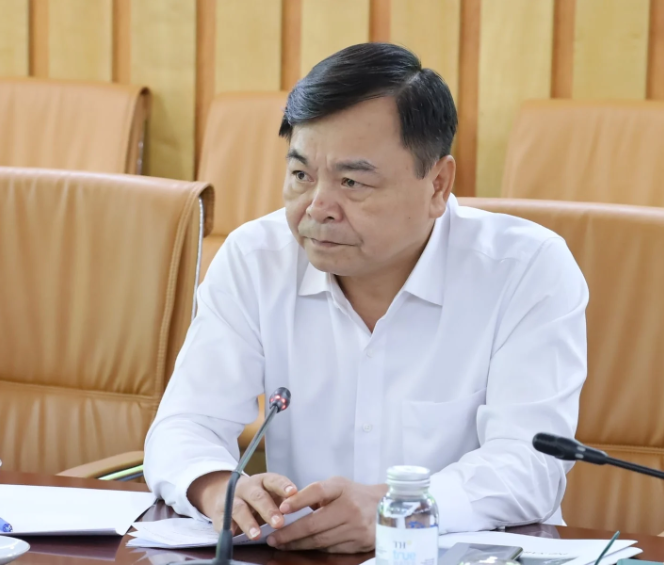
“In procurement activities, the Ministry of Agriculture and Environment (MAE) requested JICA to provide clear guidance on allowing prequalified bidders to update and adjust their consortia in cases where they do not yet meet financial capacity requirements. This is intended to ensure compliance with JICA regulations while avoiding delays in project implementation.
For Package XL5-JICA3 on the monitoring and surveillance system, as its value is currently below the threshold for international bidding, the Vietnamese side proposed shifting to open domestic competitive bidding in order to comply with regulations and shorten implementation time,” the Deputy Minister said.
Regarding design work, the MAE leadership expressed the desire for the organization to strengthen support and urge international experts to ensure the quality of documentation and timely adjustments when necessary. At the same time, there were suggestions for the lead consultant to assign domestic units to adjust certain detailed design components, thereby enhancing proactivity and ensuring project progress.
In response to these proposals, JICA stated that it would strive to expedite the review and agreement processes for Packages XL1 and XL3 while ensuring quality and full compliance with the submission requirements. For Package XL5, JICA will continue to review and discuss further due to the requirement for international experience in system operation.
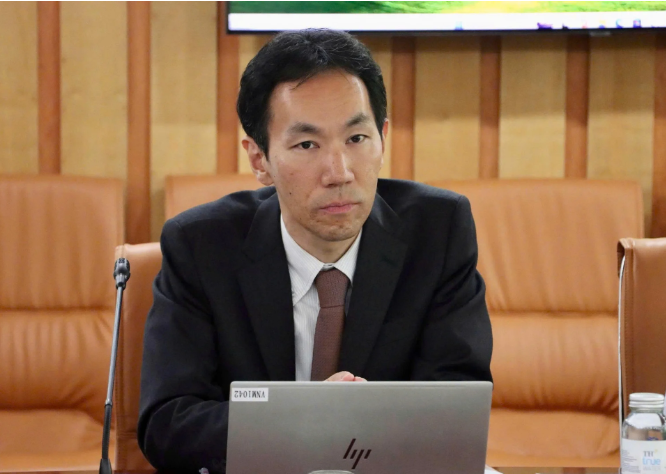
The two sides agreed to hold technical discussions soon on procedures for extending the loan agreement. At the same time, documentation completion and contractor capacity updates will be carried out in parallel with the appraisal process.
The Ben Tre Water Management Project (JICA3) is a key irrigation infrastructure project in the Mekong Delta, implemented in the former Ben Tre Province (now part of Vinh Long Province). The project’s overarching objective is to control saltwater intrusion, regulate water resources, and protect agricultural production and local livelihoods from the increasingly severe impacts of climate change.
The sluice gate system under the JICA3 Project is designed on a large scale, suitable for the hydrological conditions of the estuary and coastal areas. Specifically, the An Hoa sluice has the largest width at 120 meters (4 openings); the Thu Cuu, Cai Quao, and Vam Thom sluices are 90 meters wide (3 openings); the Ben Tre sluice is 70 meters wide (2 openings); and the smallest structures are the Tan Phu and Ben Ro sluices, each with a single opening of 20 meters.
Exchanging experience in the application of advanced Japanese science and technology
At the invitation of JICA, Deputy Minister Nguyen Hoang Hiep will lead a delegation from the Ministry of Agriculture and Environment on a working visit to Japan from April 22 - 28.
According to the tentative itinerary, the delegation will hold high-level working sessions with Japan’s Ministry of Land, Infrastructure, Transport and Tourism (MLIT), as well as talks with the JICA President at its headquarters, with the aim of further strengthening bilateral relations.
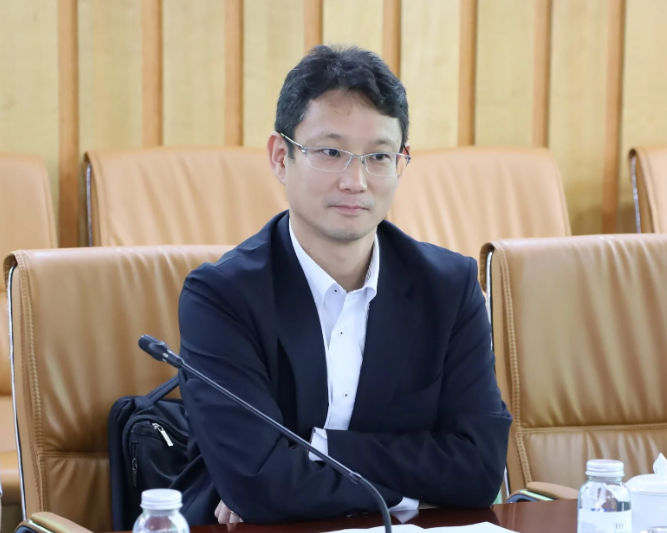
At the meeting, Mr. Kenichi Kobayashi said that both sides will focus on exchanging and sharing experience in the application of science and technology in disaster prevention and response; studying river basin management models, dam operation, and systems for flash flood and landslide prevention (SABO dams). They will also visit modern facilities such as disaster-prevention parks, urban underground drainage systems, and integrated flood-control systems. These experiences are expected to support Viet Nam in improving policies and enhancing disaster risk management capacity.
Highly appreciating the agenda, Deputy Minister Nguyen Hoang Hiep expressed his confidence that this is a practical opportunity to access advanced models from Japan and apply them appropriately to Viet Nam’s conditions, especially in the context of increasingly complex natural disasters.
Phuong Linh