Viet Nam is a key ODA partner of South Korea
Agricultural cooperation between Vietnam and South Korea is being advanced in a complementary direction, expanding markets, enhancing technology transfer, and promoting sustainable rural development.
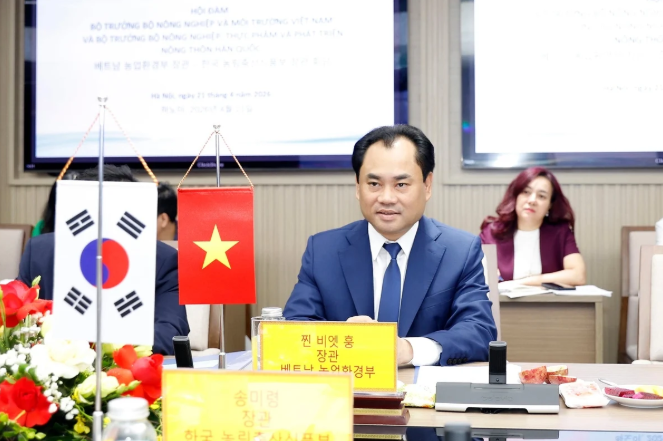
On April 21, Minister of Agriculture and Environment Trinh Viet Hung held a bilateral meeting with Minister of Agriculture, Food and Rural Affairs of South Korea, Song Miryung, on the occasion of the state visit to Viet Nam by South Korean President Lee Jae Myung.
At the meeting, Minister Trinh Viet Hung expressed his pleasure in welcoming the delegation and emphasized that the meeting took place amid the continually strengthening and flourishing diplomatic relations between Viet Nam and South Korea.
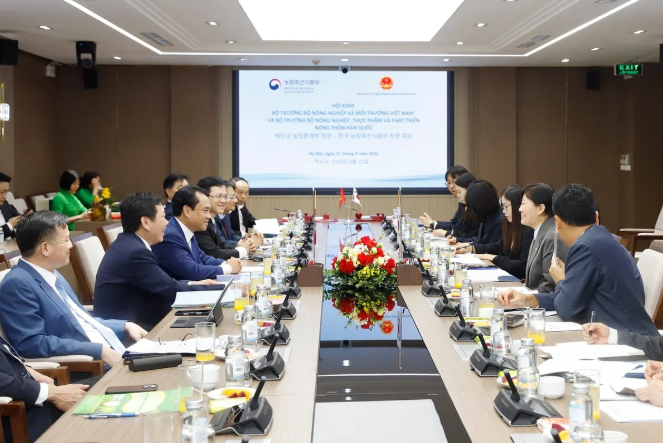
Expanding complementary agricultural markets
Minister Trinh Viet Hung expressed his appreciation and gratitude to Minister Song Miryung for her continued attention and support for practical cooperation programs and projects in the agricultural sector between the two countries.
Emphasizing the significance of these cooperation programs, the Minister noted that such projects have helped Viet Nam gradually develop smart agriculture and high-tech agriculture, adapt to climate change, and thereby further deepen the Comprehensive Strategic Partnership between the two nations. At the same time, the Ministry of Agriculture and Environment is committed to effectively utilizing the outcomes of cooperation, ensuring long-term and tangible benefits for the people.
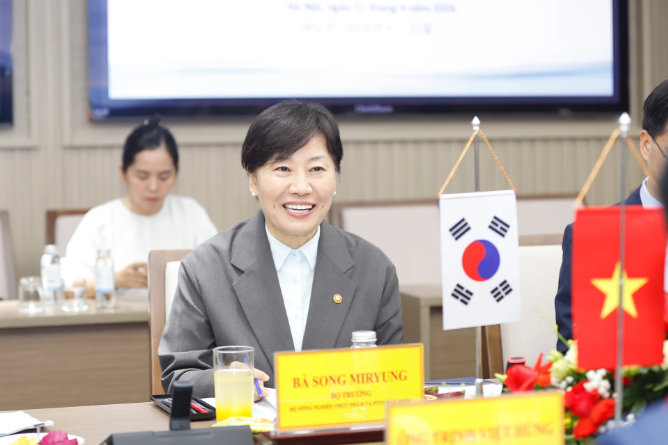
On the South Korean side, Minister Song Miryung congratulated Minister Trinh Viet Hung on his new position and spoke highly of the potential for agricultural cooperation between the two countries. She affirmed that Viet Nam is an important ODA partner of South Korea; South Korea currently ranks second in ODA provision and is the third most dynamic partner in trade, investment, and labor cooperation in Viet Nam.
According to Minister Song Miryung, differences in climate conditions mean that the two countries’ agricultural products do not directly compete but instead complement each other, helping diversify supply in each market.
To promote agricultural trade, the two ministers discussed the possibility of opening the South Korean market to Vietnamese lychee and passion fruit, while also advancing exports of Korea’s Unshu mandarins and kiwis to Viet Nam. Minister Song Miryung also acknowledged Viet Nam’s decision to extend the import period for Korean melons until June in order to take advantage of the high-quality harvest season.
Minister Trinh Viet Hung affirmed that Viet Nam will promptly address issues and create favorable conditions for bilateral trade, while emphasizing the complementary potential between temperate and tropical fruits of the two countries.
He also proposed that South Korea support human resource training and send experts to Viet Nam to share experience in developing temperate crops, winter vegetables, and high-quality fruits. Viet Nam is also interested in technological cooperation in deep processing of medicinal products such as cinnamon and star anise.
Recognizing South Korea’s strengths in producing high-value products suitable to Viet Nam’s natural conditions, Minister Trinh Viet Hung noted that there remains significant room for cooperation. On that basis, Minister Song Miryung proposed developing a cooperation framework to advance agricultural products, medicinal materials, and modern agricultural equipment.
The two sides also discussed establishing a joint coordination mechanism involving government agencies, businesses, and research institutes to enhance the effectiveness of cooperation projects. Notably, Minister Trinh Viet Hung suggested promoting joint research on African swine fever vaccines, an area where South Korea has considerable experience. Minister Song Miryung expressed her agreement and affirmed her readiness to collaborate in the near future.
In addition, Viet Nam proposed that South Korea accelerate quarantine procedures and open market access for Vietnamese pork and South Korean beef.
Sharing experience in modern rural development
In the field of rural development, Minister Song Miryung shared South Korea’s experience in building modern rural areas - one of the country’s key policies to balance development between urban and rural regions. She also expressed a desire to strengthen cooperation at the local level and to develop and replicate successful pilot models.
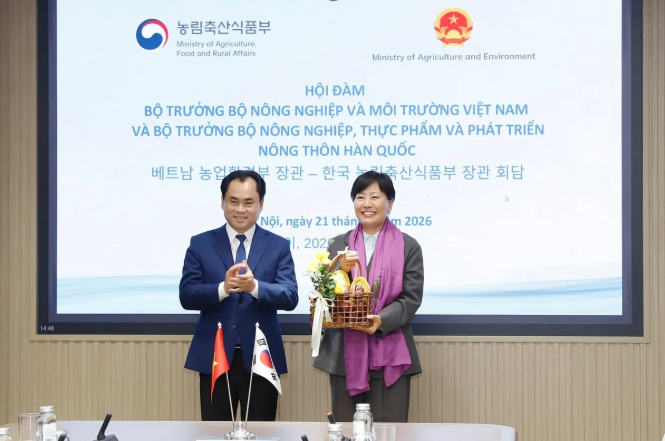
Minister Trinh Viet Hung stated that Viet Nam places special importance on improving both the material and spiritual well-being of its people through the implementation of the National Target Programs on New Rural Development and Sustainable Poverty Reduction. Learning from international experience, including that of South Korea, will help refine policies and enhance the effectiveness of these programs.
At the conclusion of the meeting, both ministers highly appreciated the outcomes achieved and agreed that the meeting reached strong consensus on many important areas of cooperation in agriculture, food, and rural development.
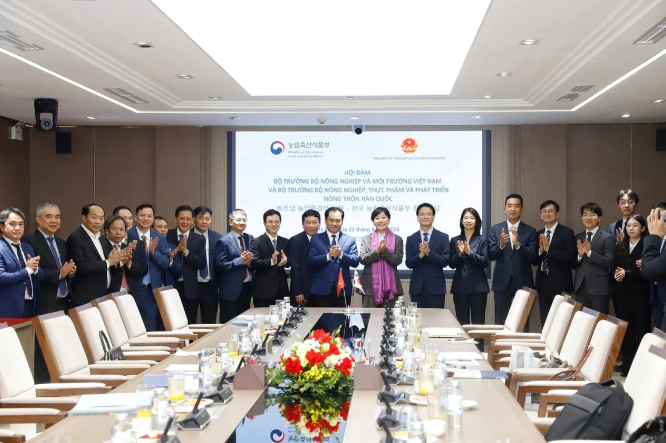
Minister Trinh Viet Hung reaffirmed Viet Nam’s steadfast commitment to developing modern, sustainable agriculture and building advanced rural areas, while expressing confidence that cooperation between the two ministries and the two countries will continue to achieve new accomplishments and bring tangible benefits to their people.
Both sides also agreed to maintain regular exchanges, strengthen political trust, and closely coordinate the implementation of cooperative initiatives, thereby deepening the Viet Nam-South Korea relationship in a more substantive and effective manner, serving the business communities and people of both countries.
Kieu Chi - Khuong Trung