Developing Trang An - Tam Coc - Bich Dong into a global destination
Deputy Prime Minister Pham Thi Thanh Tra signed Decision No. 705/QD-TTg on April 21, 2026, approving the conservation master plan for the Trang An - Tam Coc - Bich Dong scenic landscape.
The planning scope encompasses the entire Special National Scenic Landscape of Trang An - Tam Coc - Bich Dong (part of the Trang An Landscape Complex World Cultural and Natural Heritage site), covering a total area of 9,663 hectares.
Conserving the outstanding values of the heritage
The plan's objective is to further research, identify, supplement and clarify the values of the Trang An - Tam Coc - Bich Dong scenic landscape and the Trang An Landscape Complex. It seeks to combine heritage conservation with sustainable development, transforming the area into a premier tourist destination domestically and internationally, while acting as a driving force for tourism development in Ninh Binh province and the Northern Delta region.
The master plan aims to preserve the outstanding universal values of the Trang An Landscape Complex; materialize Ninh Binh province's strategies, planning and development orientations; fulfill Vietnam's commitments to UNESCO regarding heritage conservation and promotion.
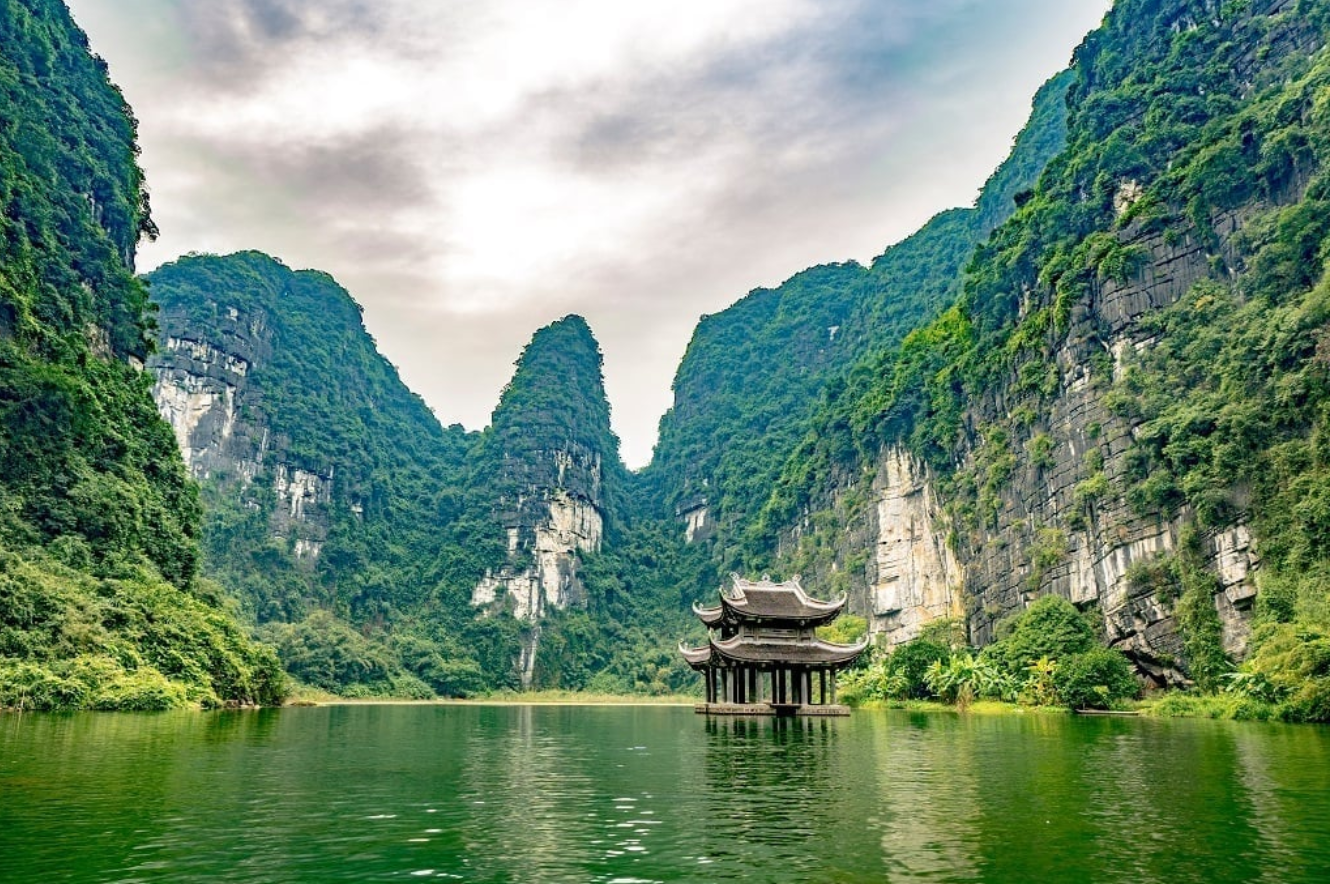
Key tasks include determining the scale, boundaries, and protection zones of the heritage site; defining functions and land use criteria for different areas; and organizing space and technical infrastructure systems appropriate for various conservation phases. It also involves establishing regulations and solutions to manage and control the architectural and landscape planning space, along with standard heritage protection measures.
The plan creates a legal framework to protect and promote component relic sites. It facilitates the formulation, appraisal, approval, and implementation of sub-projects for the preservation, restoration, and promotion of the heritage in accordance with the approved plan. Furthermore, it focuses on building mechanisms and policies to attract investment and empower the community in preserving, restoring, and promoting heritage values.
The planning scope encompasses: functional zoning; orientations and solutions for heritage preservation and restoration; spatial planning for conservation; orientations for geological landscape conservation; intangible cultural heritage conservation; tourism development strategies; technical infrastructure planning; and implementation mechanisms.
Ensuring harmony between preserving outstanding values and heritage economy evelopment
The plan mandates that preservation and restoration efforts must respect the principle of harmonizing the preservation of the site's outstanding universal values with the development of the heritage economy. This includes safeguarding community interests and livelihoods, and upgrading social, technical, and tourism infrastructure.
All conservation and restoration activities must maintain original elements, ensuring the integrity of the Trang An Landscape Complex's outstanding universal values.
Heritage management must focus on strictly controlling carrying capacity, tourism activities, and construction to restore the environment, maintain the landscape, and ensure long-term adaptability. Specifically, natural areas must be strictly zoned and clearly demarcated. Meanwhile, tourism development zones should prioritize ecological, cultural, and rural experiences with nature-harmonized architecture. For traditional villages and intertwined conservation areas, it is necessary to preserve the current landscape and intangible cultural values while strictly controlling the conversion of agricultural land to prevent spontaneous urbanization.
Conserving traditional craft villages and festivals
The master plan also guides the conservation and promotion of traditional craft villages. Villages such as Ninh Van (stone carving), Ninh Hai (lace embroidery), Gia Lac (wine brewing) and Ninh Xuan (floriculture and ornamental plants) require a roadmap for preservation and restoration linked to experiential tourism.
Concurrently, traditional festivals reflecting the historical traditions and cultural life of the ancient capital's residents will be preserved. These include: The water procession at the Hoa Lu Festival; Kha Luong Village Festival; Hanh Cung Village Festival; Tran Temple Festival (Noi Lam); Thai Vi Temple Festival; Bai Dinh Festival; Shennong Offering Ceremony.
Furthermore, the plan emphasizes preserving indigenous knowledge associated with local traditions: the Sinh Duoc village festival, natural medicinal production, the worship of Saint Nguyen Minh Khong, the veneration of To Hien Thanh and Ly Dynasty folklore.
Developing new tourism models
Given the abundant potential for cultural and natural heritage, the master plan requires developing specific tourism products that support the conservation of original values, alongside creating new tourism offerings.
Regarding specialized tourism, the focus is on developing products tied to heritage, festivals, sightseeing, and exploration of local lifestyles and cuisine, thereby effectively linking tourism with the cultural industry.
For eco-tourism and new services, leveraging natural resources will diversify products to meet emerging market trends. These encompass: Eco-tourism (boating, trekking, nature photography); cultural - historical - archaeological tourism (ancient capital and archaeological site tours); ultural, religious, and spiritual tourism (pilgrimage tours); sports and adventure tourism (mountain climbing, cycling, rowing); Agricultural and craft village tourism (embroidery and pottery village experiences, farmstays); creative - tech tourism (virtual reality tours, smart apps, art centers); medical, wellness and aesthetic tourism; MICE tourism (Meetings, Incentives, Conferences and Exhibitions); Educational tourism.
Thanh Ngoc