WWF Viet Nam, Dak Lak partner on conservation and sustainability
On May 7, WWF-Viet Nam and the Dak Lak Provincial People’s Committee signed a cooperation agreement aimed at strengthening biodiversity conservation and promoting sustainable development across the province.
Dak Lak is widely recognized as one of Viet Nam’s most ecologically valuable regions. It is home to unique dry dipterocarp forests and the country’s largest population of Asian elephants, primarily found in Yok Don National Park. The area also forms part of a transboundary landscape with Cambodia, offering significant potential for restoring large wildlife populations and safeguarding biodiversity.
Under the agreement, the two sides will collaborate across three key areas: conserving biodiversity and critical ecosystems; reducing plastic waste and protecting the environment; and advancing sustainable agriculture, forestry, and fisheries linked to nature conservation.
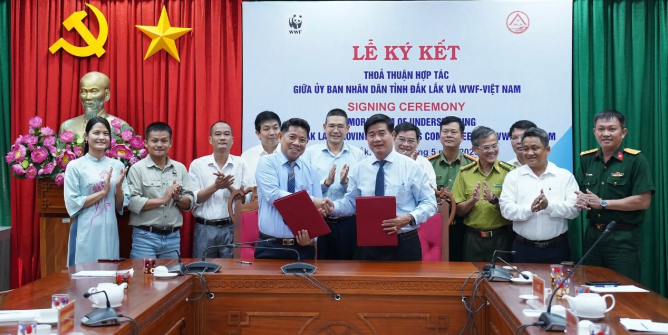
At the signing ceremony, Mr.Nguyen Thien Van, Vice Chairman of the Dak Lak People’s Committee, emphasized that the partnership would deepen ties between the province and WWF-Viet Nam, while enhancing coordination and mobilizing technical expertise, experience, and resources for conservation, environmental protection, and the development of sustainable agri-forestry and fisheries systems.
Mr.Vu Van Ngoc Thinh, representing WWF-Viet Nam, described the agreement as the starting point for a long-term partnership. He highlighted a strong commitment to mobilizing international resources, ensuring transparency in implementation, and working closely with local authorities - particularly in elephant conservation.
In the coming years, joint efforts will focus on maintaining and growing wild elephant populations by improving habitats and reducing human-elephant conflict. Ecosystem restoration programs will also be rolled out, including pilot initiatives to breed and reintroduce prey species, with the long-term goal of restoring larger wildlife populations.
The partnership will further expand cross-border cooperation with Mondulkiri province in Cambodia on biodiversity conservation, while promoting sustainable agricultural and aquaculture models connected to businesses and green finance.
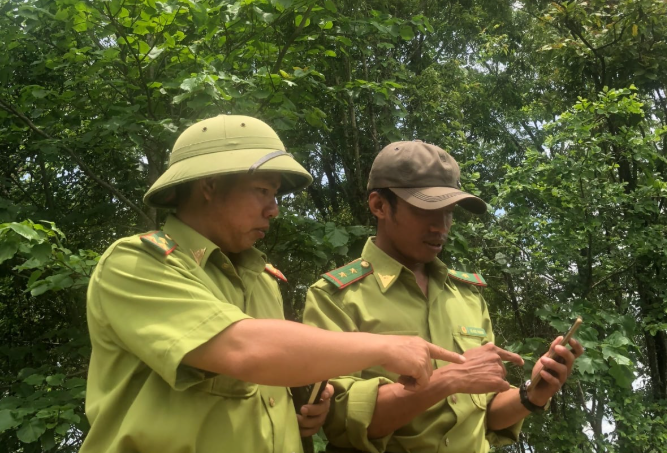
On the environmental front, initiatives to reduce plastic waste will be stepped up, including pilot schemes to collect waste generated from aquaculture and production activities.
The agreement is expected to lay the groundwork for Dak Lak to become a model for balancing nature conservation with socio-economic development, helping protect one of Southeast Asia’s most important ecological landscapes.
Minh Hanh