FAO, MAE to revive the Red River - Thai Binh ecosystem
A new project has been launched to enhance water security, restore ecosystems, conserve biodiversity, and improve livelihoods in the Red River - Thai Binh River Basin.
The Department of Water Resources Management under the Ministry of Agriculture and Environment, in coordination with the Food and Agriculture Organization of the United Nations (FAO) and the International Centre for Environmental Management (ICEM), recently organized a consultation workshop to launch the project “Enhancing Water Security, Biodiversity and Resilience of Livelihoods through Integrated Water Resources Management and Ecosystem Restoration in the Red River - Thai Binh River Basin.”
According to Chau Tran Vinh, Director General of the Department of Water Resources Management, the basin is currently facing numerous pressures, including water pollution, forest and ecosystem degradation, increasing disaster risks, and the lack of integrated, cross-sectoral, and interregional management mechanisms.
Therefore, he expressed hope that the project would generate significant global environmental benefits, including reducing more than 10.6 million tons of CO₂ equivalent emissions, while enhancing resilience and improving livelihoods for communities throughout the Red River - Thai Binh River Basin.

From an international perspective, Vinod Ahuja, Representative of FAO in Viet Nam, assessed that the Red River - Thai Binh River Basin is one of Viet Nam’s most important ecological and socio-economic regions, supporting the livelihoods of millions of people through agriculture, fisheries, forestry, industry, and diverse ecosystems.
The basin is rich in biodiversity and hosts many globally significant ecosystems, including forests, wetlands, and protected areas, all of which play an essential role in maintaining environmental balance. However, the region is also facing mounting pressures. Climate change is increasing the frequency and intensity of floods, droughts, flash floods, and extreme heatwaves, while land degradation and ecosystem fragmentation continue to weaken natural resilience.

In addition, unsustainable land and water use practices, rapid urbanization, and increasing competition for water resources are placing further pressure on already vulnerable systems. “This is not only an environmental challenge, but also a challenge of resilience, governance, and ultimately, development,” Vinod Ahuja remarked.
According to the FAO representative, the project “Enhancing Water Security, Biodiversity and Resilience of Livelihoods through Integrated Water Resources Management and Ecosystem Restoration in the Red River - Thai Binh River Basin” was designed with a transformative vision, viewing ecosystem restoration and strengthened water governance not as isolated environmental objectives, but as foundations for long-term resilience, sustainable livelihoods, and future development.
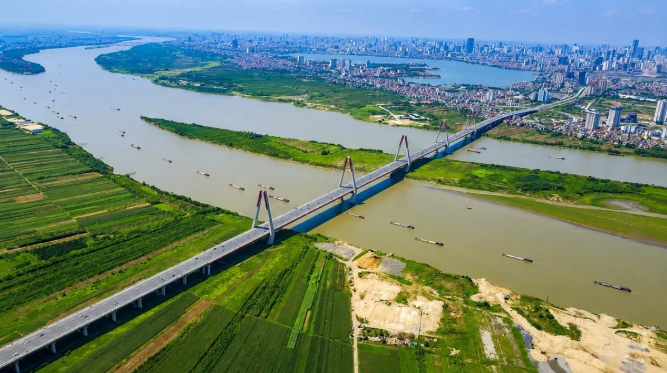
The project will focus on promoting integrated water resources management and ecosystem restoration solutions throughout the Red River - Thai Binh River Basin, aiming to enhance water security, reverse ecosystem degradation, strengthen biodiversity conservation, and improve the resilience of vulnerable communities.
Notably, the project emphasizes the role of local communities, sustainable landscape management, and nature-based solutions to link environmental restoration with economic development opportunities, rather than focusing solely on conventional conservation measures.
According to the Department of Water Resources Management, the project consists of four components: promoting water security through the development of a favorable legal framework for integrated ecosystem restoration; studying and proposing incentive mechanisms for integrated water resources management and ecosystem restoration to stimulate investment, create jobs, and ensure livelihoods for local communities; strengthening capacity and knowledge dissemination; and monitoring and evaluation.
Nguyen Thuy