Cuc Phuong National Park and SVW to rewild 60 deer
Around 60 deer will be gradually reintroduced into the wild by Cuc Phuong National Park and Save Vietnam's Wildlife (SVW) under a large-scale rewilding program set to begin in the coming period.
Cuc Phuong National Park is implementing a large-scale wildlife rewilding program in its core zone, in collaboration with and with technical support from Save Vietnam's Wildlife (SVW).
The initiative is a key component of the park's Rewilding Action Plan for 2026-2035, with a vision to 2050. It also contributes to implementing Viet Nam's National Biodiversity Strategy and fulfilling the country's commitments to nature conservation.
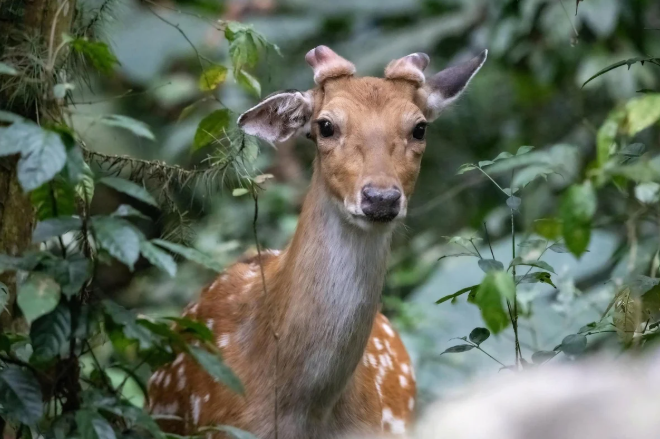
The program marks a new milestone in modern conservation in Viet Nam, shifting the focus from rescuing and protecting individual animals to restoring wild populations, rebuilding ecological functions, and enhancing the integrity of forest ecosystems. Guided by the principle of "Nature leads, humans support", Cuc Phuong aims to return wildlife to its natural habitat and gradually restore ecological links that have been weakened over decades.
Mr. Nguyen Van Chinh, Director of Cuc Phuong National Park, said: "The ultimate goal of conservation is not merely to rescue or keep animals in semi-wild conditions, but to return them to nature, where they can fully perform their ecological roles. Rewilding sika deer and sambar deer is the first step in restoring key ecological links that have declined over many years".
According to Mr. Chinh, the program is more than a simple wildlife release. It represents the first concrete step in the park's long-term strategy for ecosystem restoration.
Years of research and monitoring have shown that populations of large herbivores in Cuc Phuong's limestone forest ecosystem have declined significantly, affecting seed dispersal, forest regeneration, and overall ecological balance.
In the initial phase, the park has selected sika deer (Cervus nippon) and sambar deer (Rusa unicolor) as priority species for rewilding. Both are native species that play vital roles in maintaining the structure and ecological processes of forest ecosystems.
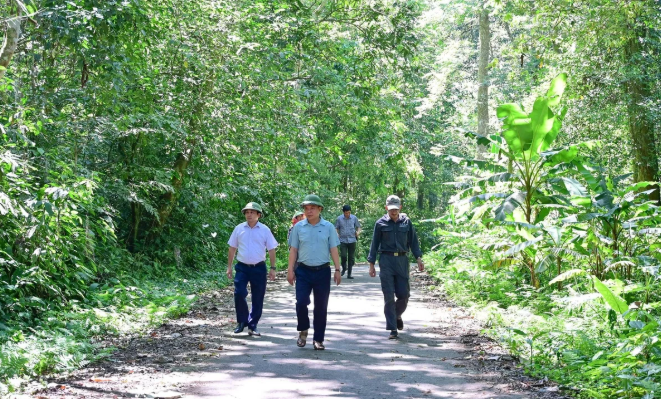
Under the plan, approximately 60 deer will be released in phases. The first release is scheduled for June 29, 2026, involving 19 animals - nine sika deer and 10 sambar deer. To improve their ability to adapt and survive after release, the Cuc Phuong Rescue, Conservation and Species Development Center has implemented a pre-release behavioral training program.
The selected rewilding site is Bong Center, located deep within the park's core zone. The area features suitable evergreen limestone forest habitat, year-round water sources, abundant natural food, and minimal human disturbance, making it well suited for post-release monitoring and protection.
Alongside the rewilding effort, the park is implementing a range of habitat protection, management, and monitoring measures to help the animals adapt and thrive in the wild.
Forest rangers and dedicated patrol teams will continue strengthening patrols, removing illegal snares, preventing wildlife crimes, and applying the SMART monitoring system to improve forest management, patrol operations, and conservation data analysis.
Following their release, the animals will be continuously monitored using GPS collars, VHF transmitters, camera traps, and other advanced biological monitoring methods. Researchers will assess their adaptation, movement patterns, foraging behavior, health, reproduction, and overall integration into the natural environment.
Tung Dinh