Shifting from a project mindset to shared ownership of nature-based models
The lasting value of an international cooperation project lies not in its short-term investments, but in the capacity, knowledge, and technologies that remain with local communities long after the project has ended.
Building lasting capacity rather than measuring grant value
When discussing international cooperation programmes, attention often focuses on the size of grants or the volume of funding flowing into localities. In reality, however, the financial resources provided by these programmes are relatively modest compared with Viet Nam's current investment capacity.
The true value of international cooperation for the Mekong Delta lies at a much deeper level. It offers this strategically important region an opportunity to accelerate access to advanced technologies, modern governance approaches, and sustainable development models that have already been successfully tested around the world.
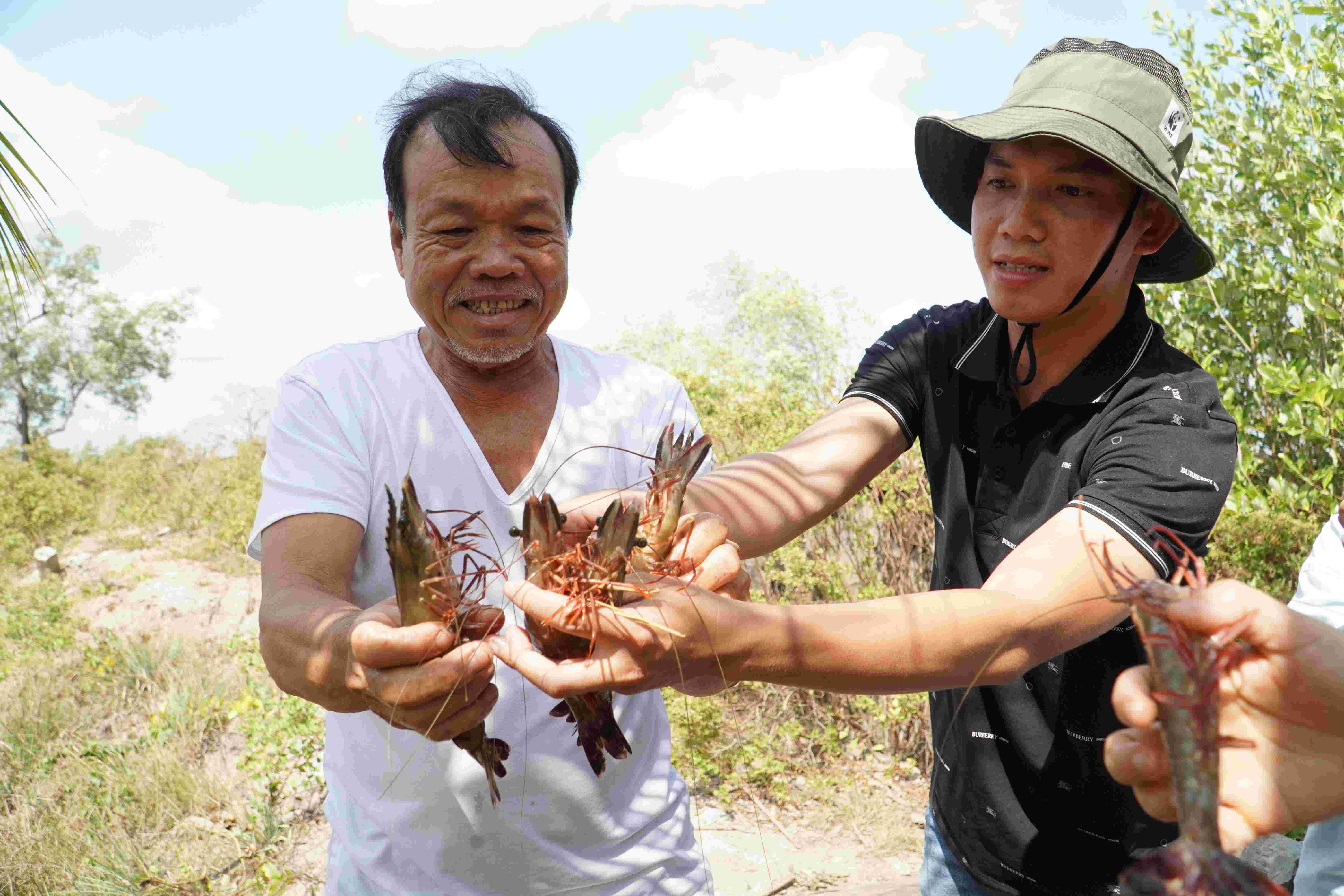
With this foundation of knowledge, provinces across the Mekong Delta can speed up climate adaptation efforts within local communities. Instead of spending years developing, testing, and refining solutions from scratch, local authorities are able to build upon proven experiences and respond more effectively to climate-related challenges.
Reflecting on this issue, Mr. Huynh Quoc Tinh, Director of the Sustainable Agriculture and Food Programme at WWF-Viet Nam, stressed that the greatest legacy of an international cooperation project is not the infrastructure or activities implemented during its lifetime, but what remains after the project comes to an end.
That lasting legacy includes a stronger cadre of local officials equipped with climate adaptation knowledge and practical skills, as well as improved data systems, technologies, management tools, and effective coordination mechanisms. More importantly, successful livelihood models become integrated into local development planning and are connected with businesses, green production standards, and international financing opportunities. Sustainable value, therefore, is measured not by the size of a grant but by stronger local capacity and the integration of proven models into mainstream production systems.
_829cf1e996.JPG)
Designing for scalability through long-term ownership
According to Mr. Huynh Quoc Tinh, ensuring that the benefits of international cooperation programmes continue beyond the funding period requires a fundamental shift in mindset. Project management teams and local authorities must move away from viewing initiatives as short-term projects and instead adopt a systems approach built on shared local ownership.
To achieve this, projects should be designed from the outset around the genuine needs of local communities and aligned with each province's socio-economic development priorities. Local governments must see themselves not merely as passive recipients of financial assistance, but as the long-term owners and operators of these models. Clearly identifying the roles, incentives, and interests of all stakeholders - including vulnerable groups - is essential to ensuring that projects become deeply embedded within local communities.
Mr. Huynh Quoc Tinh also emphasised that establishing follow-on financing mechanisms is another critical factor in sustaining project outcomes. Such funding can be mobilised through various channels, including public budgets, private-sector investment, cooperatives, green credit facilities, and appropriate market-based mechanisms. These resources can help maintain and expand proven models such as the mangrove-shrimp farming system in Ca Mau Province and the rice-shrimp rotation model in Can Tho.
_31e76f7fa7.JPG)
At the same time, project outcomes should be institutionalised by incorporating them into local development plans, technical guidelines, and policy frameworks, while operational responsibility should be transferred to capable local institutions, such as specialised government agencies, professional associations, or community organisations, to ensure their continued implementation.
International cooperation has evolved considerably in recent years. The era of demonstration projects that end once external funding ceases is coming to a close. From the very beginning, every project should be designed with scalability in mind, supported by strong local leadership and accompanied by a viable business model.
Alongside traditional areas of cooperation such as wetland restoration, mangrove conservation, and water resource management, the Mekong Delta should proactively expand partnerships into emerging fields, including climate-resilient infrastructure, green industries, eco-cities, and the circular economy.
Today, the greatest opportunity for Viet Nam's rice bowl lies in forging stronger connections among science, policymaking, businesses, and green finance. Such collaboration will provide a solid foundation for protecting natural resources while driving a prosperous and sustainable future for the region.
Kim Anh - Kieu Trang