Can Tho to host 2nd Viet Nam International Festival of Rice Industry
The 2nd Viet Nam International Festival of Rice Industry will showcase new development models for the rice sector, ranging from low-emission farming and mechanization to digital transformation.
The 2nd Viet Nam International Festival of Rice Industry, scheduled for late November in Can Tho, will go beyond promoting rice products. It is designed to showcase the country's new development models across the entire rice value chain, from low-emission farming, mechanization and digital transformation to processing and exports.
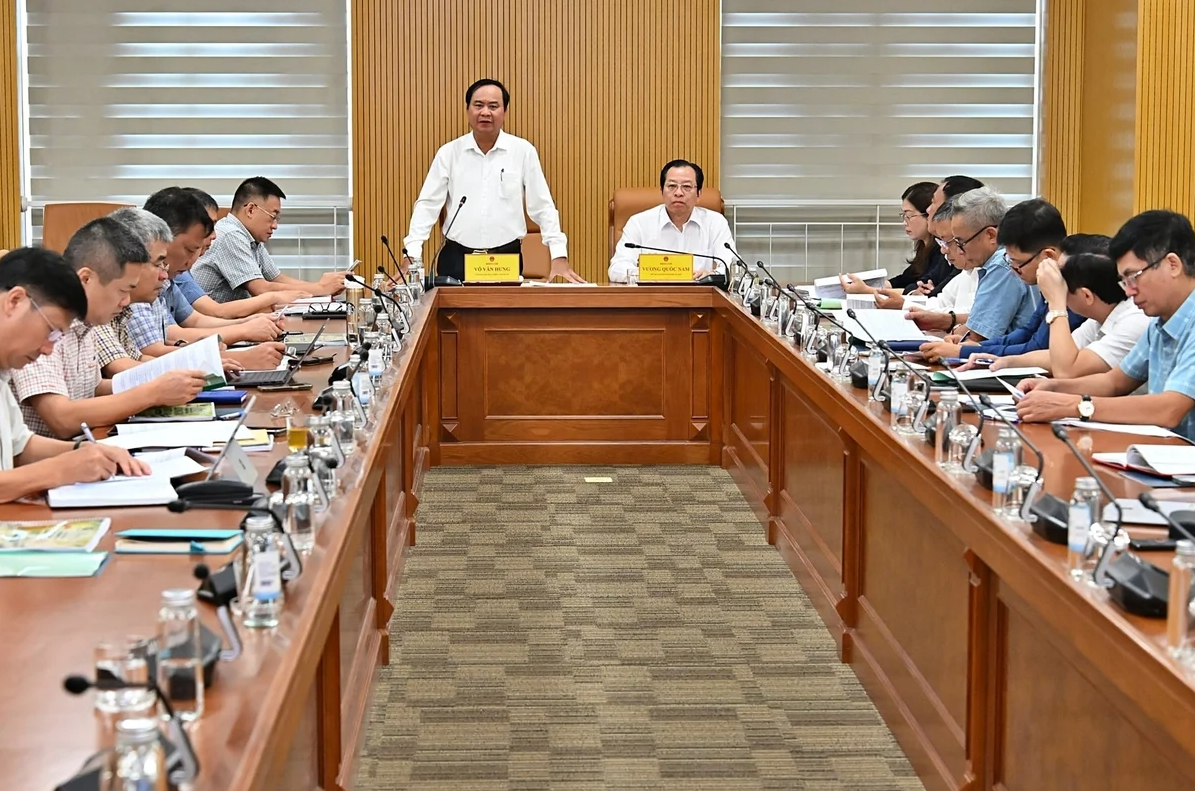
If the first festival mainly introduced Viet Nam's rice industry, the second edition will adopt a much broader approach. At a working session with the Ministry of Agriculture and Environment on July 31, Mr. Vuong Quoc Nam, Vice Chairman of the Can Tho People's Committee, said that most exhibition areas would be organized around the rice value chain.
Besides famous rice varieties such as ST24 and ST25 and OCOP products, visitors will be able to explore mechanized rice fields, digital farming models, integrated rice-shrimp-fruit production systems, and modern equipment for seeding, harvesting, drying, milling and rice sorting. The exhibition will also feature low-emission solutions and digital technologies for rice production.
A major highlight will be the exhibition "The Rice Journey: From the Past to the Future", which will recreate the evolution of rice cultivation in Viet Nam, from traditional manual farming to modern high-tech agriculture. According to the event's consulting team, the exhibition is intended to tell the story of how the country's rice industry has evolved to meet changing market demands.
A series of thematic seminars will also be held, focusing on issues shaping the future of the rice sector, including digital technologies, greenhouse gas emission reduction, branding, local marketing and development strategies for the Mekong Delta rice industry in the new context.
Deputy Minister Vo Van Hung welcomed Can Tho's approach, saying the festival should reflect a new direction for agricultural development that focuses not only on improving quality but also on increasing product value. He added that the event would be an opportunity to introduce Viet Nam's outstanding agricultural models, especially the One Million Hectares of High-Quality, Low-Emission Rice Project now being implemented across the Mekong Delta.
Building on the success of the first international festival in 2023, the organizers hope this year's event will provide more practical activities that help farmers solve problems they face in the field.
"One of the most common suggestions from participants was that farmers need more practical activities rather than simply visiting exhibition booths," a representative of the consulting team said. In response, the organizers have proposed establishing an on-site consultation area where farmers can bring their production challenges directly to scientists and businesses. The idea came from feedback collected after the previous festival, aimed at helping participants "see what is available and find what they need."
This vision is also reflected in the exhibition design. Instead of displaying products alone, the exhibition will combine real-life models with 3D mapping technology to create a more engaging experience. A dedicated high-tech zone will introduce artificial intelligence, blockchain, automation, next-generation agricultural machinery and other advanced solutions for rice production.
"The value of the festival must be clearly demonstrated rather than diluted through too many activities," he stressed, while calling for clear responsibilities to be assigned to each participating agency to avoid overlap.
Under the proposed plan, the Department of Cooperatives and Rural Development and the National Agricultural Extension Center will oversee the technology exhibition and production model displays. The thematic seminars will be jointly prepared by the Viet Nam Academy of Agricultural Sciences (VAAS), the Institute of Strategy and Policy on Agriculture and Environment (ISPAE), and the Department of Science and Technology.
Mr. Vuong Quoc Nam thanked the Ministry of Agriculture and Environment for its support, noting that agriculture continues to play an important role in Can Tho's economy despite the city's status as a centrally governed municipality. As the city's GRDP growth in the first half of the year fell short of the targeted double-digit rate, Can Tho is looking for new sources of growth, with agriculture identified as one of its key drivers.
For this reason, the city aims to turn the upcoming Rice Festival into a flagship event that promotes the Mekong Delta's position as Viet Nam's rice production hub while strengthening links among businesses, local authorities and international markets.
The 2nd Viet Nam International Festival of Rice Industry is scheduled to take place in Can Tho from November 22-26, featuring around 500-600 exhibition booths together with live demonstrations, thematic seminars and specialized exhibitions at multiple venues across the city.
Bao Thang