Viet Nam, Uganda sign sustainable coffee development action plan
A cooperation program supporting low-emission coffee farming practices, strengthening traceability, and developing markets under the framework of South–South cooperation.
The Ministry of Agriculture and Environment of Vietnam and Uganda’s Ministry of Agriculture, Animal Industry and Fisheries, in collaboration with the Sustainable Trade Initiative (IDH), held the Viet Nam - Uganda Dialogue Meeting under the theme “Promoting sustainable coffee sector development within the South-South cooperation.”
The dialogue was attended by representatives from agencies under Viet Nam’s Ministry of Agriculture and Environment, Uganda’s Ministry of Agriculture, Animal Industry and Fisheries, the Embassy of the Netherlands, the State Secretariat for Economic Affairs of Switzerland (SECO), the Viet Nam Coffee-Cocoa Association (VICOFA), international organizations, and numerous companies across the coffee value chain, including JDE Peet’s, Simexco, Intimex, and Tuan Loc.
Climate-resilient coffee program launched
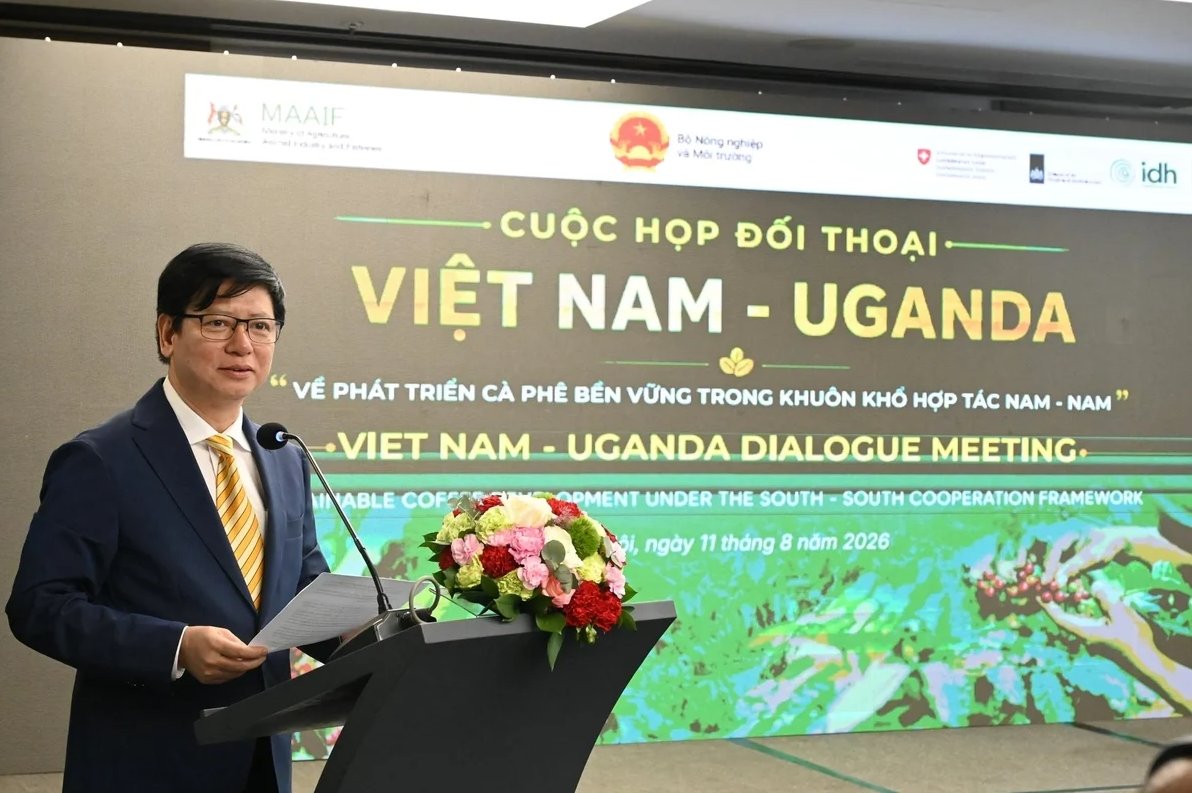
According to Pham Ngoc Mau, Deputy Director General of the International Cooperation Department, South-South cooperation carries special significance as a mechanism for countries to share practical experience, address common challenges, and jointly seek pathways toward sustainable agricultural development.
For Viet Nam and Uganda, coffee could become a flagship area of cooperation.
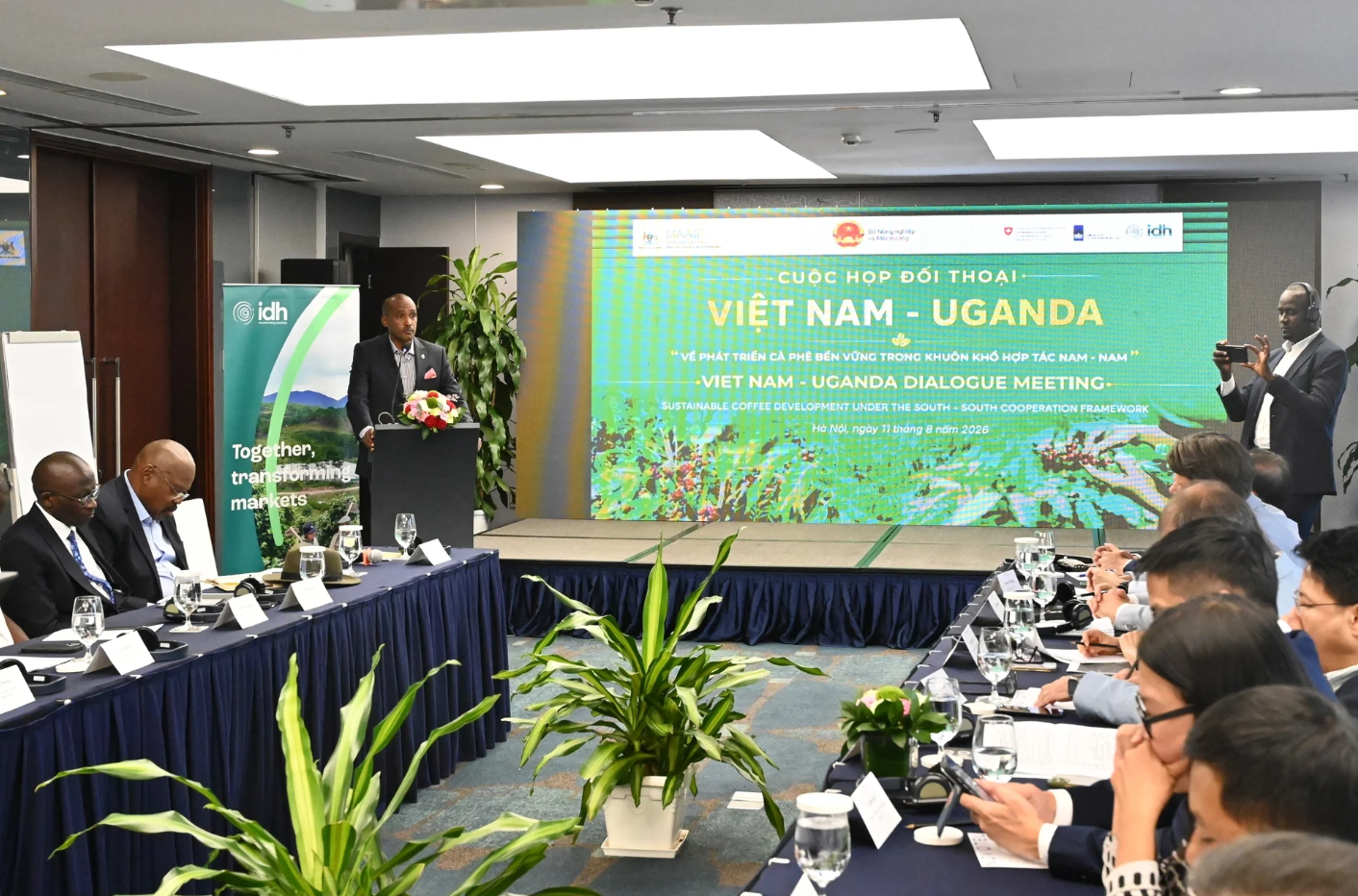
On the Ugandan side, Minister of Agriculture, Animal Industry and Fisheries Frank Kajiji Tsungwebaze said Uganda is keen to learn from Viet Nam’s extensive experience in improving production systems, irrigation organization, farming techniques, processing, quality management, market information, and risk management.
Coffee currently plays an important role in Uganda’s economy, accounting for around 24% of the country’s foreign exchange earnings. Coffee is grown in most districts across the country, with 4 million farmers involved in production, about 80% of whom are smallholder farmers.
In the 2025/2026 crop year, Uganda’s coffee production is estimated at 9.5 million 60-kg bags, while exports are expected to reach around 8.3 million bags. Uganda aims to increase coffee production to 20 million bags by 2030 under the Coffee Development Roadmap issued by President Yoweri Kaguta Museveni.
First model under South-South cooperation
At the meeting, IDH introduced the Resilient Coffee Program (RCP), an initiative aimed at transitioning to regenerative, low-emission and climate-resilient coffee production practices while strengthening product traceability.
According to Daan Wesing, CEO of IDH, the signing of a tripartite cooperation agreement among the South-South Cooperation Working Group in Agriculture, the Uganda Coffee Development Authority, and IDH under the Action Plan for Sustainable Coffee Sector Development will serve as a concrete model of South-South cooperation.
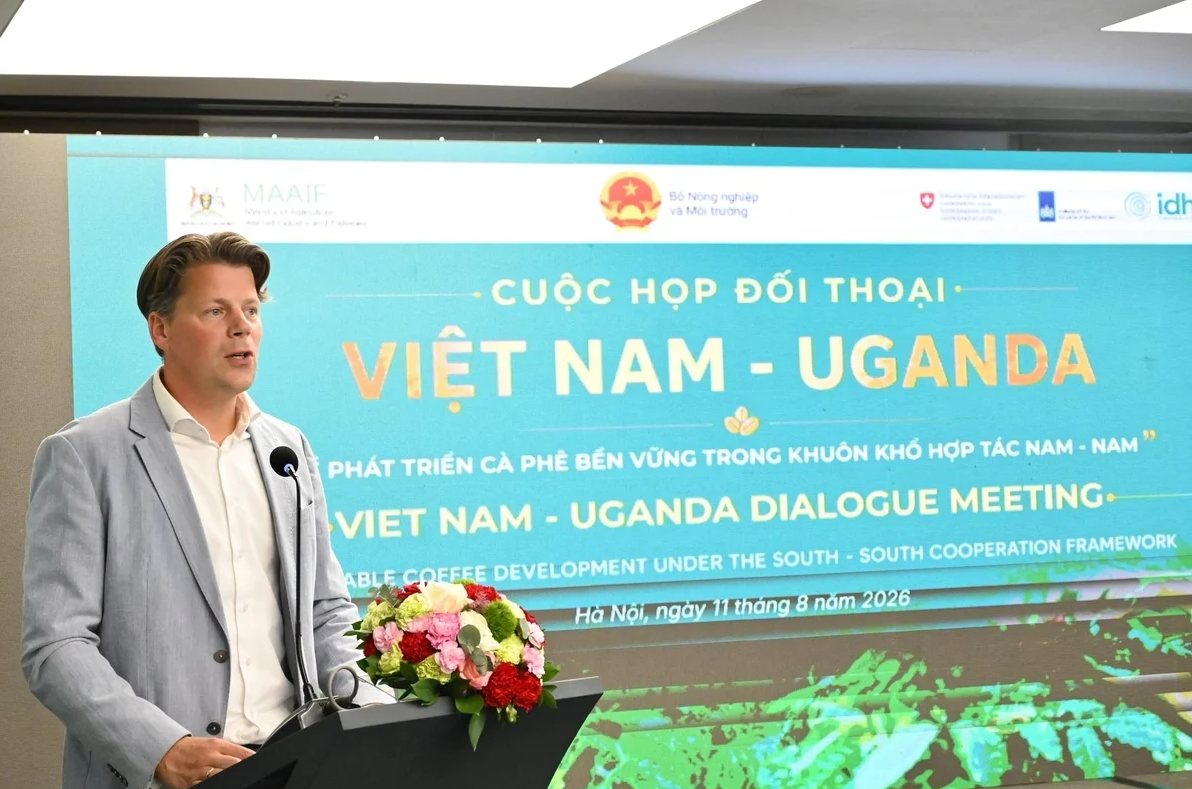
“We are committed to connecting governments and markets so that cooperation can translate into tangible results. Climate change and increasingly demanding market requirements call for a different approach, one based on cooperation and investment. This framework helps strengthen linkages among regulatory agencies, research institutions, industry associations, businesses, cooperatives, the private sector, and development partners,” Daan Wesing said.
The cooperation plan signed at the forum builds on the bilateral agricultural cooperation Memorandum of Understanding signed in 2019, providing a clearer framework for the two sides to advance their shared objectives, with a focus on research, innovation, capacity building, and the development of suitable coffee varieties.

Building on cooperation in coffee, Vietn Nam and Uganda expect to expand exchanges into other agricultural sectors, gradually developing concrete and practical cooperation programs that can be effectively implemented and deliver tangible benefits to producers and businesses in both countries.
The plan identifies key priority areas, including research and innovation, capacity building, the development of resilient coffee varieties, smart production, post-harvest management, quality assurance, processing, branding, market development, and institutional support.
Under the joint action plan to be implemented across four countries: Viet Nam, Uganda, India, and Colombia, IDH will serve as a bridge between coffee-producing countries and global markets, supporting efforts to meet international regulations and sustainability commitments.
Kieu Chi