Viet Nam, Canada cooperation has much room to grow
Viet Nam is considered a strategic gateway for Canada to expand agricultural trade, investment, technology, and deep connections with ASEAN.
According to Vietnam News Agency, the potential for bilateral agricultural cooperation was recently emphasized at a workshop organized by the Canada - Viet Nam Trade Council. Mr. Greg Folinazzo, representative of Agriculture and Agri-Food Canada, affirmed that Viet Nam is a priority market and a strategic gateway in Southeast Asia.
Highly complementary bilateral trade
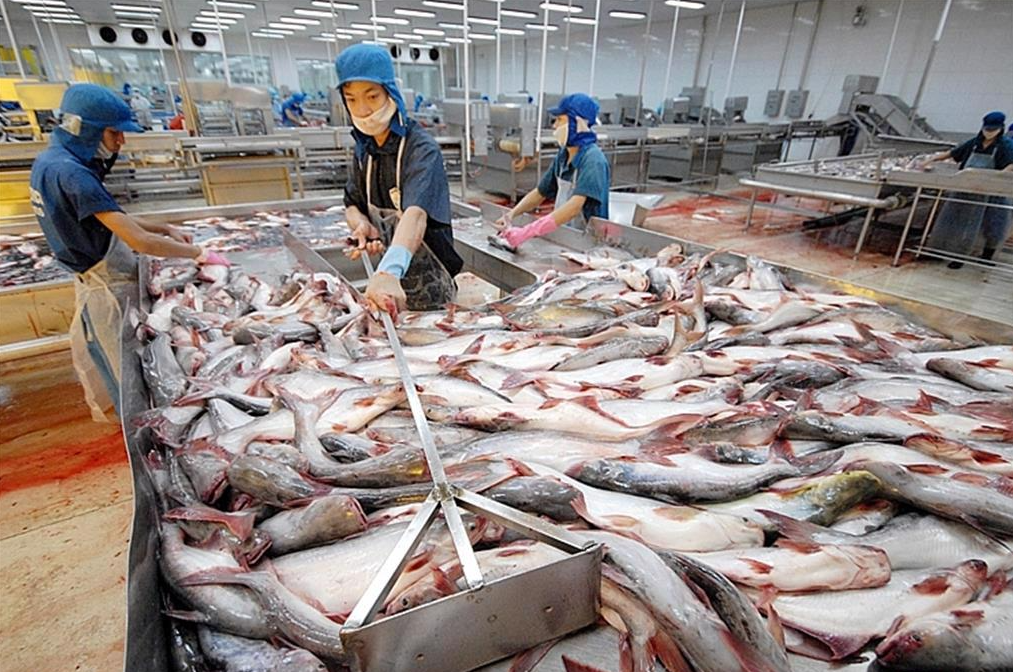
Statistics show that during 2021-2025, Canada's exports of agricultural and aquatic products to Viet Nam increased by an average of 22.7% per year, reaching an estimated CAD 702 million in 2025 (including wheat, soybeans, beef, and frozen crab). Conversely, Canada imports about CAD 964 million of agricultural and food products from Viet Nam, mainly shrimp, fish fillets, and deep-processed products.
Mr. Calvin Xiao (Senior Relationship Manager at Export Development Canada - EDC) commented that Viet Nam plays a dual role: both as a consumer market and a fulcrum for Canadian businesses to penetrate the ASEAN bloc in an effort to reduce dependence on North America. Ms. Natujwa Maliondo (Alberta province) also agreed, stating that Viet Nam should be included in the strategy for approaching the entire ASEAN market.
The Comprehensive and Progressive Agreement for Trans-Pacific Partnership (CPTPP) is generating strong momentum, but the two countries need to continue simplifying administrative procedures to promote investment. Although it is difficult to compete on shipping costs with countries closer to Viet Nam, Canadian agricultural products have a great advantage in reliability, food safety, traceability, and environmental standards.
Promoting technology and climate change adaptation
Besides trade, cooperation is strongly expanding into precision agriculture, hydroponics, fertilizer technology, deep processing, post-harvest preservation, emission reduction, and building carbon credit measurement systems.
Professor Huy Dang (Trent University) pointed out that climate change is threatening the supply chains of both countries. Canada faces harsh winters, while the Mekong Delta is heavily impacted by saltwater intrusion and land subsidence. Therefore, hydroponic systems (which help save 90% of water) are an ideal direction for cooperation. His team plans to coordinate with a rice research institute in Can Tho to field-test this model.
Regarding technological needs, Ms. Natujwa Maliondo (Senior Trade Development Officer at the Ministry of Agriculture and Irrigation of Alberta Province) said Vietnamese businesses are currently very interested in precision agriculture and climate change adaptation solutions, aiming to gradually transition away from labor-intensive production models.
Delegates recommended that Canadian businesses focus on specialized segments, leveraging their technological and quality strengths instead of competing directly. Combining Canada's research capabilities with Viet Nam's market scale and regional connection position promises to open up many breakthrough opportunities, bringing mutual benefits to the agriculture of both countries.
Hong Ngoc