Vietnamese seafood boosts market share in Chile
Amid Chile's declining seafood imports, purchases from Viet Nam still rose 13.4%, making it the fourth-largest supplier to this South American market.
Data from the Agency of Foreign Trade (Ministry of Industry and Trade) shows that in the first five months of 2026, Chile imported nearly 33,913 tons of seafood, worth USD 142.36 million, down 17.2% in volume and 10.1% in value compared to the same period in 2025.
Despite the shrinking market capacity, Chile's seafood imports from Viet Nam still increased. In five months, Chile imported about 2,635 tons of Vietnamese seafood, worth USD 9.75 million, up 13.4% in volume.
This result makes Viet Nam the fourth-largest seafood supplier to Chile in terms of volume and fifth in value. Vietnamese seafood accounts for 7.77% of Chile's total import volume, a significant increase from 5.67% in the same period of 2025. The market share by value also rose from 6.15% to 6.85%.
Viet Nam's market share increased amidst Chile cutting imports from many major suppliers, demonstrating the competitiveness of Vietnamese seafood compared to several other sources.
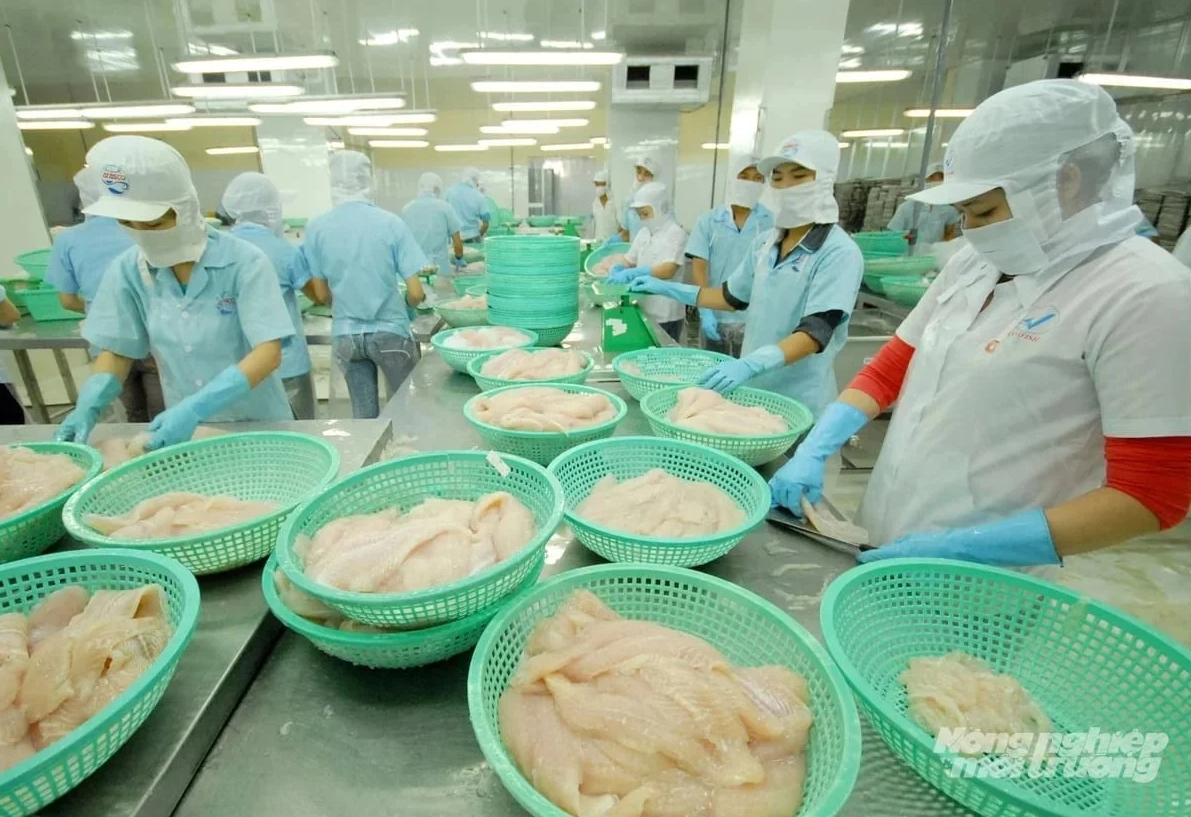
According to market information from the Ministry of Industry and Trade, whitefish is one of the segments where Viet Nam has an advantage in Chile. Among them, frozen pangasius has suitable prices and convenient fillet forms, which can be supplied to retail systems, restaurants, industrial kitchens, and processing facilities. An importing enterprise in Chile currently introduces IQF frozen pangasius and basa from Viet Nam to processing, foodservice, and retail channels.
Besides pangasius, tuna is becoming a notable growth point in the structure of Vietnamese seafood exported to this South American market.
According to the Vietnam Association of Seafood Exporters and Producers (VASEP), in the first six months of 2026, Viet Nam's tuna exports to Chile reached nearly USD 6.8 million, up 37% compared to the same period in 2025. Chile ranks 13th among Viet Nam's largest tuna import markets and is one of the notable growth markets within the CPTPP bloc.
Viet Nam and Chile concurrently participate in the Viet Nam - Chile Free Trade Agreement and the Comprehensive and Progressive Agreement for Trans-Pacific Partnership (CPTPP). This is a significant tariff advantage for Vietnamese seafood. Specifically, frozen pangasius and basa fillets enjoy a 0% import tax when entering Chile.
Even so, the Chilean market is not yet large in scale. The value of seafood imported from Viet Nam in five months only accounts for 6.85% of the country's total import turnover. The gap between the 13.4% volume increase and the nearly zero increase in value also indicates that the average unit price of Vietnamese goods has decreased.
Based on calculations from ITC data, the average price of Chilean seafood imported from Viet Nam in the first five months of 2026 was about USD 3,702/ton, roughly 11.8% lower than the same period. Therefore, the opportunity to expand market share needs to be accompanied by increasing the proportion of processed products and developing specific specifications for retail and foodservice, instead of merely increasing volume in the low-price segment.
Ha Duyen