Joining hands to end bear bile farming in Viet Nam
Viet Nam is entering a decisive phase in its goal to completely end the farming of captive bears for bile extraction.
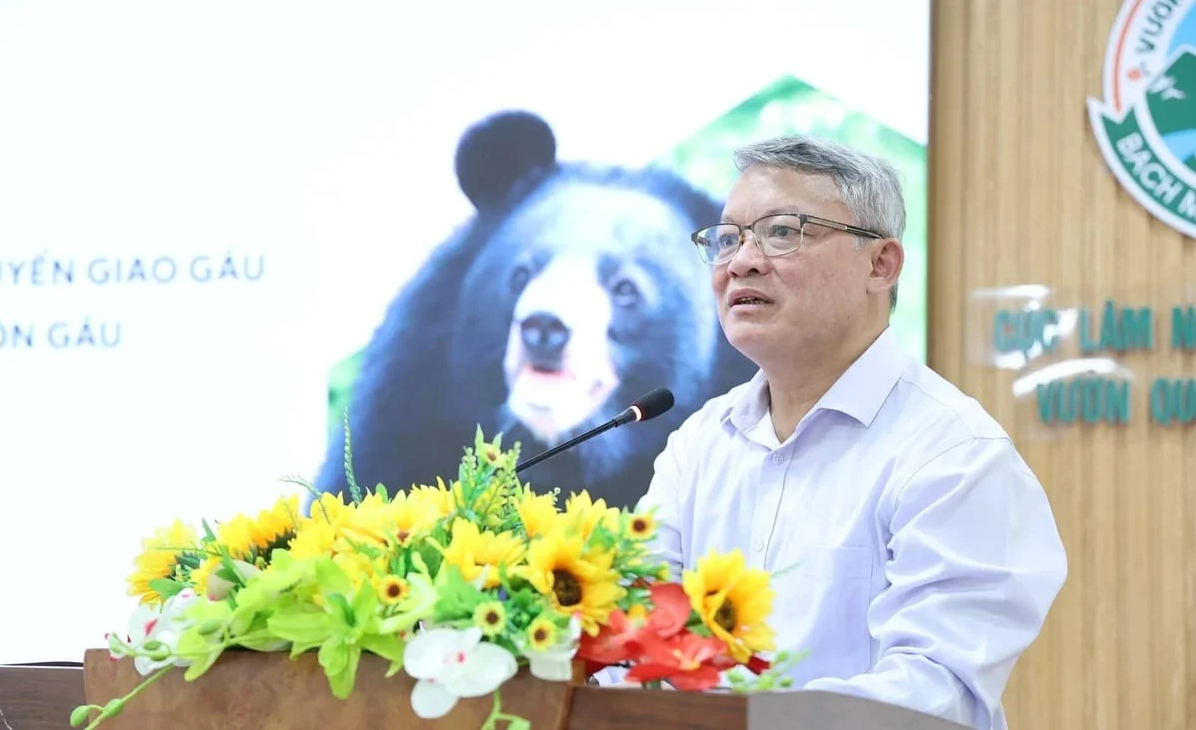
At Bach Ma National Park (Hue City), the Department of Forestry and Forest Protection coordinated with Bach Ma National Park and Animals Asia to organize a workshop on "Coordinating to promote bear transfer, rescue, and conservation".
The event gathered many delegates from state management agencies of the Department of Forestry and Forest Protection, Forest Protection Sub-departments of Ha Noi, Hai Phong, Hue, Nghe An, Dong Nai, Thai Nguyen, Bach Ma, Tam Dao, and Cat Tien National Parks, the Ministry of Public Security, and various organizations. The workshop aimed to assess the status of captive bears, share experiences in advocating for their transfer, and agree on coordination solutions to accelerate the rescue of the remaining bears nationwide.
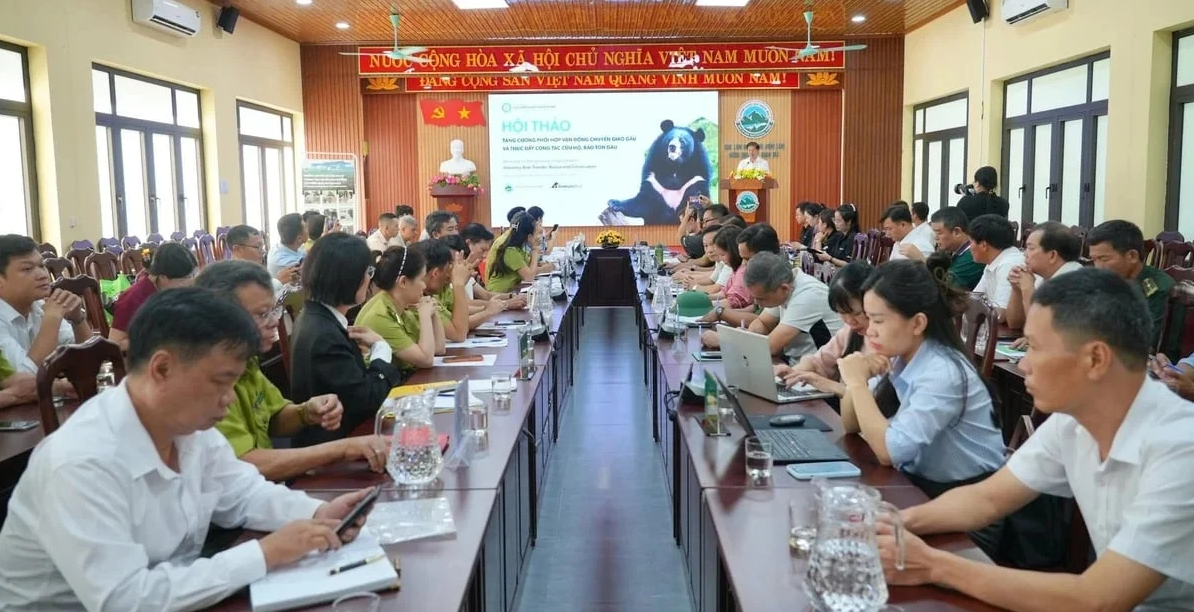
This is the first specialized workshop held at the Viet Nam Bear Rescue Centre (Bach Ma National Park) in the context of Viet Nam entering a decisive phase in its goal to completely end captive bear farming for bile extraction.
Over 200 captive bears remain
According to the Department of Forestry and Forest Protection, Viet Nam recorded 4,239 captive bears in 2005. After more than two decades of implementing coordinated management, rescue, and propaganda solutions, this number has plummeted to 206 individuals (updated July 2026), a decrease of nearly 95% from its peak.
In particular, from 2024 to 2026, the number of captive bears fell from 384 to 206, showing the clear effectiveness of coordination among management agencies, forest protection forces, and conservation organizations. Among them, 129 bears are currently kept at 46 households and private facilities, which are identified as the core group needing continued voluntary transfer advocacy in the coming time. The localities with the most remaining bears include Ha Noi, Nghe An, Hai Phong, Dong Nai, and some Northern provinces.
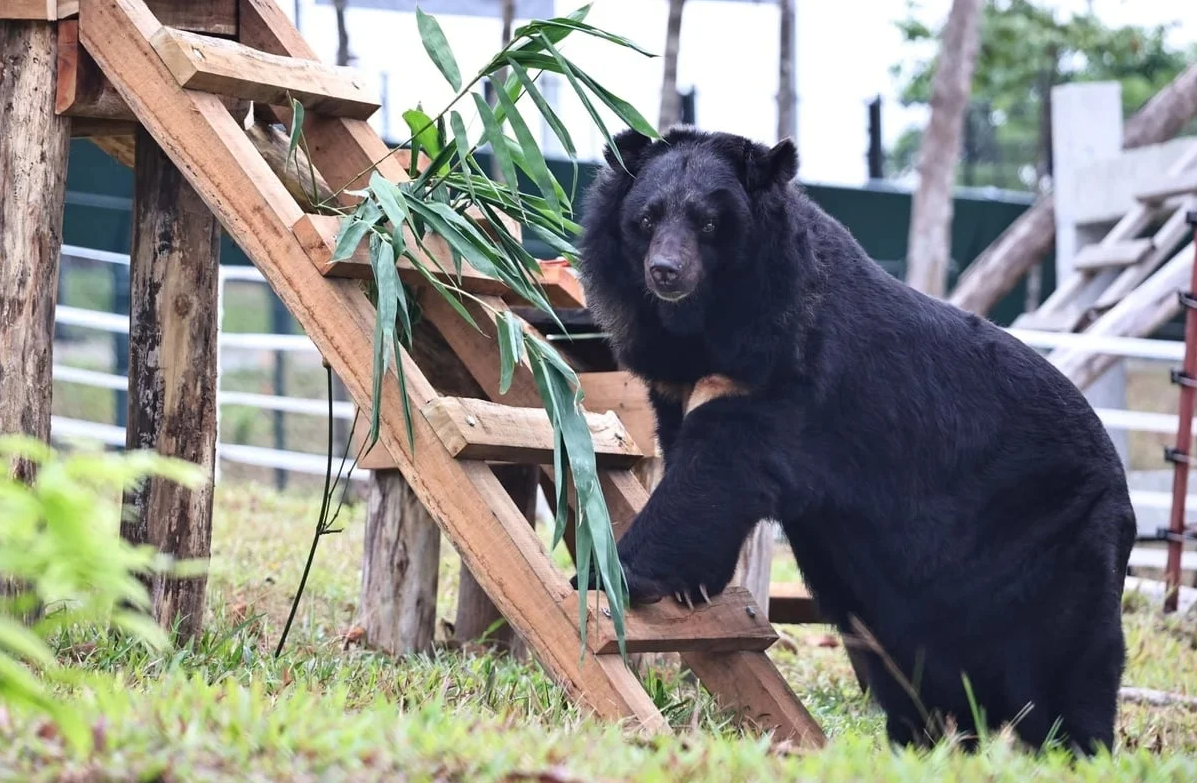
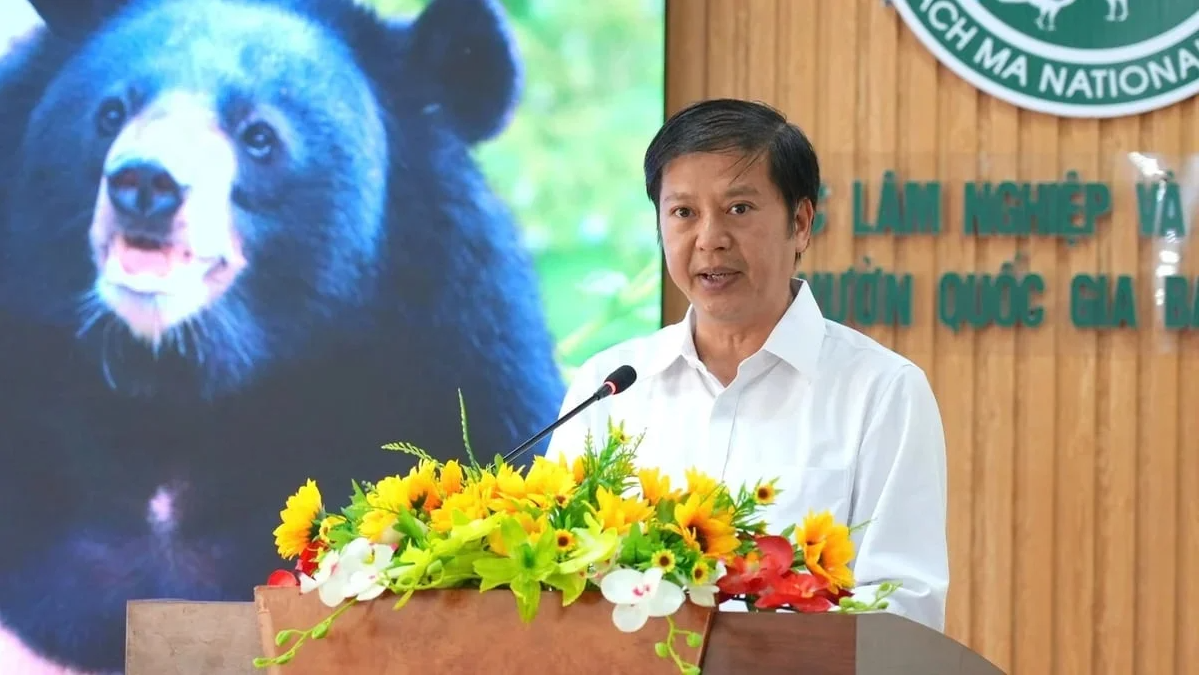
In his opening speech, Dr. Nguyen Vu Linh, Director of Bach Ma National Park, emphasized that the Viet Nam Bear Rescue Center at Bach Ma is not just an investment project but a long-term conservation task. To date, the center has received and cared for 30 bears transferred from many localities, and is ready in terms of facilities, veterinary teams, and professional procedures to receive more individuals in the next phase.
"The biggest challenge right now no longer lies in rescue capacity, but in shortening the time from achieving the owner's consensus to bringing the bear safely to the center. Therefore, the workshop focuses on 3 main contents: evaluating the current situation, removing bottlenecks in the transfer process, and unifying the coordination mechanism among localities", Mr. Linh said.
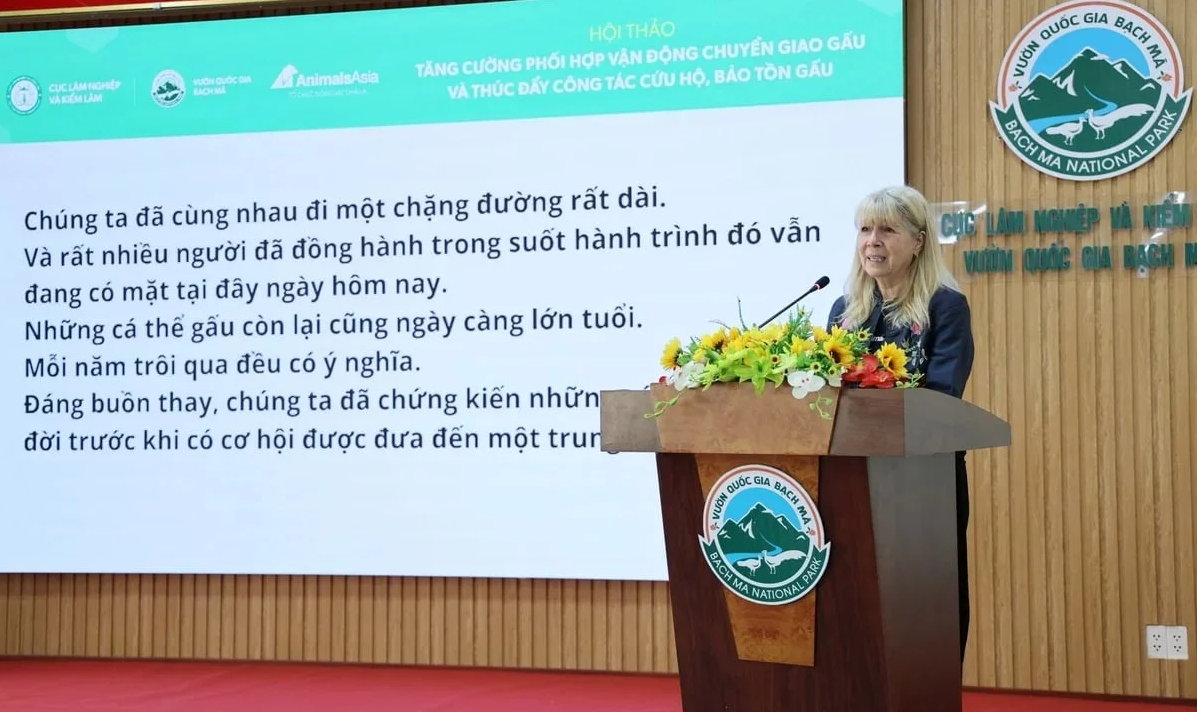
Dr. Jill Robinson MBE, Founder and CEO of Animals Asia (AAF), shared that she has accompanied Viet Nam since 1999 and witnessed the entire process of reducing the number of captive bears. This is the result of nearly three decades of cooperation among the Vietnamese Government, forest protection forces, national parks, local authorities, and related agencies.
"Right from the early days, Animals Asia has never walked alone on this journey. AAF wishes to share with localities what is working, face existing difficulties directly, and jointly find practical solutions to complete the final leg of the journey... The ultimate goal is very simple but deeply meaningful: every remaining bear deserves the opportunity to live the rest of its life in a safe environment with guaranteed welfare", Ms. Jill expressed.
Frontline localities share experiences
According to the Thai Nguyen Forest Protection Sub-department, June 15, 2026, marked a special milestone when, after more than 22 years of persistent advocacy, the locality reduced the number of captive bears from over 70 to 0, becoming the 23rd province in the country to completely end bear farming.
From this experience, Thai Nguyen believes the key is perseverance and persistent advocacy, while turning citizens from subjects of management into accompanying partners, so the change comes from their own awareness and willingness. This is also an important practical lesson for other localities advocating for bear transfers, showing that when citizens become companions and spread the story of humane conservation, the goal of ending bear farming can be achieved sustainably.
The Ha Noi Forest Protection Sub-department stated that there are currently 69 managed bears in the area, spanning 17 households. Since early 2026, Ha Noi has coordinated the successful transfer of 3 bears and found that propaganda, advocacy, and each family's consensus are decisive factors. The unit also proposed enhancing technical support, communication, and monitoring equipment during the remaining phase.

At the conference, the Nghe An Forest Protection Sub-department shared its lessons on patiently understanding each farming household's circumstances, choosing the right time for advocacy, and coordinating with the owners' relatives to create consensus. In the past 2 years, the province has successfully transferred 3 bears to the Bach Ma Bear Rescue Center.
Key solutions
Dr. Doan Hoai Nam, Deputy Director of the Department of Forestry and Forest Protection, affirmed that propaganda and advocacy remain the main solutions for now. The Department will synthesize opinions and submit a report to the Ministry of Agriculture and Environment, urging provinces and cities that still have captive bears to strengthen advocacy and hand over the remaining bears as soon as possible.
The workshop agreed to continue considering propaganda and advocacy as key solutions, emphasizing close coordination among all levels, sectors, and residential communities to encourage the remaining households to voluntarily transfer their bears as soon as possible. For new violations related to illegal trading, transportation, or captive breeding, functional agencies will handle them strictly in accordance with legal provisions.
At the workshop, delegates visited the Viet Nam Bear Rescue Center at Bach Ma National Park to learn firsthand about the rescue process, veterinary care, and rehabilitation of bears after years of captivity. This also reflects the rescue system's capacity to scale up during the upcoming acceleration phase.
The workshop created an important professional forum to share practical experiences, strengthen inter-agency coordination, and work toward a common goal: bringing the last bears to rescue centers and ultimately ending bear bile farming in Viet Nam.
Van Dinh