Viet Nam, Netherlands cooperate on sustainable aquaculture
Viet Nam and the Netherlands deepen aquaculture ties, from technology, breeds and digital transformation to markets and sustainable value chains.
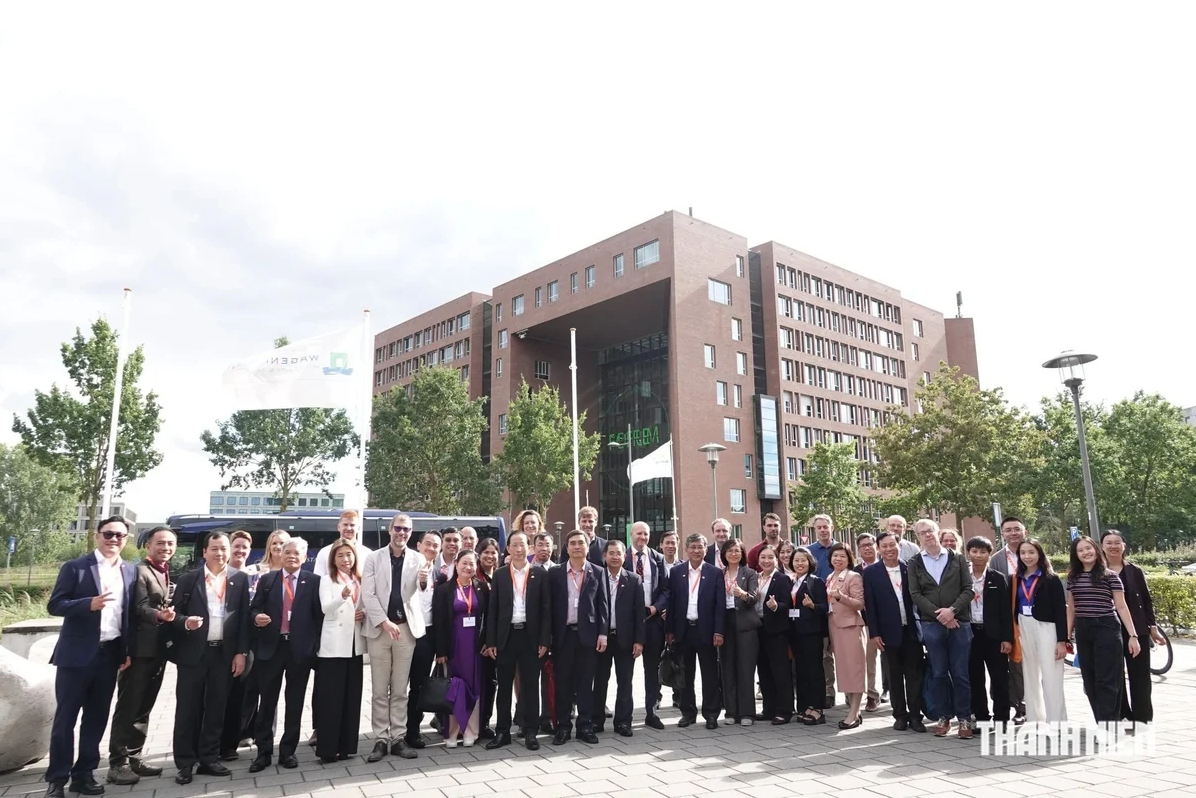
During the Vietnamese aquaculture delegation's working trip to the Netherlands from August 29 to September 5, 2026, the delegation held working sessions with the Dutch Ministry of Agriculture, Fisheries, Food Security and Nature; the Dutch Ministry of Foreign Affairs; and Wageningen University & Research (WUR). The discussions revealed ample room for Viet Nam and the Netherlands to further deepen their aquaulture cooperation, ranging from water management, technology, breeds, nutrition, and aquatic health to digital transformation, finance, markets, and sustainable value chain development.

Leveraging complementary strengths between Viet Nam and the Netherlands
At the meeting with the Dutch Ministry of Agriculture, Fisheries, Food Security and Nature and the Dutch Ministry of Foreign Affairs, both sides highly appreciated the long-standing foundation of cooperation between the two countries.

Welcoming the delegation, Vice Minister Mark Roscam said Viet Nam has built an aquaculture industry that holds an important global position, highlighted by shrimp, pangasius, and marine farming. While Viet Nam has practical production experience, large-scale industry, and a dynamic business community, the Netherlands has strengths in innovation, water management, technology, scientific research, selective breeding, nutrition, aquatic health, recirculating aquaculture systems, and digital monitoring technologies.
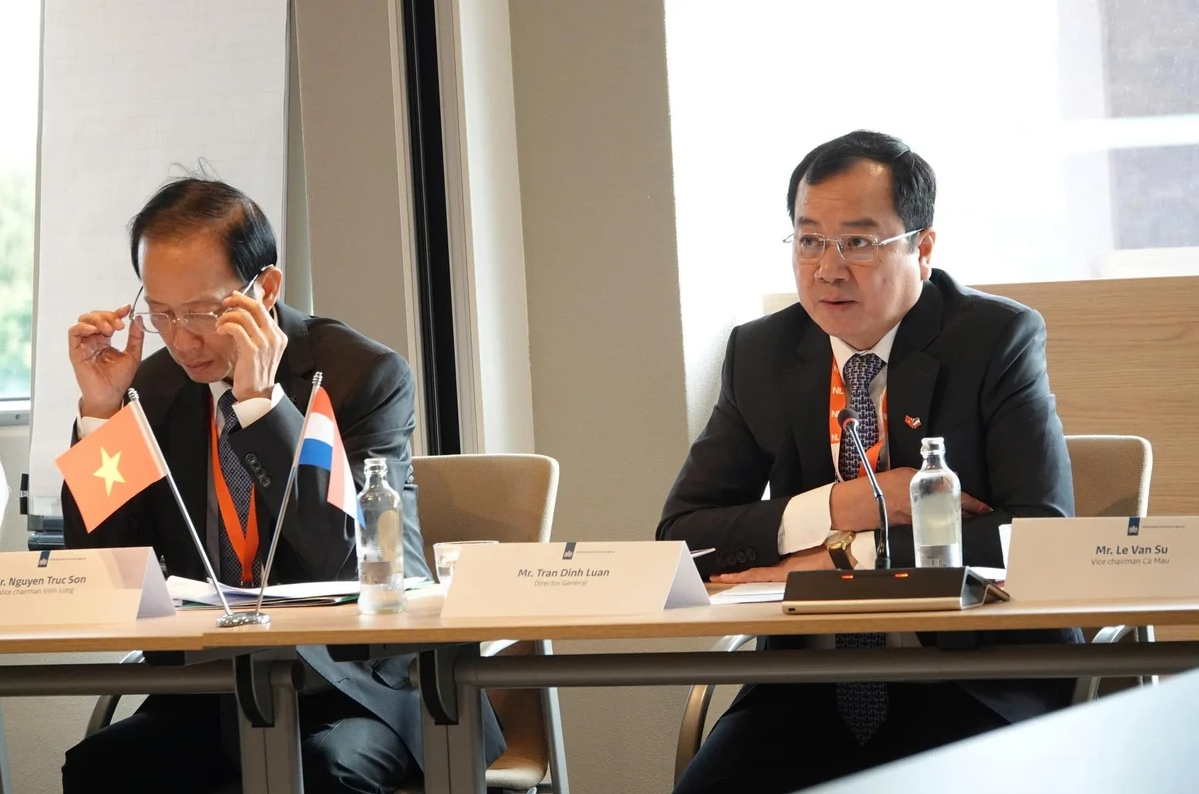
Director of the Department of Fisheries and Surveillance Tran Dinh Luan stated that Viet Nam wishes to continue strengthening cooperation with the Netherlands in areas such as water management and conservation; recirculating aquaculture systems; digital monitoring and data-driven production; aquatic animal breeds, nutrition, and health; climate-resilient production; the circular economy, and emission reduction.
Viet Nam's specific models, such as shrimp-mangrove, shrimp-rice, and ecological farming, also open up meaningful cooperation directions, as they can combine production, people's livelihoods, and ecosystem protection.
A clear example is the Combi-Track program on sustainable aquaculture transformation in the Mekong Delta, conceptualized in 2022 and launched in 2023.
According to Mr. Massimo Lindeman, a private sector development expert at the Netherlands Enterprise Agency (RVO), over the past three years, the two countries have implemented 35 activities and projects within the program's framework.
Combi-Track's notable significance lies in its ability to connect resources from the public sector, the private sector, and scientific research, bringing solutions from research and pilot stages closer to practical application and scalability.
The Netherlands is not only a consumer market but also a crucial European hub for seafood import, processing, logistics, and distribution. With the Port of Rotterdam and a developed trading system, seafood imported into the Netherlands can be further processed and distributed to various European Union markets.
According to data presented at WUR, in 2025, the Netherlands imported about 125,000 tons of shrimp, of which approximately 27,000 tons were Vietnamese shrimp.
Notably, the Dutch market has strong demand for peeled, cooked, marinated, breaded, and value-added convenience products. This segment aligns perfectly with the processing strengths of Vietnamese seafood enterprises.
Hong Ngoc