Fostering eco-habits in children through daily actions
By collecting litter, recycling, planting vegetables, and raising chickens, students at Bac Cuong Primary School in Lao Cai learn to protect the environment through real-life activities.
Bac Cuong Primary School in Cam Duong Ward, Lao Cai Province, is among the schools with outstanding environmental education initiatives. The school has won Third Prize in the Viet Nam ASEAN Eco-School Awards for two consecutive years. On September 7, it won Second Prize in the group category and a student also received Third Prize in the individual category of the “I Tell the Story of Air” creative challenge. The Ministry of Agriculture and Environment organized the competitions in coordination with relevant agencies.
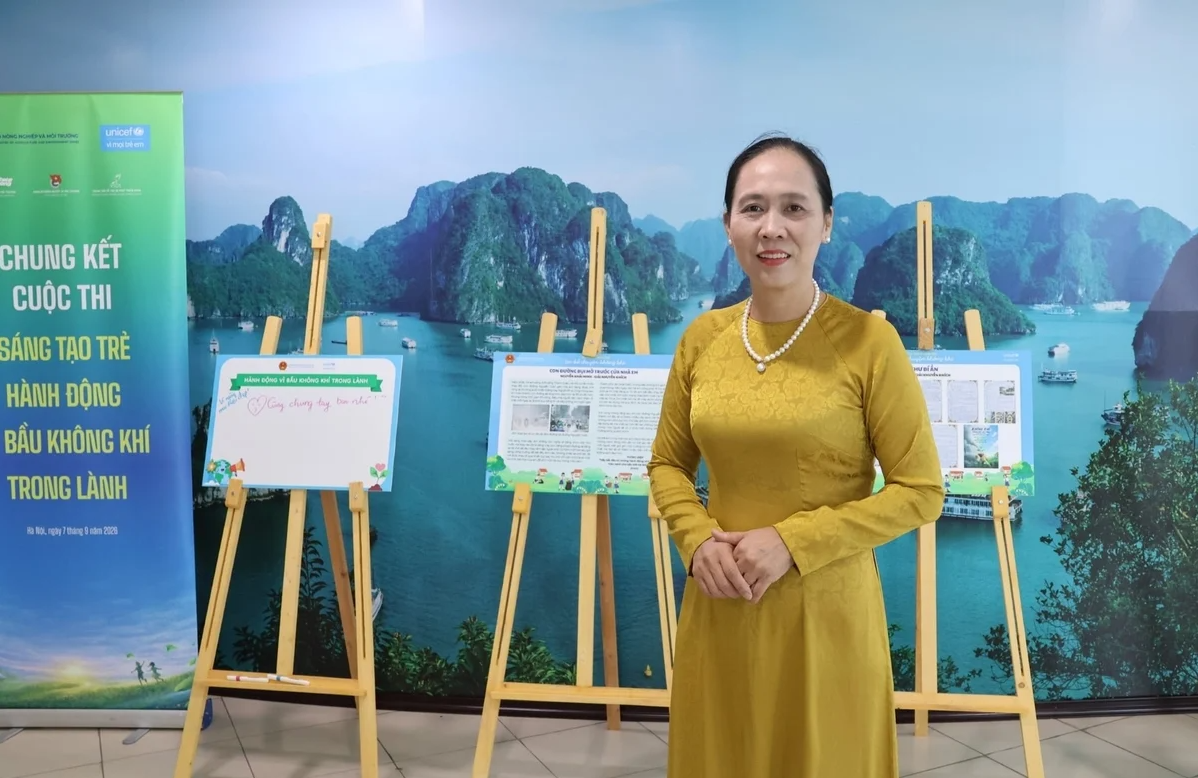
Speaking on the sidelines of the closing ceremony of the program “Youth in Action for Clean Air and a Sustainable Future,” Tran Thi Minh Chung, Principal of Bac Cuong Primary School, shared how the school turns broad environmental lessons into practical activities for primary students.
Bac Cuong Primary School had a high participation rate in the competition. What accounts for this?
After receiving the competition announcement, the school worked with homeroom teachers and parents to encourage students to participate from the beginning of summer. This was also in line with the school’s long-standing environmental education efforts, particularly its participation in the Viet Nam ASEAN Eco-School Awards.
Importantly, students did not wait for the competition to find environmental stories. They regularly clean up, sort waste and recycle discarded materials, while environmental protection is also incorporated into lessons. Because these are activities they practice every day, students were able to tell their own stories in the competition.
How should environmental education begin for primary students to keep it from becoming merely theoretical?
It should start with simple, age-appropriate actions. For example, students should pick up litter when they see it and avoid littering. When traveling by car, they should keep food wrappers instead of throwing them out the window and dispose of them properly.
Small actions may not bring immediate change, but repeated actions can become lasting habits. The same principle guides the school’s environmental education.
An environmental competition is meaningful when it reflects students’ everyday activities, rather than a scenario created just for the contest. For us, it is a chance for students to share what they already do, while prizes encourage them to keep going.
So the school aims to build long-term environmental habits rather than one-off activities?
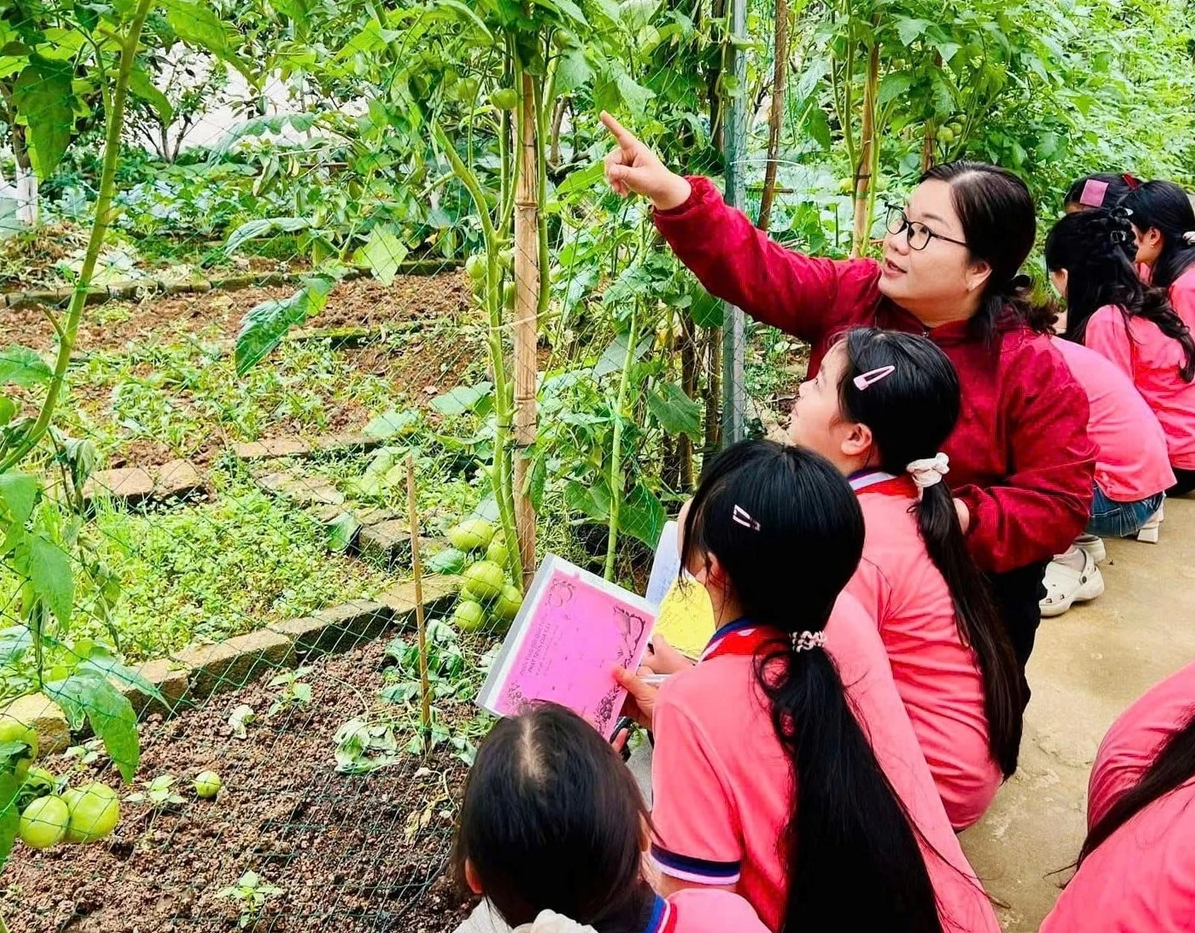
Exactly. Students need to learn through hands-on activities, not just from books. Each year, the school organizes five experiential projects for different grade levels. First-graders collect litter and plastic waste; second-graders recycle them into school supplies, toys or planters; and third-graders learn to grow bean sprouts.
Older students take part in environmental protection, farming and animal raising. At the school’s experience area, they grow vegetables, care for fruit trees and raise chickens, rabbits and birds. Some of the produce is also used in students’ school meals.

After winning environmental education awards for two consecutive years, how will the school build on these achievements?
The awards provide recognition and motivation. The school has used prize money to improve its experience area and create more opportunities for hands-on learning.
Our goal is to combine knowledge with moral education and life skills. Through environmental, recycling and farming activities, students learn to protect nature while developing practical skills through growing plants, caring for animals and making useful products.
For a school in Lao Cai, exposing students to farming, animal raising and locally important crops also has particular value. These experiences can help them better understand their community, develop a sense of work and build skills for greater self-reliance in the future.
Thank you very much, Ms. Chung!
Mai Dan - Tung Dinh - Khanh Ly