WWF supports flood-season livelihood models
The floating rice-fish farming model is a key WWF-supported activity in the climate change adaptation livelihood program.
The Management Board of the ecological fish farming combined with floating rice model in Vinh Gia commune, An Giang province, has just inspected the technical conditions and officially released the net pens to stock fish fingerlings into a 25-hectare farming area. This is a central activity in the climate change adaptation livelihood support program implemented by the World Wide Fund for Nature (WWF) and the An Giang Provincial Agricultural Extension Center, in coordination with the Vinh Gia Commune People's Committee.
Participating in the activity were representatives from WWF, the An Giang Provincial Agricultural Extension Center, leaders of the Vinh Gia Commune People's Committee, the Commune General Service Center, along with technical staff and farmers from the Rice - Fish Group of Vinh An hamlet.
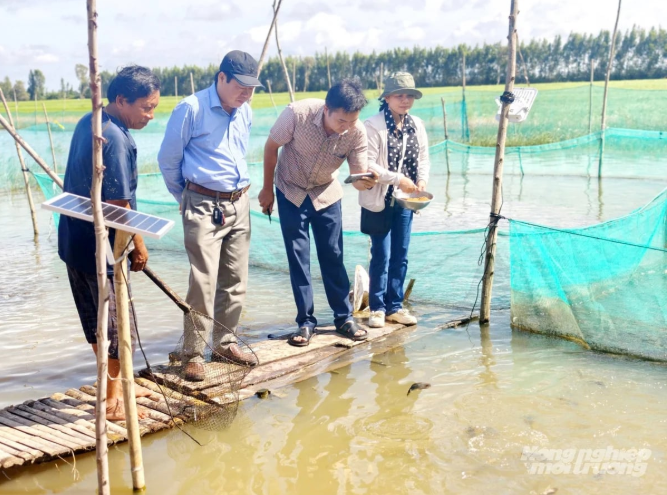
Stocking fish fingerlings over the 25-hectare area marks an important implementation step for the model in Vinh Gia commune. With the participation of farmers and the companionship of agricultural extension agencies, local authorities, and conservation organizations, the model is expected to create additional livelihoods for local people, while gradually changing the production mindset towards reducing inputs, utilizing natural resources, and better adapting to climate change conditions.

From the initial results of the nursing phase in net pens (the initial fish rearing stage), a high survival rate and healthy fish growth are positive signs for the model to continue being monitored and evaluated for effectiveness throughout the farming season. Thereby, An Giang has more practical grounds to replicate ecological agricultural production models suitable for the flood region's characteristics, aiming toward the goal of sustainable agricultural development.

Mr. Nguyen Phuoc Thanh, Deputy Director of the An Giang Provincial Agricultural Extension Center, stated: The floating rice combined with fish farming model is expected to bring numerous benefits to farmers in areas frequently affected by floods and climate change. Combining these two production subjects on the same area not only generates additional income sources during the flooding season but also contributes to improving the field's ecological environment.
In this production system, waste and nutrients from the fish can become a supplementary organic source for the soil, helping to reduce the need for chemical fertilizers in the next rice crop. Simultaneously, the presence of fish in the fields helps form a diverse production ecosystem, aligning with the nature-based farming orientation.
Le Hoang Vu