Turning one tonne of food waste into more than 300 kWh of electricity
Each tonne of food waste can generate more than 300 kWh of electricity, along with organic fertiliser, offering a waste treatment solution suited to Viet Nam’s conditions.
Mastering waste treatment technology
After six years of implementation, the 2021-2026 cooperation project between the Vietnam National University of Agriculture, the Japan International Cooperation Agency (JICA), and a consortium comprising Toyo Fujiko Co., Ltd. and Toyo Energy Solution Co., Ltd. has completed trials of methane fermentation technology for organic waste.
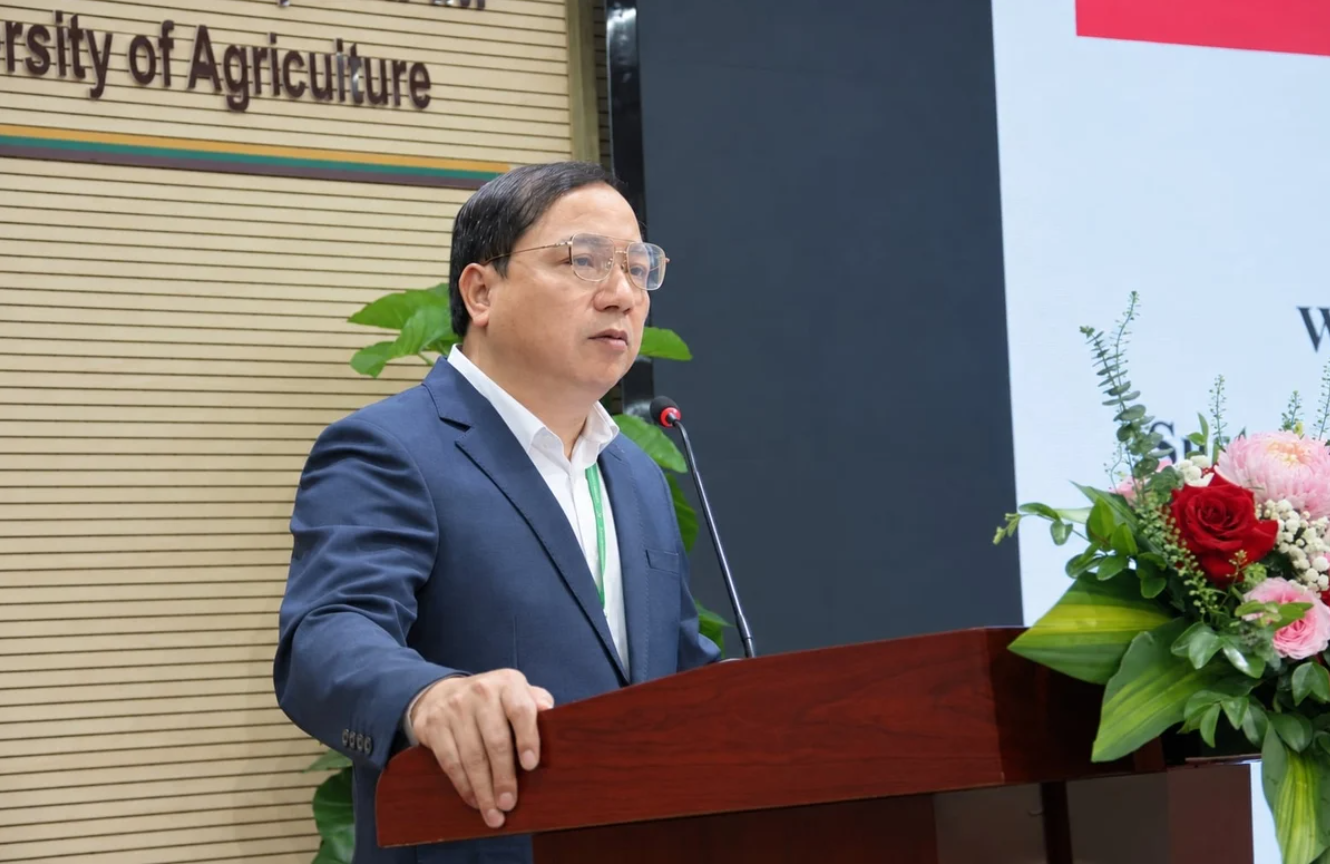
At the project’s closing ceremony in Hanoi on September 16, Assoc. Prof. Dr. Vu Ngoc Huyen, Vice President of the Vietnam National University of Agriculture, said the project was launched as Viet Nam accelerates its green transition and works towards the goal of net-zero emissions by 2050.
Treating agricultural and urban organic waste is not only an urgent environmental requirement but also an opportunity to promote a circular economy by turning waste into a resource.
According to Dr. Huyen, although the project was extended due to the impact of the COVID-19 pandemic, scientists from the university, Toyo experts, JICA and the Ministry of Agriculture and Environment worked together to bring it to a successful conclusion. An important outcome was not only the transfer of advanced Japanese technology, but also the demonstration that the technology can operate under actual conditions in Viet Nam.

As part of the project, a biochemical methane potential (BMP) assessment system and a CT-1000 continuous fermentation system were installed at the university. JICA and Toyo provided technology transfer and training, while evaluating the methane production potential of four types of feedstock: chicken manure, pig manure, food waste and organic waste. The CT-1000 system operated stably at a capacity of 30 kg of waste per day, converting organic waste into products that can be used as fertiliser.
Scaling up the circular model
Nishimura Emiko, Deputy Chief Representative of the JICA Vietnam Office, said the growing volume of organic waste from households, food processing and livestock farming poses an increasing challenge to the green transition. Methane fermentation technology can convert waste into biogas for energy generation while also producing organic fertiliser for agriculture.
According to Ms. Nishimura, the demonstration and verification activities confirmed the feasibility of converting organic waste into energy and fertiliser under Vietnamese conditions. JICA also supported lecturers from the university in travelling to Japan for training in technology, facility management and business operations. The BMP equipment and small-scale demonstration system will be used for research, training and technology dissemination.

From the perspective of a company directly involved in the project, Mr. Yoshimasa Anzawa, Director of Management and Business Support at Toyo Fujiko Co., Ltd., said Vietnamese and Japanese partners had worked together to make use of livestock waste and organic waste to reduce environmental impacts and generate renewable energy. Trials in Viet Nam have allowed the company to gain practical experience and better understand local conditions, helping it develop solutions suited to the Vietnamese market.
Providing further details on the potential of different feedstocks, Kazuya Matsunaga, Head of the Engineering Department at Toyo Energy Solution Co., Ltd., said food waste had the highest methane production potential among the four types of feedstock, while organic waste also had strong potential for energy recovery. Pig manure produces relatively little methane when treated separately, so it can be mixed with other feedstocks to improve overall efficiency.

With an assumed electricity generation efficiency of 35% and heat recovery efficiency of 50%, processing one tonne of food waste per day can generate around 318 kWh of electricity and recover 454 kWh of heat. For the same amount of feedstock, the estimated electricity output is 64 kWh from pig manure, 276 kWh from chicken manure and 212 kWh from organic waste per day. According to Matsunaga, organic waste is also a source of renewable energy that can be harnessed locally.
Based on these results, Dr. Huyen said the project’s closing ceremony marks the beginning of a new phase. The university will continue operating the transferred systems, study the use of organic fertiliser produced after fermentation on major crops, and expand cooperation to scale up the model. Toyo also plans to develop CT systems suited to the Vietnamese market, contributing to better waste management, renewable energy generation and the development of a circular agricultural economy.
Methane fermentation is a circular technology in which biogas produced through the microbial decomposition of organic waste is used to generate electricity or heat. At the same time, the digestate left after fermentation can be returned to agricultural land as organic fertiliser. By addressing waste treatment while generating renewable energy, the technology has been widely adopted, particularly in Europe. Japan currently has around 300 facilities operating under this model.
Mai Dan