Hanoi kicks off campaign in observance of World Cleanup Day 2026
More than 1,000 people joined the World Cleanup Day 2026, joining hands to reduce waste, promote waste storting and recycling for a greener lifestyle.
On September 20, at Thong Nhat Park in Hanoi, the Ministry of Agriculture and Environment, in coordination with the Hanoi People’s Committee and relevant agencies, held the national launch ceremony for the 2026 World Cleanup Campaign, themed "From Clean Plates to Clean Cities."
Under this theme, the 2026 campaign focuses on raising public awareness and mobilizing communities to reduce food loss and waste, minimize waste generation, and strengthen waste segregation, collection, reuse and recycling. These efforts aim to gradually foster sustainable consumption habits and enhance the responsibility of individuals and organizations in environmental protection.
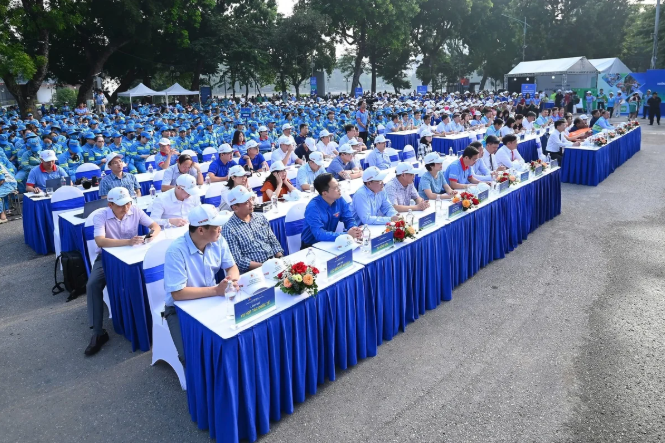
Environmental protection must become a culture and a civilized way of life
Speaking at the launching ceremony, Deputy Minister of Agriculture and Environment Le Trong Yen said food and organic waste currently account for 50-70% of the total volume of household waste nationwide. He noted that if not properly sorted, collected and treated, such waste could place a significant burden on urban infrastructure and pose a direct threat to the living environment.
According to UNEP’s 2024 Food Waste Index Report, households, food services, and retail wasted approximately 1.05 billion tonnes of food in 2022, equivalent to around 19% of the food available to consumers. Food waste not only strains waste management systems but also wastes land, water, energy, and human resources, while contributing to increased greenhouse gas emissions.
According to the Deputy Minister, “a clean plate” means more than simply leaving no food uneaten. It marks the beginning of a resource circularity chain from saving food at the dining table and sorting waste in the kitchen to effective waste management, reducing pollution and building green, clean and beautiful cities.
Likewise, “a clean city” is not simply a city that collects and treats waste effectively. Above all, it must be a city that generates less waste and uses resources more efficiently. This is also the spirit of the green transition and circular economy, with solutions focused on reducing waste at source, extending product lifecycles, reusing and recycling materials, and recovering value from waste.
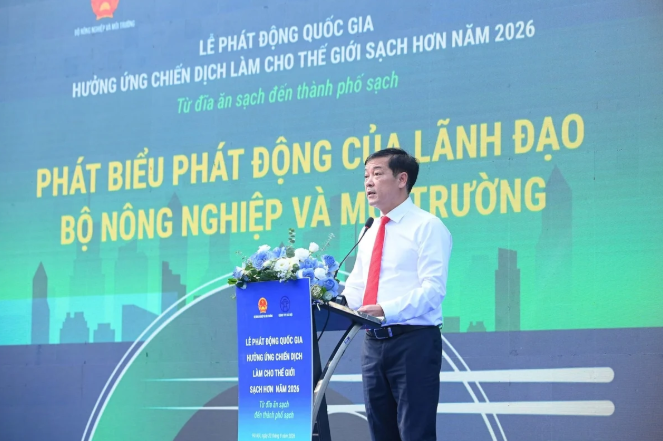
This approach is consistent with Conclusion No. 75-KL/TW, dated July 28, 2026, issued by the 14th Party Central Committee, which identifies environmental protection and climate change response as central components of the development process, laying the foundation for the green transition and sustainable development.
According to Pauline Tamesis, United Nations Resident Coordinator in Viet Nam, the 2026 World Cleanup Campaign goes beyond calling for a reduction in food waste. It places the issue within a broader framework of efficient resource use, waste reduction and the promotion of a circular economy, beginning at the stages of production and consumption.
“A cleaner city begins with responsible consumption. A more sustainable future begins with reducing waste. And a truly circular economy starts to take shape when we recognize the inherent value of resources that might otherwise be discarded,” she said.
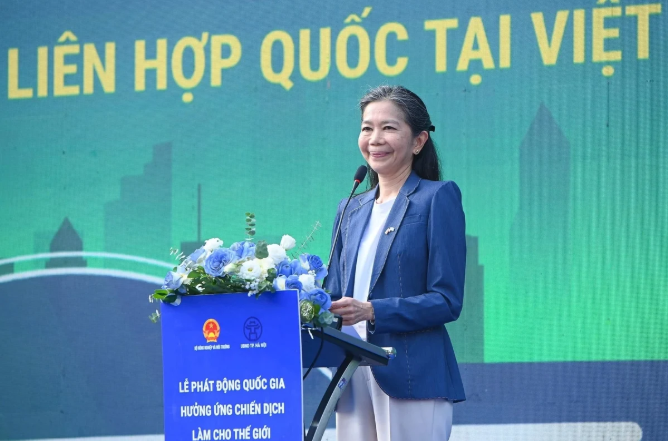
The United Nations remains committed to working with the Vietnamese Government to promote solutions to reduce food loss and waste. Through its agencies, including the Food and Agriculture Organization of the United Nations (FAO), the UN is coordinating with the Ministry of Agriculture and Environment and local partners to promote concrete actions toward more sustainable food systems.
From changing consumption habits and reducing food waste to improving the collection, treatment, and utilization of organic waste, actions at the individual, community, and urban levels can create a cumulative impact on the environment.
Launching the 21-day waste sorting community action campaign
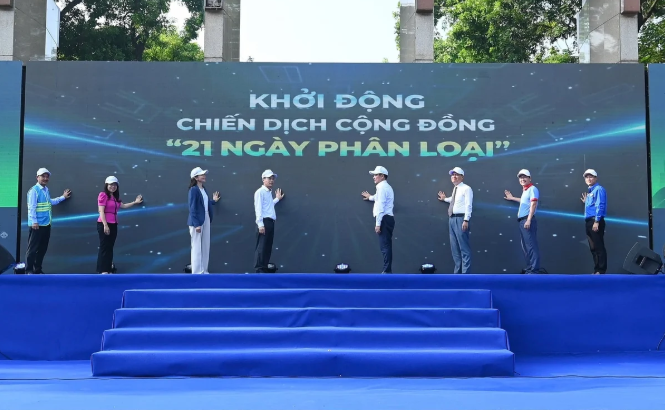
At the event marking the 2026 World Cleanup Campaign, Hanoi Urban Environment Limited Company (URENCO) activated a network of 100 waste sorting and recyclable recovery points, known as HUBs, while also launching the “21 Days of Waste Sorting” Community Action Programme across the capital.
According to Nguyen Thanh Son, Deputy General Director of Hanoi Urban Environment Limited Company (URENCO), the event reflects a new approach to environmental sanitation. Making Hanoi cleaner cannot rely solely on increasing the volume of waste collected and treated. Instead, it requires reducing the amount of waste that needs to be treated, maximizing the recovery of materials that still retain value, and returning them to the production and consumption cycle.
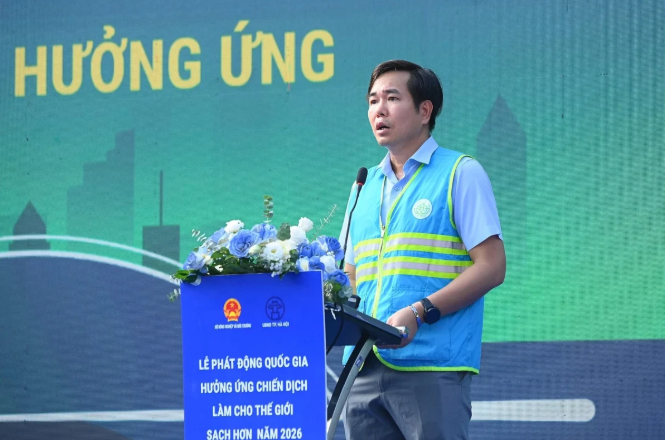
Alongside investment in infrastructure, URENCO has launched the “21 Days of Waste Sorting” campaign, calling on agencies, organizations, businesses, schools, residential communities and households to start with practical, appropriate actions and maintain them regularly. The focus is on separating paper, plastic and metal and taking them to designated recovery points.
Following the launch ceremony, Deputy Minister of Agriculture and Environment Le Trong Yen, Deputy Chairman of the National Assembly’s Committee on Science, Technology and Environment Ta Dinh Thi, Vice Chairman of the Hanoi People’s Committee Bui Duy Cuong, United Nations Resident Coordinator in Viet Nam Pauline Tamesis, and other delegates took part in an activity to exchange recyclable waste for gifts.
For Hanoi, the Deputy Minister said the capital, as the launch point for these efforts, should take the lead in putting effective waste management models into practice and fostering a green way of life. Outlining specific solutions, he called for reducing food waste and waste generation at source as a first step. He also emphasized that waste segregation at source should become the foundation of modern waste management.
Another priority highlighted by the Deputy Minister is to shift from a mindset of “waste treatment” to “managing resources from waste”, promoting reuse, recycling, material recovery, energy recovery and appropriate treatment of organic waste, while encouraging the application of advanced and environmentally friendly technologies.
“Waste is not simply something that needs to be discarded; when properly managed, it can become a resource that contributes to the economy,” the Deputy Minister said.
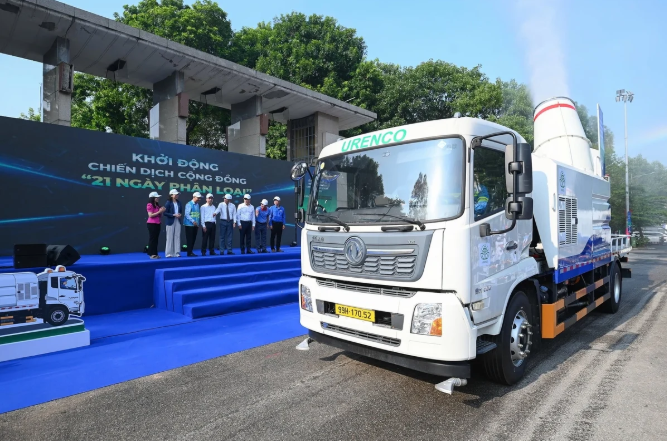
Through concrete activities, the 2026 World Cleanup Campaign continues to emphasize the need to move from raising awareness to taking regular and practical action. Agencies, organizations, businesses and individuals are encouraged to proactively reduce waste, sort waste at source, increase reuse and recycling, and maintain environmental cleanliness.
With the message “From Clean Plates to Clean Cities,” this year’s campaign aims to bring about more tangible changes in consumption behavior and waste management, thereby contributing to a greener, cleaner and more sustainable living environment.
Kieu Chi - Nguyen Thuy - Trung Hieu - Khanh Ly