Vietnamese processed farm products eye South Korean market
Fresh porridge, flour mix for crispy Vietnamese pancakes, plant-based milk, Shan Tuyet tea, chocolate and sesame oil are among the products showcased by 10 Vietnamese businesses at ASEAN Panorama 2026 in Seoul, South Korea.
From September 5 to 30, 2026, the Viet Nam national pavilion is on display at Seoul ASEAN Hall on the first floor of the Press Center in Seoul, South Korea. It is the final stop in the ASEAN Panorama 2026 program, organized by the ASEAN-Korea Center (AKC).
Ten Vietnamese businesses are taking part in the program, showcasing products ranging from fresh porridge and ready-to-use flour mixes to plant-based milk, tea, honey, chocolate and sesame oil, according to Nong thon Viet magazine.
The product range shows that Vietnamese businesses are gradually shifting from exporting agricultural produce and raw materials to offering more highly processed products as they seek to enter the South Korean market.
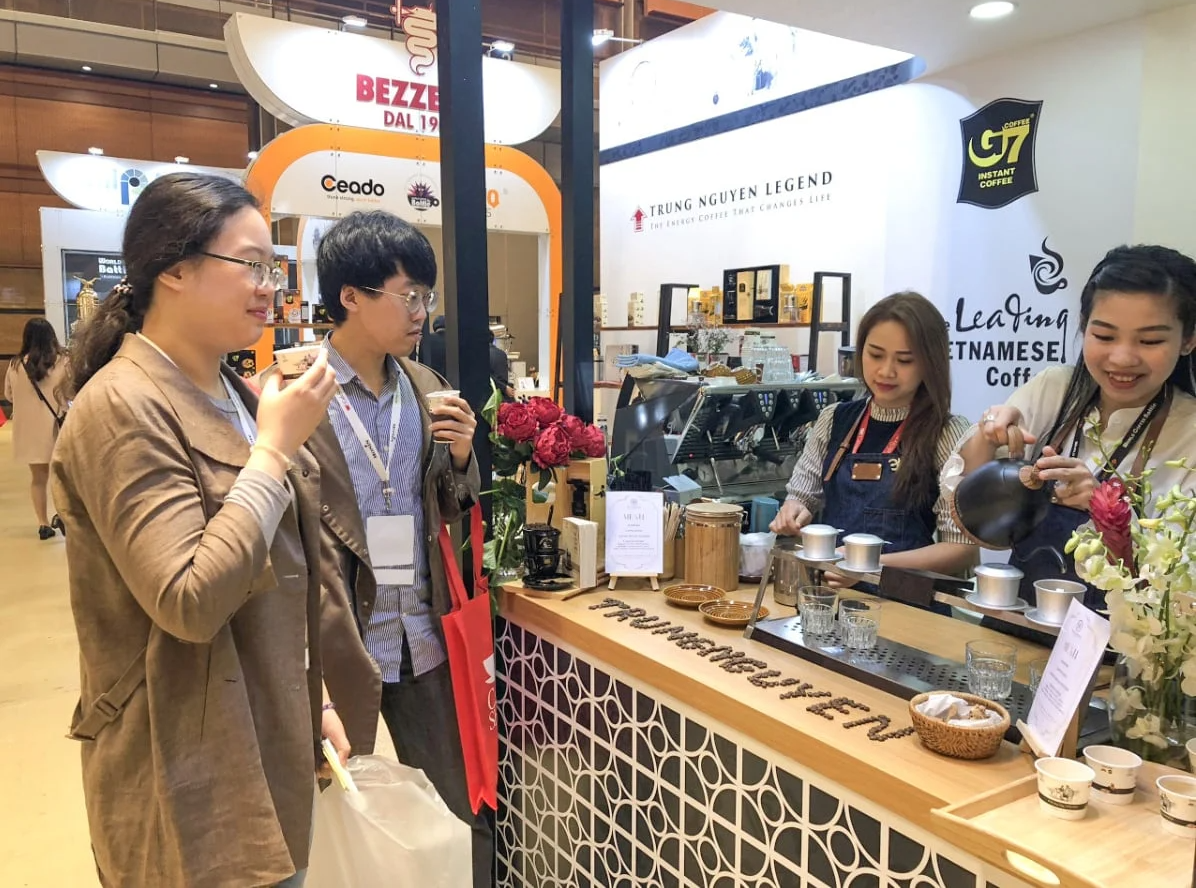
At Seoul Food 2026 in June, Vietnamese Ambassador to South Korea Vu Ho said businesses needed to improve product quality, upgrade packaging, strengthen traceability and develop products that match consumer trends, including demand for healthier, greener and more convenient choices.
South Korea has high standards for quality, food safety and sustainable development, but there is still room for Vietnamese agricultural products, food and beverages to expand in the market.
At ASEAN Panorama 2026, Anh Kim Food Production JSC is showcasing fresh porridge products such as brown rice and mixed-bean porridge, as well as beef and carrot porridge. International Flour Joint Venture Company is showcasing flour mixes for crispy Vietnamese pancakes, tempura and steamed buns.
In the beverages and processed agricultural products category, Vinamilk is presenting plant-based milk made from oats and grains, along with coconut drinks and condensed milk. Viet Herbs is showcasing organic ancient-tree Shan Tuyet green tea and herbal teas, while Viet Essentia is introducing black pepper and coffee blossom honey. SK Noni is presenting noni juice, and Wincofood is showcasing bird's nest products.
Fancy Foods is offering chocolate combined with cashews, almonds and macadamia nuts, while Nakydaco is introducing cooking oils and pure roasted sesame oil.
According to the Vietnamese Trade Office in South Korea, agriculture and food products, consumer goods and e-commerce are among the areas that still have significant room for growth in the market.
However, opportunities vary from one product group to another. For fresh porridge, Vietnamese businesses could tap into demand for home meal replacement (HMR) products, which are popular among South Korean consumers because of their convenience. According to the Korea Rural Economic Institute, South Korea's HMR market has grown by an average of 14.1% annually since 2015.
Meanwhile, products such as flour mixes for crispy Vietnamese pancakes, Shan Tuyet tea, coffee blossom honey and bird's nest products could draw on distinctive Vietnamese ingredients and culinary traditions to reach niche segments, including specialty stores, gift markets and Asian food chains.
The Vietnamese Trade Office in South Korea recommends that businesses step up efforts to connect with major retailers, supermarket chains, convenience stores and leading e-commerce platforms. They should also closely follow up on partnerships after business-matching activities.
Another major challenge is meeting technical requirements. According to South Korea's Ministry of Food and Drug Safety (MFDS), overseas food manufacturers must complete registration before filing import declarations. Products imported for the first time may be subject to document reviews, on-site inspections or laboratory testing before they are allowed to enter the market.
In addition to displaying products and reaching consumers, the 10 Vietnamese businesses have opportunities to connect with South Korean buyers and distributors through B2B meetings, market-entry strategy seminars and field visits.
According to the Ministry of Industry and Trade, the program gives Vietnamese small and medium-sized enterprises an opportunity to strengthen their competitiveness and gradually expand their presence in the South Korean market.
Minh Hanh