WWF partners to build sustainable cities starting with smart meals
Through Plastic Smart Cities initiatives and sustainable diets, WWF is transforming consumer choices to advance the World Cleanup Day 2026 message.
World Cleanup Day 2026 officially kicked off with a series of activities taking place from September 19-21. This year, Shaoxing City in Zhejiang Province, China, was selected to host the global event, coordinated by UN-Habitat.
The campaign marks a milestone in implementing Resolution 78/122, adopted by the United Nations General Assembly.
WWF’s food systems approach
The message of World Cleanup Day 2026 aligns with several WWF programs that aim to reduce plastic waste and promote sustainable food systems.
Through its No Plastic in Nature initiative, WWF promotes the Plastic Smart Cities model, which seeks to reduce plastic waste leaking into the environment by engaging authorities, schools, businesses, and communities.
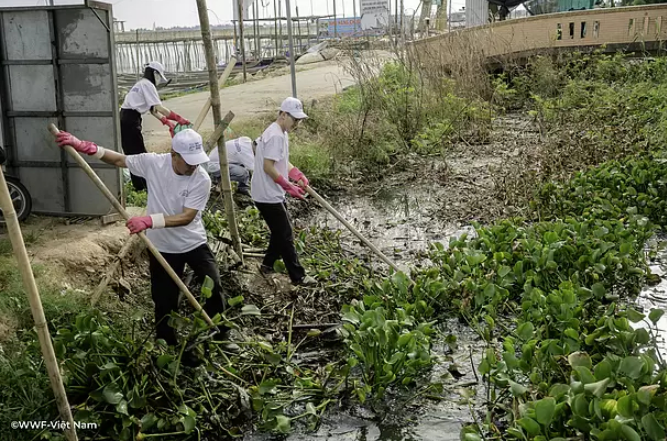
In Viet Nam, WWF has implemented the model in 14 districts across 10 provinces and cities, including Ha Tinh, Quang Binh, Quang Tri, Thua Thien Hue, Da Nang, Quang Nam, Phu Yen, Ba Ria - Vung Tau, Long An and Kien Giang. The program works with local authorities, schools, businesses, women’s unions and youth organizations to reduce plastic waste leaking into nature. Tackling food waste is also a direct way to reduce associated plastic packaging.
In parallel, the Sustainable Diet initiative promotes more responsible food choices, including greater consumption of plant-based foods, sustainably produced food and reduced food loss and waste.
WWF also promotes the concept of a Planet-Friendly Diet, which prioritizes plant-based foods, sustainable production and reduced food loss.
Under this approach, building sustainable food systems depends not only on how food is produced but also on consumer choices and reducing food loss and waste across the entire value chain.
WWF has implemented projects that connect urban consumers with sustainably produced agricultural products from the Mekong Delta through networks of restaurants, chefs, and media outlets. The concept of a “clean plate” therefore goes beyond avoiding food waste to include smarter consumption choices that protect ecosystems and support sustainable livelihoods for farmers.
WWF also works with RMIT University through research forums on solutions to reduce food loss and waste.
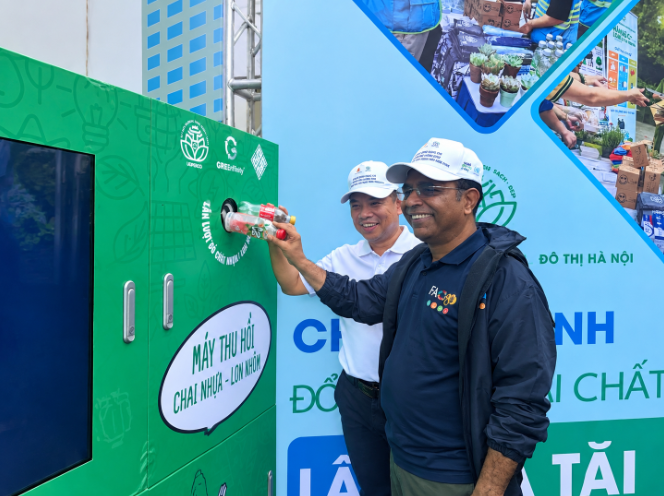
On the morning of September 20, the Ministry of Agriculture and Environment, in coordination with the Hanoi People’s Committee and relevant agencies, held the national launch ceremony for World Cleanup Day 2026 at Thong Nhat Park in Hanoi. The event brought together more than 1,000 participants, including around 500 environmental workers from Hanoi Urban Environment Company (Urenco).
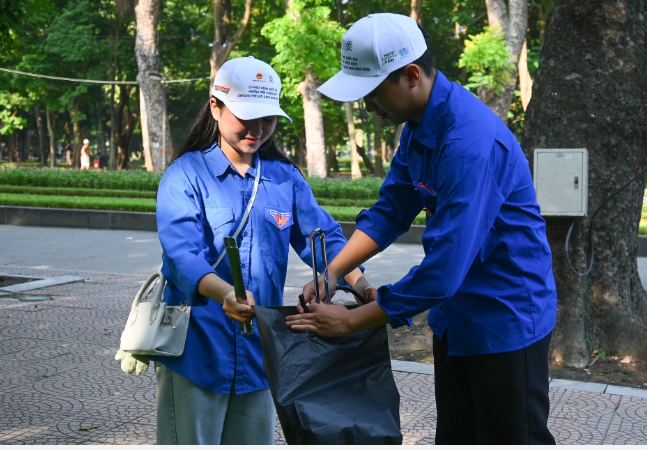
Following the launch, delegates, youth union members, environmental workers and local residents took part in the “Waste for Gifts” program, while joining environmental cleanup activities and collecting waste at Thong Nhat Park and other locations across Hanoi.
Phuong Linh