Restoring Cu Lao Cham's blue carbon treasure
Early success in Cu Lao Cham's seagrass restoration links ecosystem conservation with livelihood improvement and blue carbon potential.
Seagrass is a vital ecosystem in Cu Lao Cham, providing habitat, foraging, and nursery grounds for various aquatic species and supporting biodiversity, fishery resources, and coastal environmental stability. It can also absorb and store carbon, helping mitigate climate change. The carbon storage capacity of seagrass is two to three times higher than that of terrestrial forests per unit area, with an absorption rate up to 35 times faster than tropical rainforests.
However, the seagrass area in Cu Lao Cham is declining significantly. From about 50 hectares in 2014, the current area is only about 15-17 hectares. Assessing the trend from 1999 to 2025 also reveals that many coastal seagrass beds around the island have degraded and fragmented.
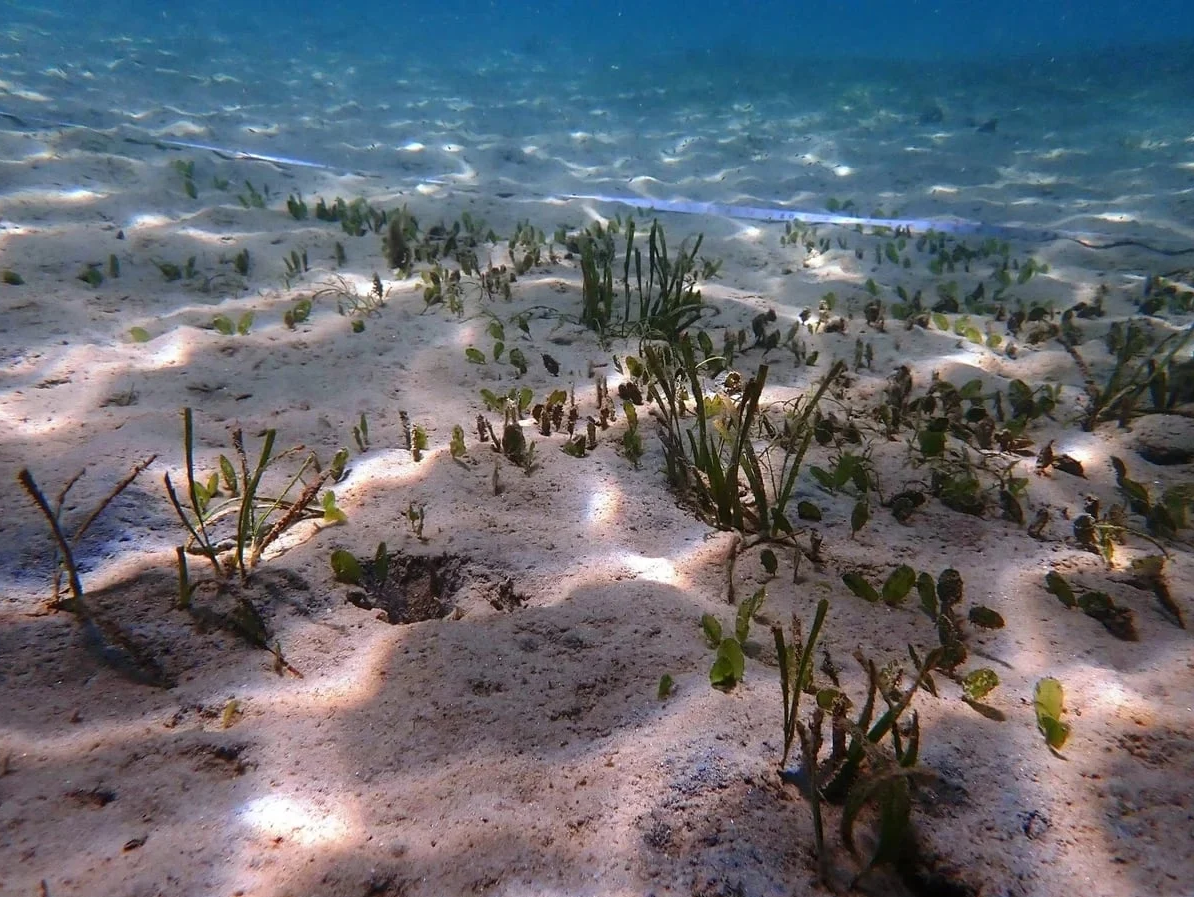
Conducting 4 seagrass restoration campaigns
Facing this reality, the "Pilot Seagrass Restoration Combined with Livelihood Improvement in Cu Lao Cham" (GCBC) project was launched to restore the seagrass ecosystem while supporting community livelihoods. The project is funded by the UK Government through the GCBC program and implemented by the World Wide Fund for Nature in Viet Nam (WWF-Viet Nam) in coordination with the Cu Lao Cham Marine Protected Area Management Board and relevant agencies. The project aims to restore 2 hectares of seagrass, establishing a scientific and practical foundation for larger-scale restoration in the future.
As of September 2026, the project has conducted 4 pilot restoration campaigns in Cu Lao Cham. Monitoring results of the March 2026 restoration campaign at Bai Bac show that the seedlings continue to survive and develop relatively stably, despite varying retention rates among species.
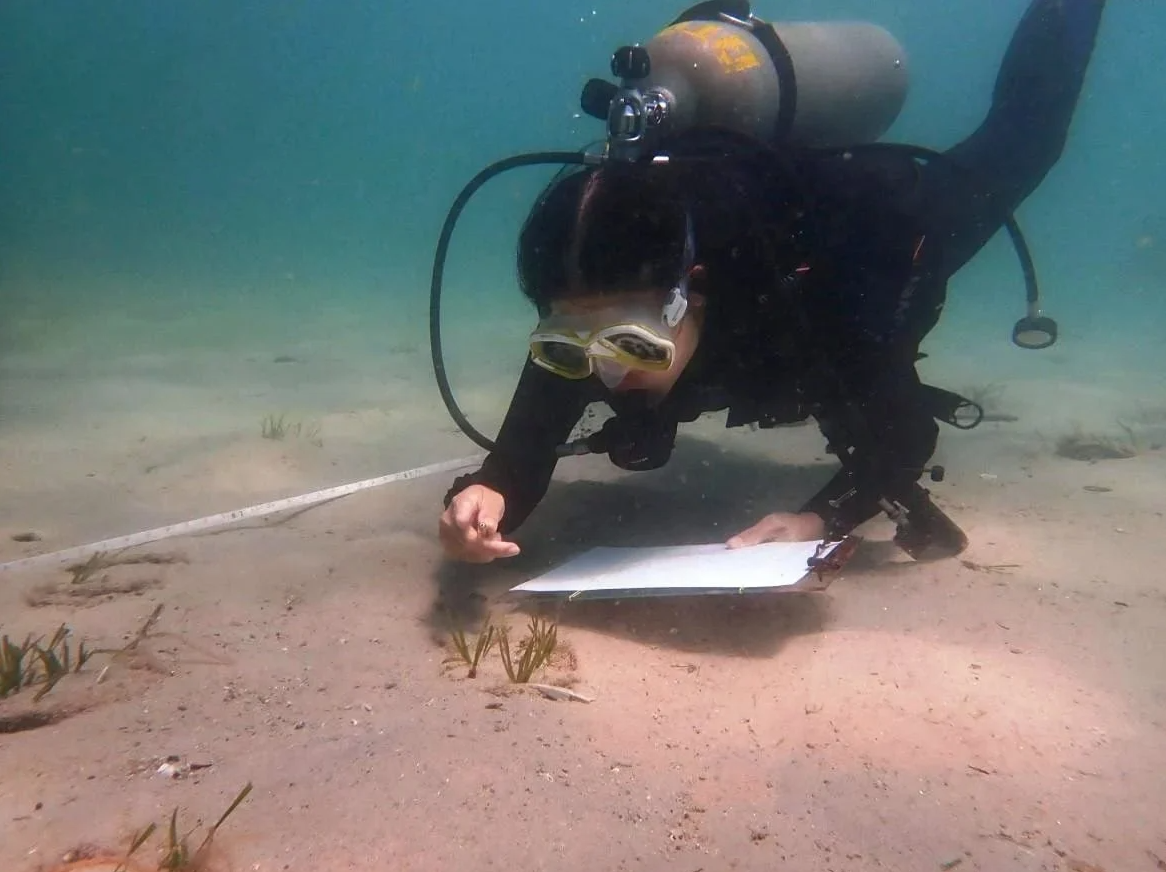
In this area, the project is restoring two species: Cymodocea rotundata (ribbon seagrass) and Thalassia hemprichii (Pacific turtlegrass). Over 1,200 vertical shoots were planted on the seabed using the potting method. Following observation, the survival rate of the pots reached about 71.1%, with the number of vertical shoots increasing to 933.
Notably, Halodule pinifolia (needle seagrass) and Halophila ovalis (spoon seagrass) have begun to appear in the restored area, showing signs of seagrass community re-establishment. Several organisms such as snails, snail eggs, goatfish, and rabbitfish have also been recorded.
For Thalassia hemprichii, after 4 months, 13 out of 20 pots remained, achieving a survival rate of 65%, with 35 vertical shoots maintained. The recovery and expansion rate of this species is slower than that of Cymodocea rotundata, yet the continuous survival of the seedlings indicates initial adaptation to the pilot area's conditions.
Building on these initial results, the project will continue to research, adjust, and perfect techniques while proposing replication solutions to increase the restored area in the future.
Supporting community livelihoods
Alongside ecosystem restoration, the GCBC project aims to create suitable livelihoods for the community. Strategically, the project plans to support 2-3 livelihood models with about 70-100 participating and benefiting households. This gives residents more economic options, reduces pressure on marine resource exploitation, and increases participation in conservation efforts.
Livelihood support activities are implemented alongside community awareness-raising and capacity-building on seagrass conservation and sustainable marine resource use. This approach ensures residents can both benefit from livelihood improvements and actively participate in protecting the island's coastal ecosystem.
The project also strengthens coordination among management agencies, businesses, and local communities to monitor and protect natural seagrass beds alongside restored areas.
Furthermore, GCBC is researching the carbon absorption and storage capacity of Cu Lao Cham's seagrass beds and methods to measure and verify blue carbon potential. This aspect is currently in the research phase, aiming to establish a scientific basis for appropriate future directions.
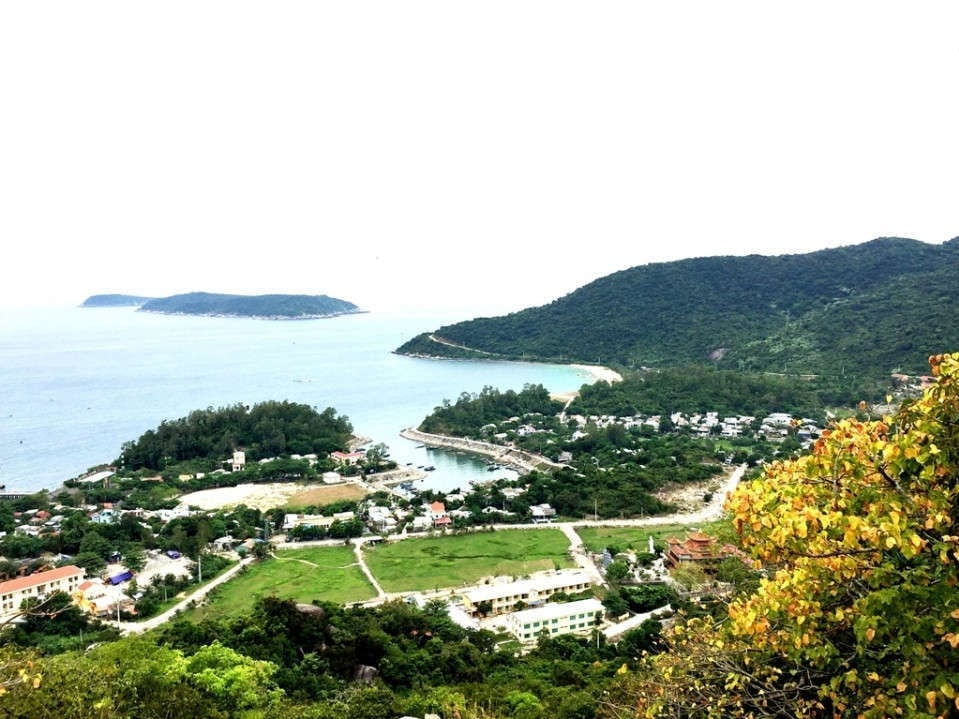
According to Mr. Nguyen Thanh Huy, GCBC Project Manager at WWF-Viet Nam, the initial results from restoring Cu Lao Cham's seagrass show promising prospects for continued research and improved techniques.
"We will continue researching and perfecting technical solutions so we can soon replicate the restoration scale in the future, not only in Cu Lao Cham but potentially in other coastal areas, contributing to biodiversity conservation, seagrass ecosystem recovery, and fisheries resources", Mr. Huy shared.
Lan Anh