Can Tho City: Tens of billions aid climate adaptation
A livelihood project provides Can Tho farmers with production capital to transform models, increase income and actively adapt to climate change.
Climate change, drought and saltwater intrusion are increasingly impacting agricultural production and the lives of people in the Mekong Delta. In this context, building suitable livelihood models and strengthening community resilience is a crucial way to stabilize production and living standards.
Recognizing this reality, the "Livelihood support and climate change adaptation capacity building for the community" project, funded by Merry Year International (MYI), South Korea, has been implemented since 2023 in Luong Tam and Vinh Vien communes, formerly of Hau Giang province and now part of Can Tho City. The project has a total budget of 8 billion VND, of which 6 billion VND is sponsored by MYI and 2 billion VND is local counterpart funding.
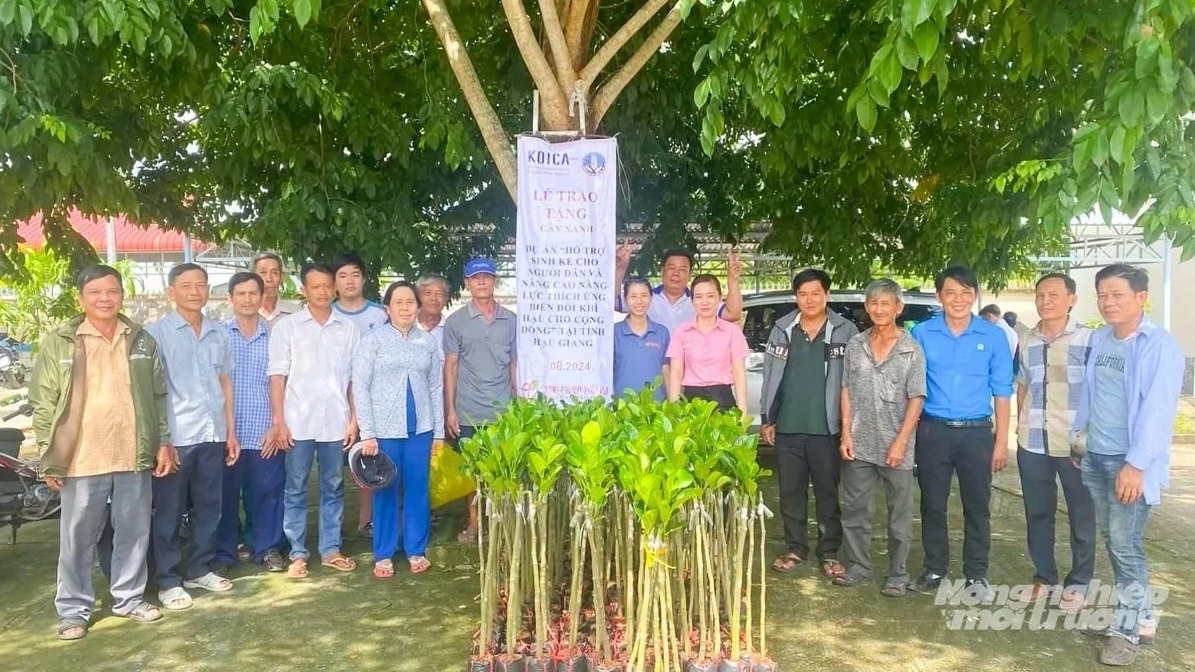
Over 400 beneficiary households
A core focus of the project is providing zero-interest livelihood capital to disadvantaged households. From 2023 to 2025, the project disbursed over 6 billion VND to 404 household turns, enabling residents to invest in production, purchase agricultural supplies with cash, and reduce input costs by 15-20%. Notably, all households repaid the capital on time without any overdue debts.
In Luong Tam commune, this funding has empowered many households to boldly transform their farming practices to adapt to increasingly adverse conditions. Mr. Tran Bao Binh, from Hamlet 7, Luong Tam commune, Can Tho City, is among those supported to implement a shrimp-rice rotational farming model.
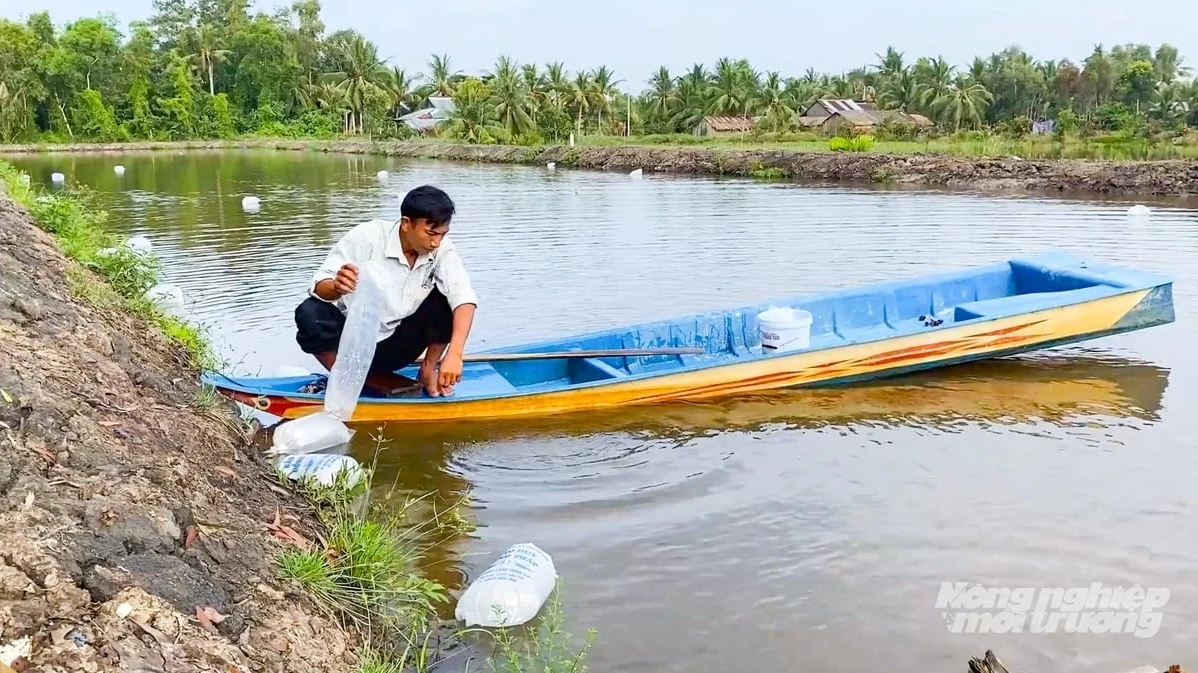
According to Mr. Binh, his family received 19.1 million VND in zero-interest loans. The funds were used to purchase breeding stock, improve soil, and buy feed in cash, thereby easing the initial investment burden. On a 1.5-hectare plot, his family cultivates one crop of giant freshwater prawn intercropped with whiteleg shrimp and black tiger shrimp, followed by soil preparation for the Winter-Spring rice crop. The total profit from both shrimp and rice reaches about 80 million VND per year.
Mr. Binh shared that previously, when sudden saltwater intrusion occurred, many households stubbornly maintained rice production, leading to crop failures. Consequently, farmers gradually shifted to the shrimp-rice model. In the early years, shrimp farming also faced significant challenges due to acid sulfate soils and a lack of equipment to test salinity and pH levels. After receiving project funding and connecting with university lecturers, professors, and masters for guidance on water treatment and stocking techniques, production efficiency steadily improved.
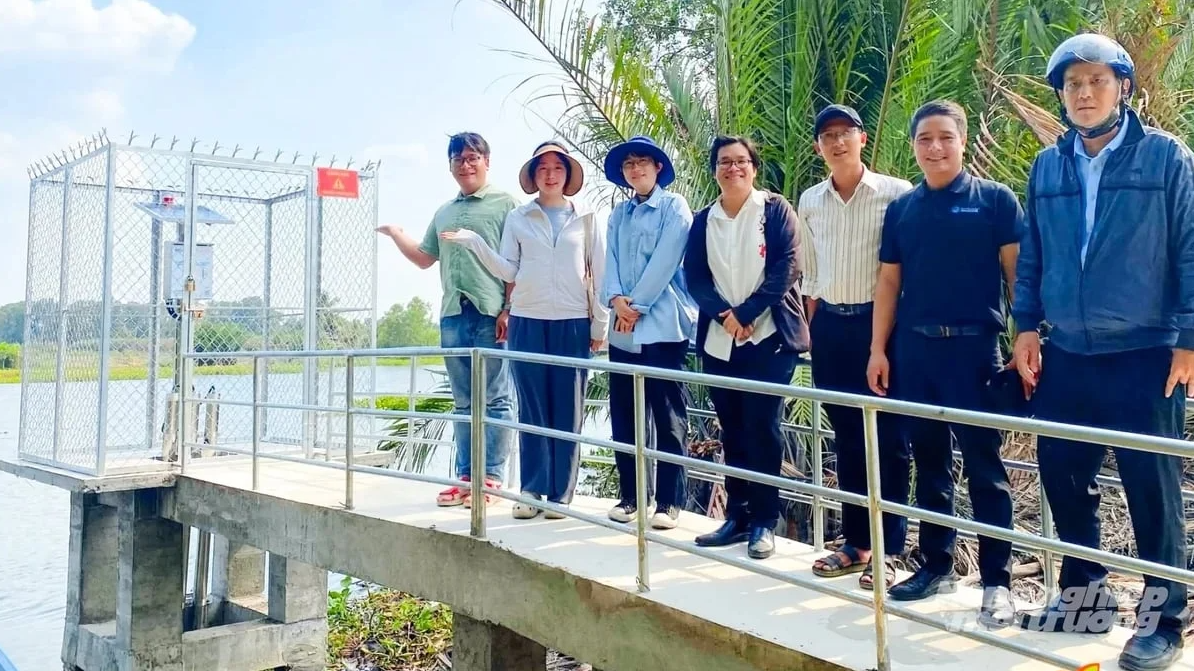
Beyond financial support, the project invested in technological solutions for water resource management. Seven automated salinity monitoring stations and surveillance camera systems were installed in key localities. A website and software for online tracking provide real-time updates on salinity, pH, dissolved oxygen, and water quality parameters, helping technical staff and farmers monitor water conditions to proactively regulate production.
The project also supplied 156 domestic water tanks, handheld salinity meters, salinity pens, and water quality testing kits to local authorities, specialized units, and residents. These devices empower locals to actively monitor water sources, choose appropriate production timelines, and ensure a stable domestic water supply during the dry season.
Alongside material support, training and technical transfer are heavily emphasized. Over 2024 and 2025, the project organized 50 training sessions on production techniques, household economic management, low-emission high-quality rice cultivation, planting area code issuance, food safety, and climate change adaptation. The Farmer Field School (FFS) approach allows farmers to combine theoretical learning with hands-on field practice.
Powered by project resources, multiple locally adaptable production models have been established and replicated, such as biosafety-oriented cultivation of honeydew melon, watermelon, and corn; beekeeping linked to value chains; and pineapple farming. Among these, the shrimp-rice model is highly regarded for its ability to capitalize on seasonal natural conditions, lower costs, and boost income per cultivated area.
Mr. Lam Van Viet, Director of the Luong Tam Commune General Service Center, Can Tho City, stated that the project specifically targets poor and disadvantaged households, those lacking production capital, and areas impacted by drought and saltwater intrusion. Activities are diverse, ranging from capital support and technical training to water management equipment, salinity tracking, and freshwater storage.
According to Mr. Viet, during implementation, production models have progressively demonstrated efficiency, improving residents' livelihoods. In Luong Tam commune alone, the shrimp farming area in saline-affected zones has expanded to roughly 180 households covering about 250 hectares. In the next phase, the project will continue replicating successful models while exploring new ones suited to local conditions and yielding high economic returns, ultimately helping farmers stabilize their household economies.
Besides production activities, the project implements various social welfare initiatives, such as distributing Mid-Autumn Festival gifts to students and providing green trees and fruit saplings to households and schools, contributing to landscaping and fostering a spirit of sharing within the community.
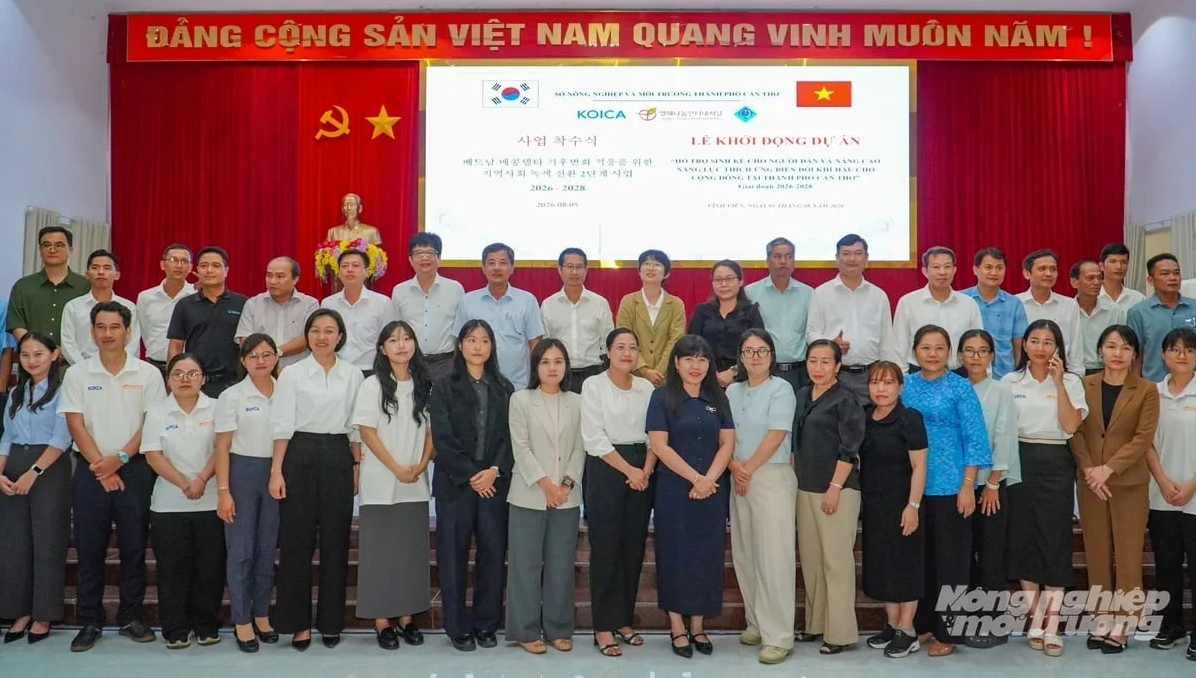
MYI provides an additional 7.7 billion VND for Phase 2
Following the initial phase, the project continues into the 2026-2028 period. The Can Tho City People's Committee has approved the grant for Phase 2 implementation.
Phase 2, implemented in Luong Tam and Vinh Vien communes, Can Tho City, will run until November 26, 2028. The total project capital is 948 million won (equivalent to 620,000 USD, or approximately 16.114 billion VND). Of this, the non-refundable aid amounts to 453 million won (equivalent to 296,000 USD, or roughly 7.7 billion VND). Counterpart funding includes 2.5 billion VND from the state budget, 3.514 billion VND from residents, and 2.4 billion VND rolled over from the initial phase.
In this new phase, the project continues to focus on enhancing climate change response capacity, supporting livelihoods for vulnerable groups, and improving quality of life. A notable component is the ongoing upgrade and installation of salinity monitoring stations and the development of IT and communication infrastructure for drought and salinity disaster prevention. Additionally, grassroots authorities will receive training on system operation, administration, and climate change management capacity.
Ms. Nguyen Thi Giang, Deputy Director of the Can Tho Department of Agriculture and Environment, noted that from 2023 to 2025, the project provided livelihood support, training, and knowledge to help residents improve production resilience against climate change. These achievements will serve as a foundation for Phase 2.
A new feature highlighted by Ms. Giang is the increased application of IoT, sensors, and digital transformation in monitoring salinity, extreme weather, and other factors impacting production. Data from this technological system is expected to give residents timely access, allowing proactive responses to shifting weather and water conditions.
According to Ms. Giang, the 2026-2028 phase will continue to prioritize enhancing climate change adaptation capacity, linking livelihood support with improved life quality and higher income for farmers. Collaboration between local agencies and the international donor organization will be maintained throughout the selection of beneficiaries, model deployment, and project execution.
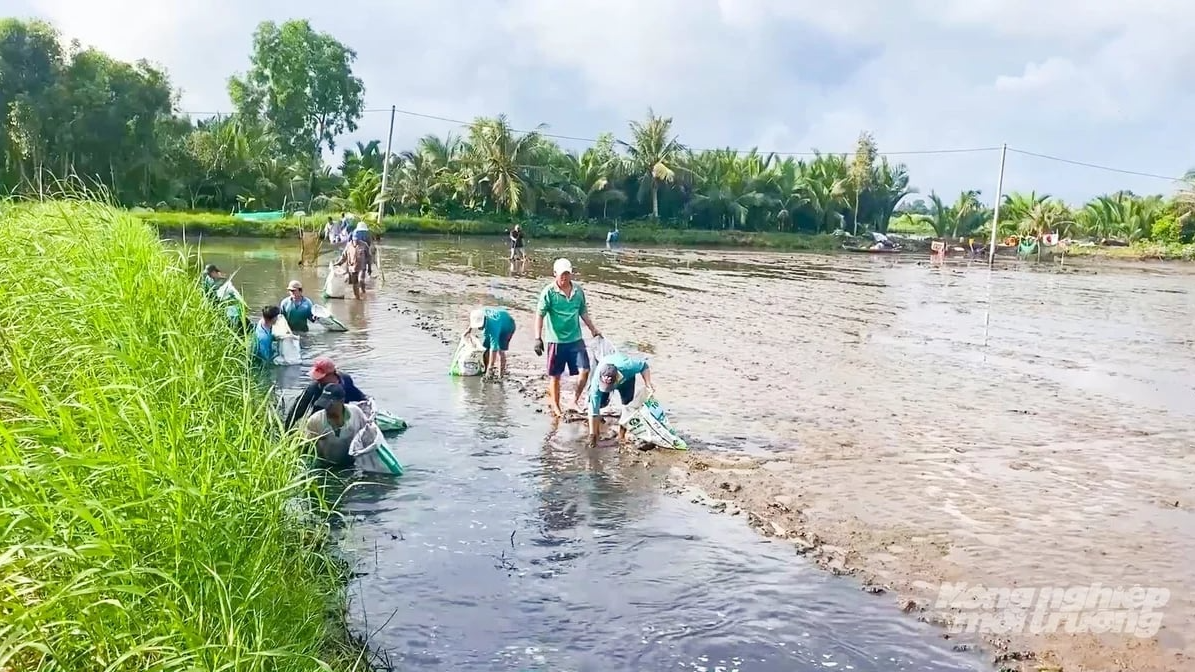
From livelihood capital to shrimp-rice models, water monitoring systems, and digital technology applications, the project is creating more conditions for residents in salinity-affected areas to be proactive in production. Results from the initial phase also provide a strong basis for expanding suitable models, aiming for stable livelihoods and enhanced climate change resilience in Can Tho City.
Van Vu