Controlling cadmium and Auramine O to develop sustainable durian industry
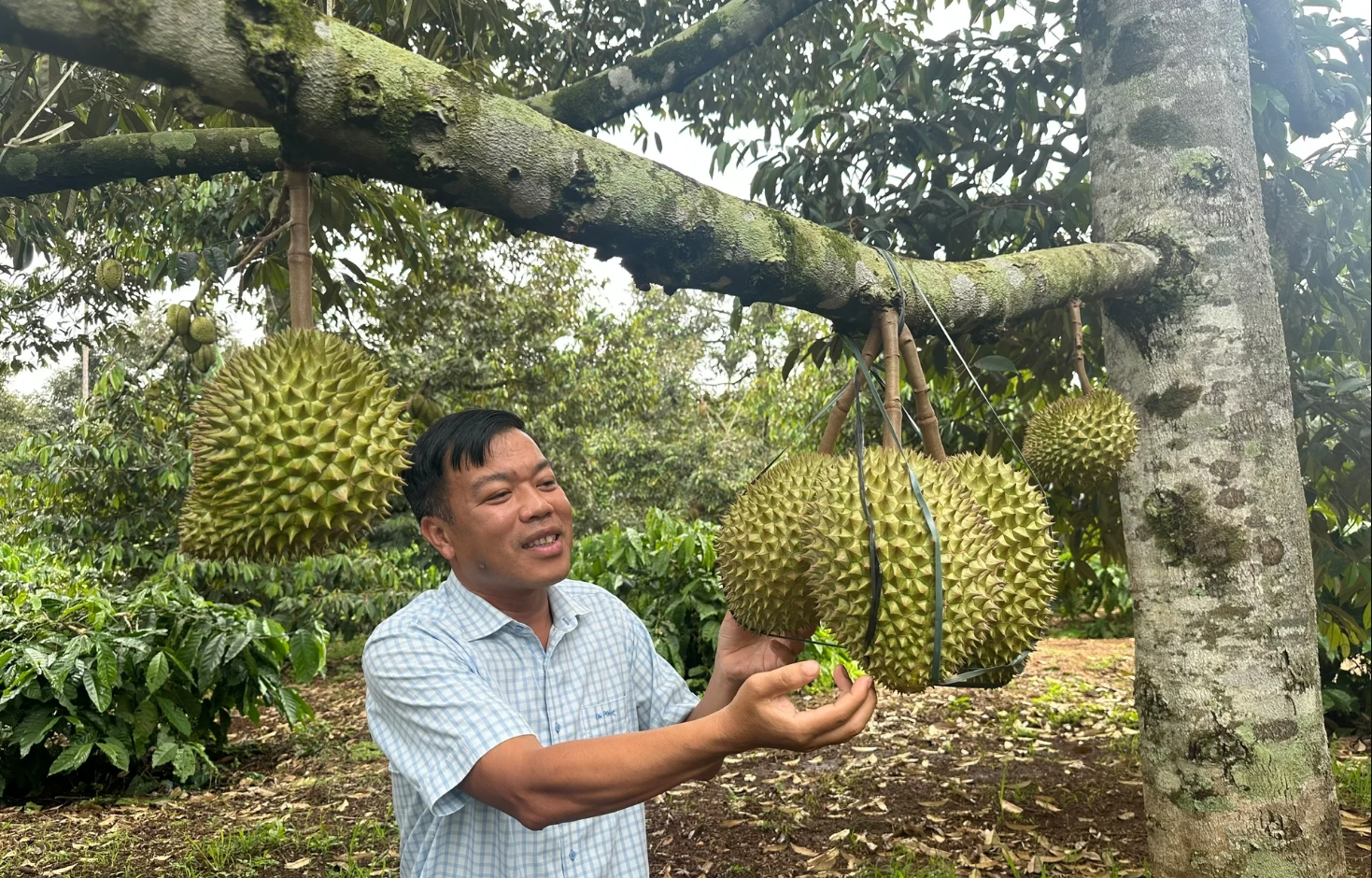
Controlling Cadmium and Auramine O in durian production is an urgent requirement to ensure quality, food safety and the sustainability of Viet Nam’s durian export markets.
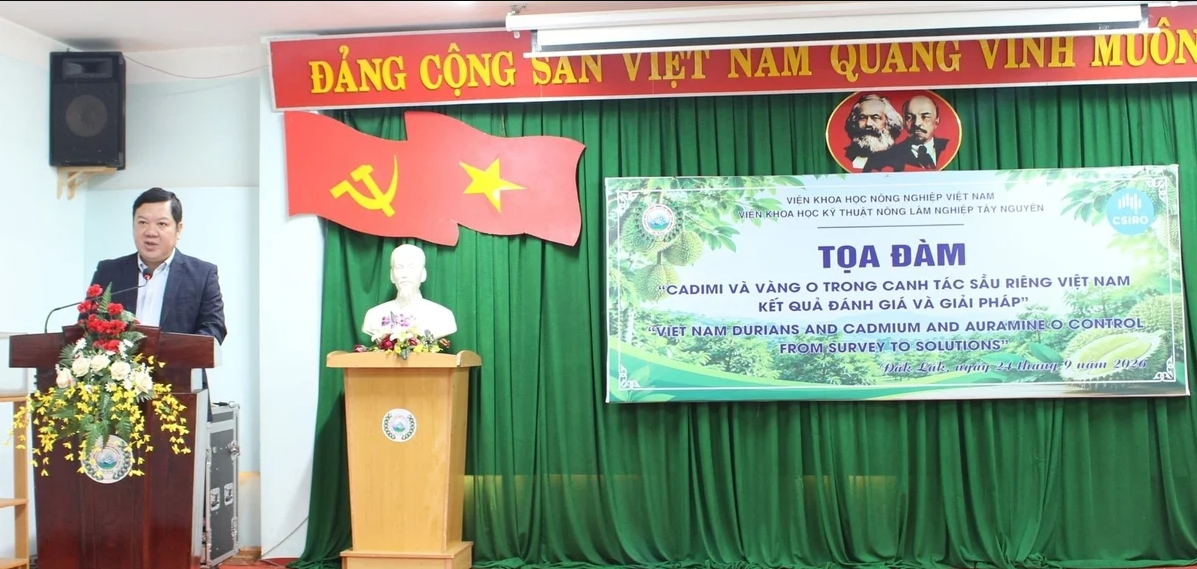
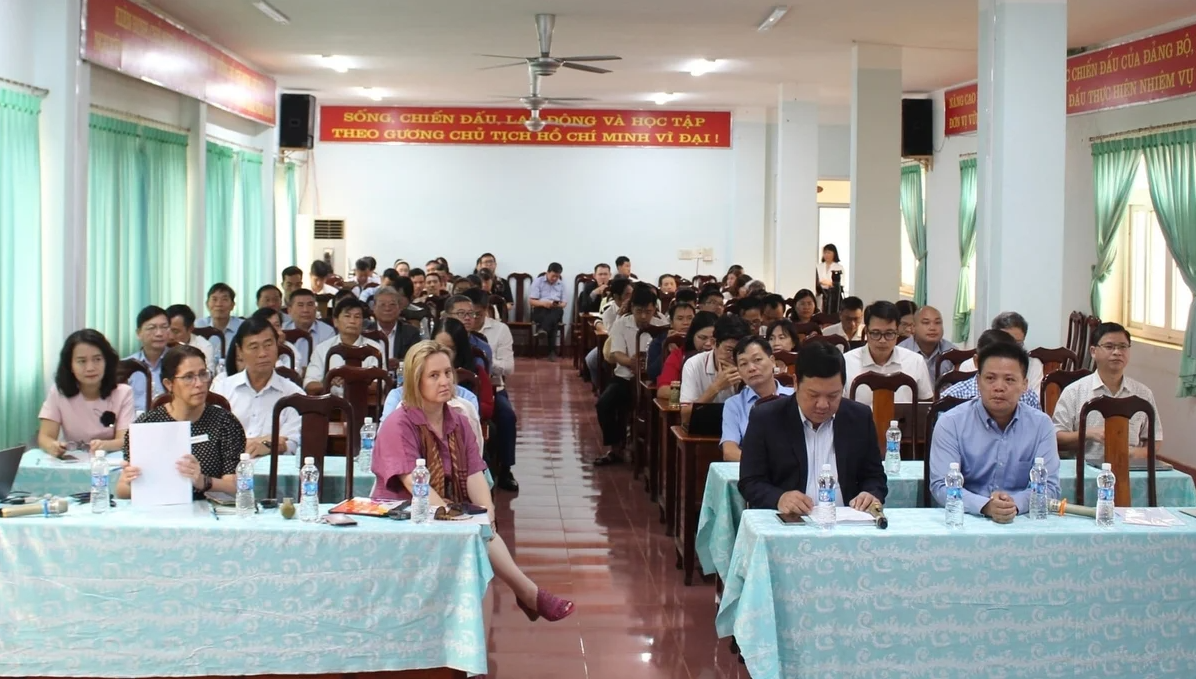
The Western Highlands Agriculture and Forestry Science Institute (WASI) recently held the seminar “Viet Nam durians, cadmium and auramine O control from survey to solutions” to identify residue risks, determine their sources and propose control measures throughout the durian production, pre-processing and storage chain.
The seminar was held under the Central Highlands Horticultural Innovation Network (HIN), jointly implemented by WASI and Australia’s Commonwealth Scientific and Industrial Research Organisation (CSIRO) under the Aus4Innovation program, with funding from the Australian Government.
Identifying the risks accurately
Dr. Phan Viet Ha, Deputy Principal in charge of the Western Highlands Agriculture and Forestry Science Institute and project leader, said the rapid expansion of durian production in the Central Highlands is creating opportunities to increase incomes for producers, businesses and local communities. However, alongside market opportunities come increasingly stringent requirements for quality, food safety and residue control, particularly for Cadmium (Cd) and Auramine O.
According to Dr. Phan Viet Ha, these are currently notable barriers to Viet Namese durian exports, particularly to the Chinese market. Accurately assessing the current situation and identifying the sources and mechanisms through which these risks arise are important foundations for developing appropriate control measures.
Cadmium and Auramine O pose risks at different stages of the production chain. Cadmium may originate from soil, water, agricultural inputs and products used in cultivation. Auramine O, meanwhile, is associated with post-harvest pre-processing, storage and circulation.
Dr. Nguyen Viet Tru, representing the project implementation team at WASI, said assessments conducted in key durian-growing areas of the Central Highlands have initially identified potential sources through which Cadmium could enter the production chain. Mineral fertilizers, secondary- and micronutrient fertilizers, growing media and soil amendments that do not comply with standards are among the factors requiring attention.
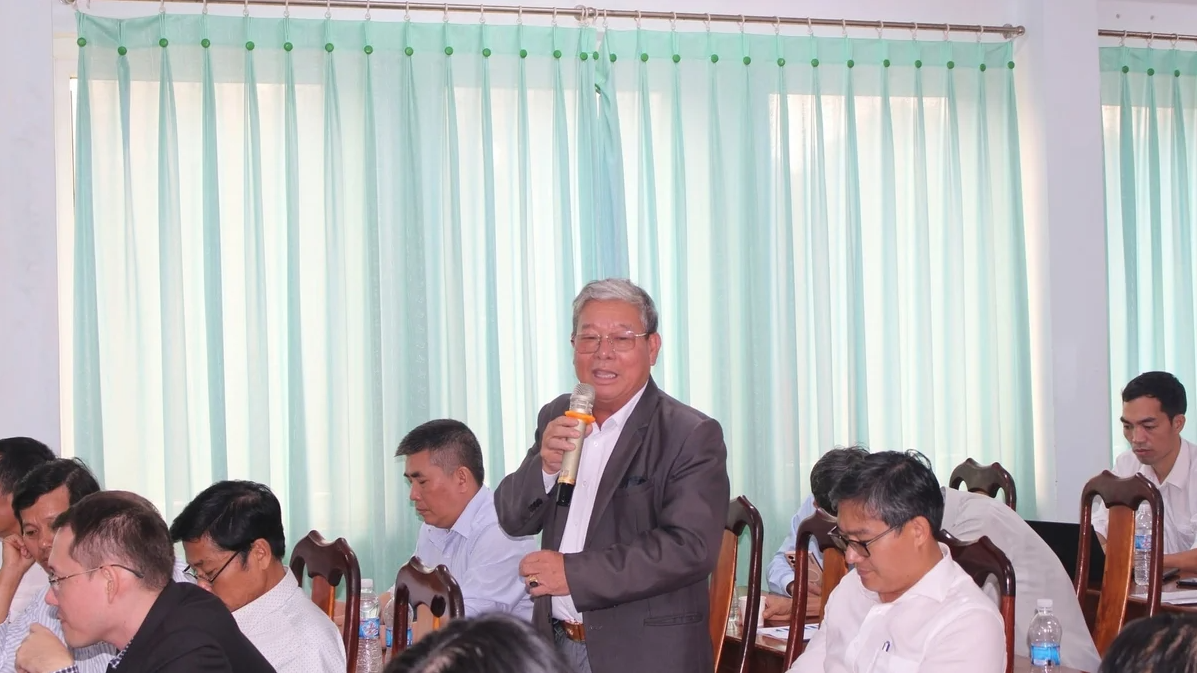
Cadmium risk does not depend solely on heavy-metal content in soil; it also depends on solubility, soil conditions, and how plants absorb it. At the seminar, some participants noted that certain durian orchards had recorded high Cadmium levels in soil while no residues were detected in fruit samples, indicating that further assessment is needed of the factors affecting plant uptake.
Expert Le Ngoc Bau recommended strict control over fertilizer use, particularly fused phosphate fertilizers. Excessive use over a long period could increase the risk of Cadmium accumulation in the soil.
A representative of Dat Ly Green Agriculture Cooperative said that, in addition to the pesticide samples already analyzed, assessments should be expanded to organic fertilizers, foliar fertilizers and leaf samples. Prioritizing risk prevention at the input stage should be a priority, as reducing residues after they have already occurred can be difficult and time-consuming.
For Auramine O, the risk is concentrated in pre-processing, storage and fruit-surface treatment at some packing facilities. It is an industrial dye that is not permitted for use in food processing. Therefore, control of Auramine O needs to focus on post-harvest processes, sanitation, treatment and storage of fruit, and cannot be replaced by input-management measures at the orchard level.
Le Anh Trung, Chairman of the Dak Lak Durian Association, emphasized that quality control, food safety, residue control and traceability are no longer optional but are conditions for maintaining and expanding export markets. Failure to comply can result not only in a rejected shipment but also higher costs for inspection, storage, handling and recalls, while damaging the reputation of Viet Namese durians.
Controlling risks from the origin
Delegates agreed that Cadmium and Auramine O control measures should be implemented in an integrated manner, with coordination among regulators, scientists, businesses, cooperatives and producers.
Nguyen Hac Hien, DiPrincipal of the Dak Lak Sub-Department of Plant Production and Protection, called for greater dissemination of research findings and closer coordination with specialized agencies to deliver recommendations to growing areas. Further research under different cultivation conditions is also needed, along with a more detailed risk-assessment system to support management and farmer guidance.
Participants also proposed focusing research on soluble Cadmium in soil and working with cooperatives to develop risk maps based on soil, fertilizer and water-source factors. On this basis, specialized agencies could develop risk-management procedures tailored to each growing area, helping farmers proactively select safe inputs and cultivation practices.
For producers, fertilizer and soil amendments must be based on their origin, quality, and technical guidance. Inputs of unknown origin should be avoided, as should excessive use of fertilizers that may introduce heavy metals into the soil. Production records, compliance with good agricultural practices and management of growing-area codes should be strictly implemented and linked to traceability requirements.
For Auramine O, packing facilities must completely eliminate the use of unauthorized industrial dyes in the pre-processing and storage of durians. Instead, they should research and apply safe preservation solutions and biological and microbial products approved for circulation by competent authorities, ensuring fruit quality and food safety.
Participants also recommended developing standard operating procedures (SOPs) early to control Cadmium and Auramine O, and strengthening the capacity of testing laboratories in production areas to support businesses, cooperatives, and farmers in testing products before export.
Jennifer Kelly, CSIRO Project Lead, said the seminar would help stakeholders better understand Cadmium and Auramine O residue risks and gather scientific input to develop reliable control solutions. CSIRO will continue working with WASI and Viet Namese partners to share data, provide technical support and test innovative solutions aimed at strengthening resilience and promoting sustainable development of the Central Highlands fruit and vegetable sector.
Concluding the seminar, Dr. Phan Viet Ha said WASI would incorporate the participants’ comments, finalize the report and comprehensive set of solutions, and submit them to the Ministry of Agriculture and Environment and local authorities for consideration and practical application.
Tran Tho