Sustainable green livelihoods for Co Tu women
By adopting a green economy, the Co Tu people in Song Vang commune now utilize local resources to build highly effective production models.
From indigenous vine tea to green products
Vine tea is a product closely tied to the lives of the Co Tu people in Song Vang commune, Da Nang City. Previously, locals mainly harvested, pre-processed and packaged it manually, so the product's value remained limited. Since joining the project "Empowering women in Central Viet Nam to improve livelihoods and protect the environment and natural resources through green and circular economy", the method of making vine tea has gradually shifted towards a greener and more sustainable direction.
The project, funded by the Delegation of the European Union to Viet Nam with a total budget of nearly 1 million Euros, is being implemented over four years (2025-2028) in Son Tra and Hai Van wards and Song Vang commune. It is executed by the Da Nang Union of Science and Technology Associations and the GreenViet Biodiversity Conservation Center, in collaboration with Visible Impact (Germany) and the Center for Social Research and Development (CSDR).
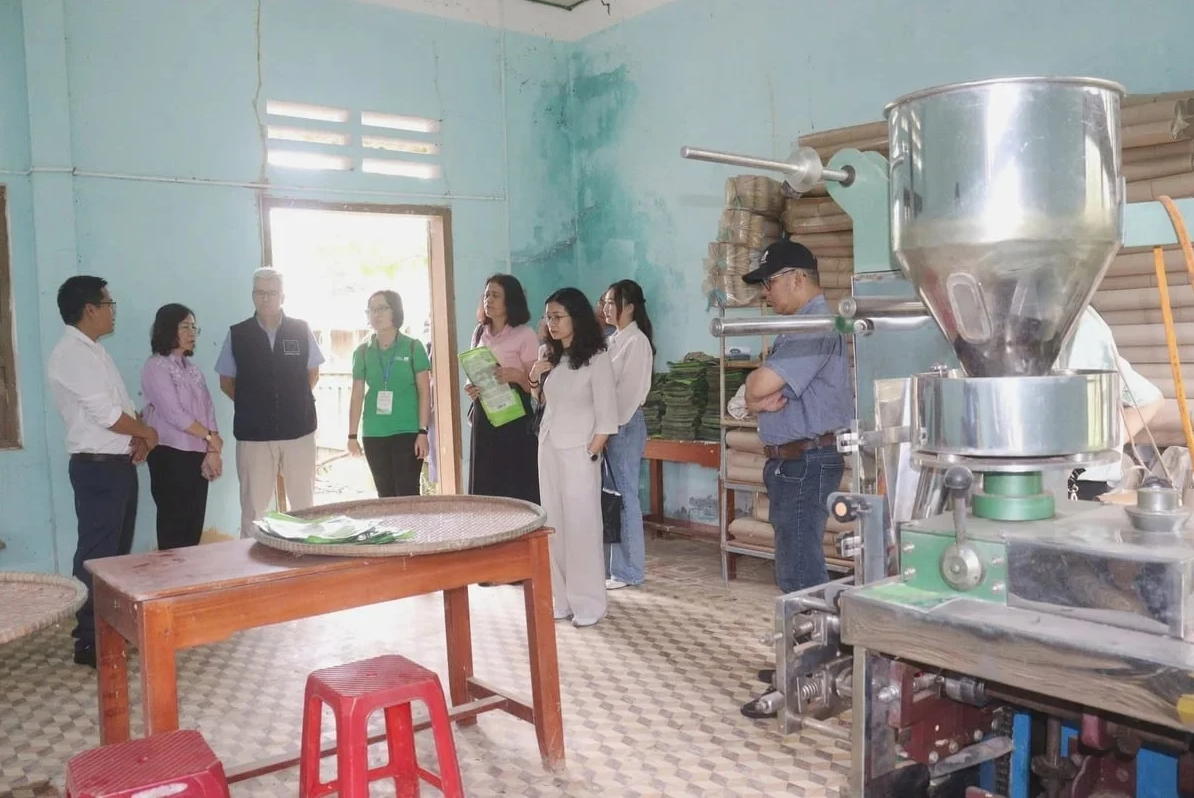
Ms. Nguyen Thi Hoa, a member of the Song Vang Agriculture and Medicinal Herbs Cooperative, shared that the women in the cooperative have been introduced to new production methods, from planting, tending, and harvesting to processing. Notably, they use agricultural by-products and compost them into organic fertilizer for the tea plants, minimizing the use of chemical fertilizers during production.
In the processing stage, instead of roasting the vine tea directly over an open kitchen fire as before, the cooperative now uses electric dryers. This ensures a more uniform product, stabilizes the fermentation process, and preserves the tea's authentic flavor. This is one of the most distinct changes as the model gradually transitions from manual methods to device-assisted processing workflows.
Beyond upgrading production methods, the vine tea's visual presentation has also received investment. The cooperative receives support to refine eco-friendly labels and packaging, giving the product a distinct identity when introduced to the market.
"The support from the project not only helps perfect the product but also creates conditions for locals to gradually adopt new approaches, from producing raw materials to processing and bringing the product to market", Ms. Hoa shared.
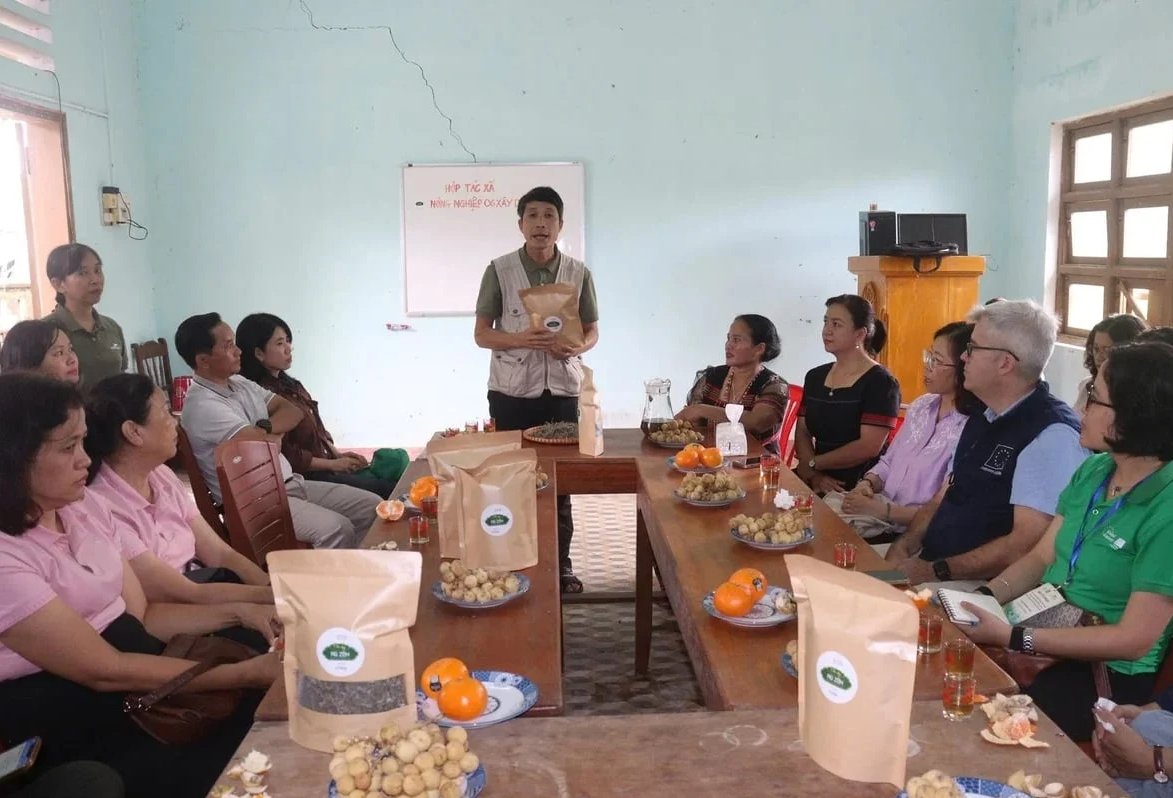
According to Mr. Hoang Duc Thao, Director of the Song Vang Agriculture and Medicinal Herbs Cooperative, after surveying and recognizing that vine tea suits local conditions, the project supported the development of a collaborative group, expanding it into a full cooperative. This provided the foundation for locals to secure better conditions to organize production, rather than relying heavily on fragmented, small-scale harvesting and processing as before.
Currently, the cooperative has 16 official members and 14 associate members, with women constituting the majority of the production workforce. From tending the raw material areas and harvesting to processing products, women are increasingly participating directly in multiple stages. Consequently, the available local medicinal resources are being exploited in a way that generates added value and expands livelihood opportunities for women.
Mr. Thao noted that the cooperative is continuing to refine its products and is gradually building its own raw material area to apply science and technology to production. The product now has a brand identity, packaging, and a defined production process, though full commercialization is still in the formative stage.
"The cooperative plans to register for the OCOP program in 2027 to continue perfecting the product", shared Mr. Thao.
Empowering women to proactively drive the green economy
Developing vine tea following a green economic approach in Song Vang commune is one of the green livelihood models implemented under the project "Empowering women in Central Viet Nam to improve livelihoods and protect the environment and natural resources through green and circular economy".
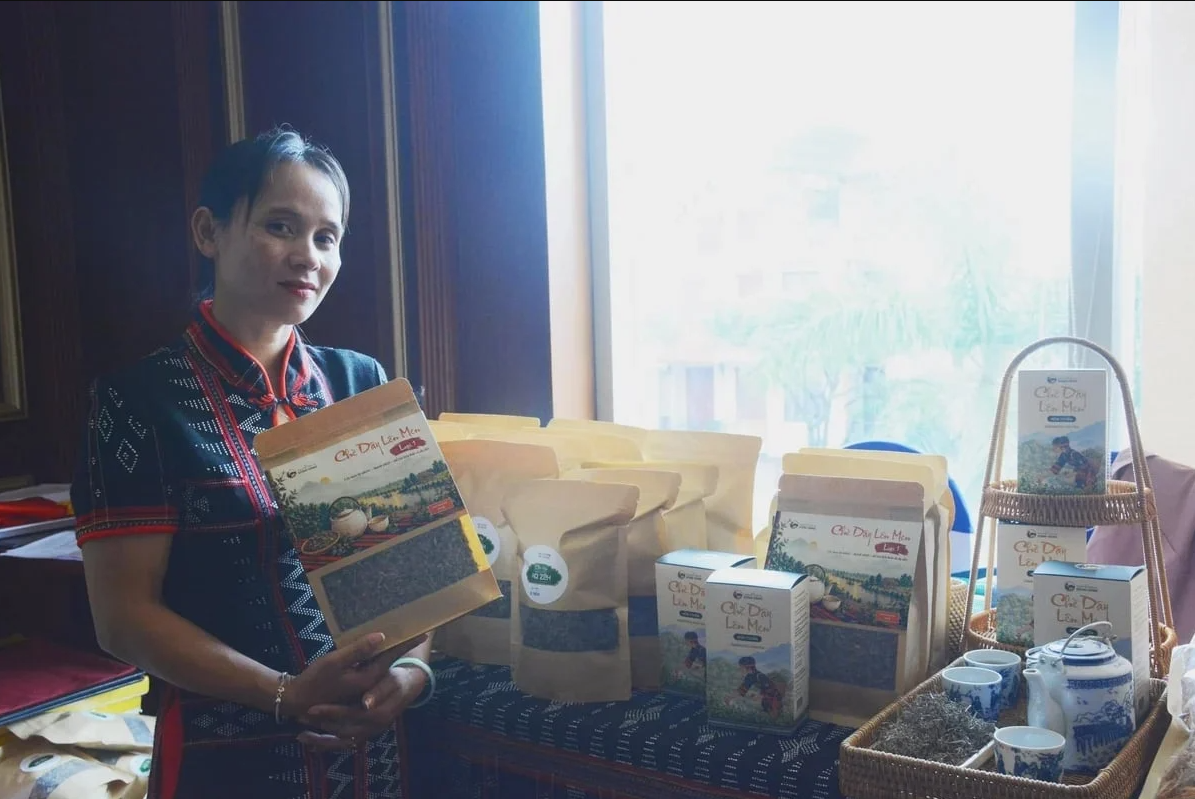
According to Mr. Tran Huu Vy, Vice Chairman of the Founding Council of GreenViet, the project's approach goes beyond supporting a specific product; it aims to build knowledge and capacity so the community can participate proactively. When women are equipped with knowledge, directly engage in production, and gradually take ownership of the product, the ability to sustain and develop their livelihoods is also elevated.
In Song Vang, this approach is put into practice through the development of vine tea, an indigenous medicinal resource intrinsically linked to local lives. Moving away from experience-based production, residents are guided step by step to apply technical protocols, improve processing stages, refine labeling and packaging, and develop market-entry strategies.
Through this, the green economy and circular economy have transitioned from abstract concepts into concrete actions suited to local conditions. Co Tu women gain more opportunities to access techniques, engage deeper in production, and incrementally increase the value of products derived from available medicinal herbs.
To make this process effective, GreenViet coordinates with local forces, where the Women's Union participates in mobilizing and organizing activities; local authorities facilitate implementation; cooperatives and collaborative groups manage production; and social organizations assist with connectivity and community support.
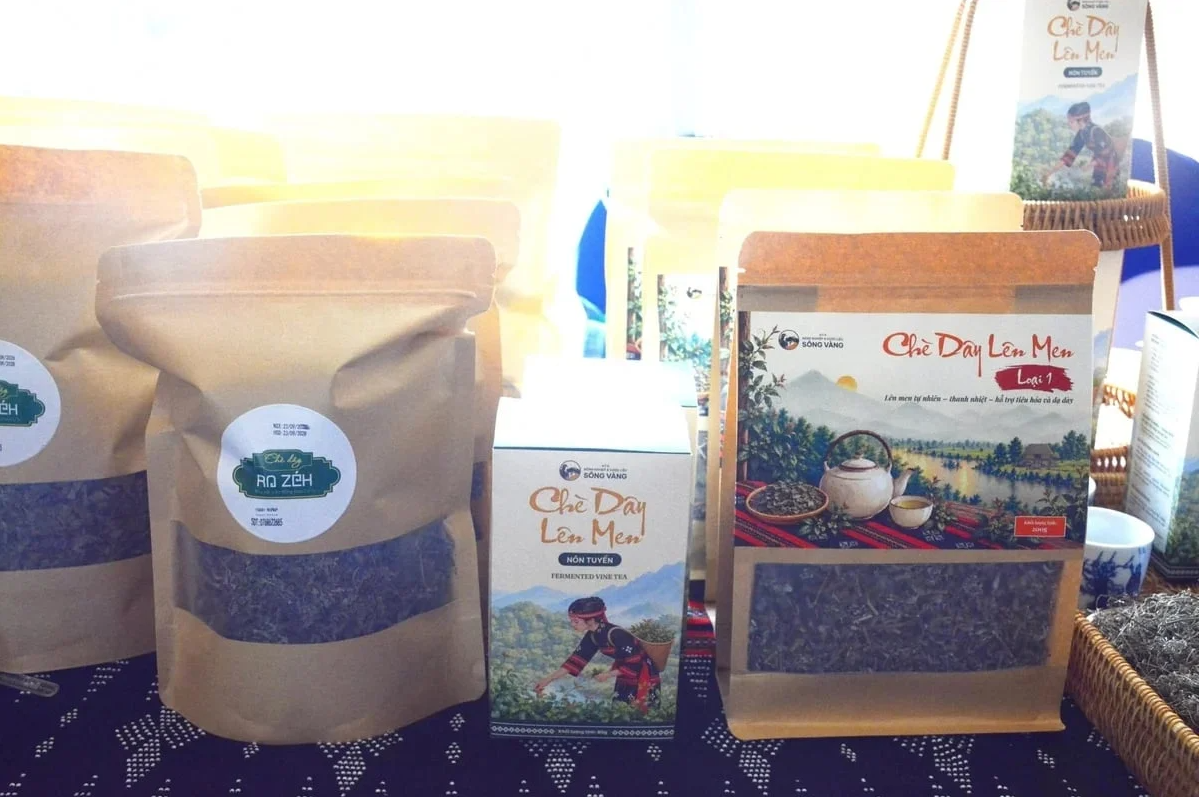
Alongside local resources, developing vine tea also opens doors for multi-stakeholder participation. Foreign organizations can provide financial aid, businesses can purchase and connect with markets, and institutes or universities can contribute to research, ultimately enhancing product value. According to Mr. Vy, this collaboration ensures that women's initiatives receive the resources and conditions needed to progressively evolve into tangible production activities.
"From support in knowledge and techniques to equipment and connections, the Song Vang vine tea product is being perfected step by step. More importantly, local women are not just participating in one single production stage but are progressively learning how to organize production towards a green, circular direction, enhancing product value, and seeking opportunities to bring the product to market", Mr. Vy shared.
According to Mr. Vy, to sustain these changes, alongside external support, it is crucial to harness the community's internal strength. When locals have the knowledge, active participation, and the right conditions to organize production, new livelihoods will have the foundation for long-term development, closely aligning with the rational use of resources and environmental protection.
Lan Anh