ILRI join hands to repel rabies and protect public health
World Rabies Day 2026 emphasizes cross-sectoral collaboration to control the disease, targeting zero rabies deaths by 2030.
Recently, the Ministry of Health, the Ministry of Agriculture and Environment, and domestic and international partners organized a series of activities to mark World Rabies Day 2026 under the theme “Stronger Together.”
The event brought together international partners working in health, veterinary medicine and One Health, including the Food and Agriculture Organization of the United Nations (FAO), FHI 360, Humane World for Animals, the International Livestock Research Institute (ILRI) and the World Health Organization (WHO), along with domestic agencies, organizations and communities.

According to MSc. Dr. Vo Hai Son, Deputy Director of the Viet Nam Administration of Disease Prevention, under the Ministry of Health, the series of activities held in Dak Lak and Dong Nai helped raise awareness of rabies prevention and control, promote responsible dog and cat ownership, and strengthen coordination among the health and veterinary sectors and local authorities.
“To achieve the goal of zero human deaths from dog-mediated rabies by 2030, close coordination among the health and veterinary sectors, authorities at all levels and communities is essential. This year’s message, ‘Stronger Together,’ also highlights the role of each stakeholder in taking joint action, making effective use of available resources and protecting human health from a completely preventable disease,” he said.

A key activity was an inter-agency simulation exercise for responding to a rabies case. Health and veterinary authorities, together with local authorities, coordinated to handle a case involving a person bitten by an animal suspected of having rabies, while investigating and controlling the risk of disease transmission among animals. The exercise helped strengthen local preparedness and inter-agency coordination in responding to rabies outbreaks.
“Fully vaccinating dogs and cats, practicing responsible pet ownership, and strengthening quarantine and controls on animal transportation are important measures to prevent rabies. We call on pet owners to proactively vaccinate and properly manage their dogs and cats in accordance with regulations, and to cooperate with authorities in rabies prevention and control efforts, contributing to the protection of public health and animal health,” emphasized Assoc. Prof. Dr. Pham Kim Dang, Deputy Director of the Department of Animal Health and Production.
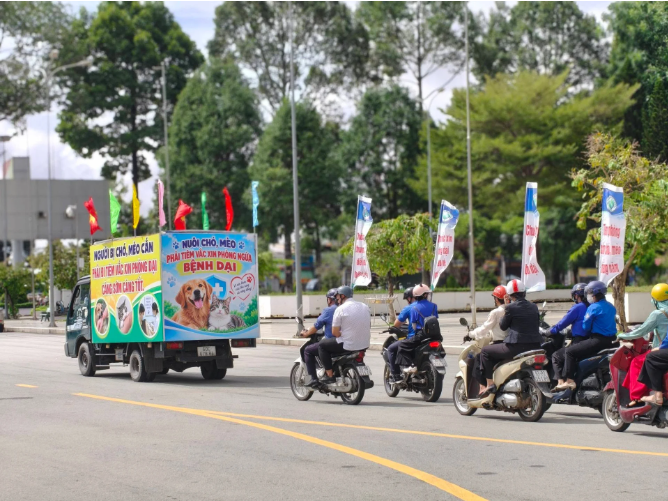
Rabies is a dangerous zoonotic infectious disease transmitted from animals to humans, primarily through bites or scratches from infected dogs and cats. Once clinical symptoms appear, the disease is almost always fatal. However, rabies can be effectively prevented through vaccination of both humans and animals.
In 2025, Viet Nam recorded 77 rabies-related deaths across 20 provinces and cities, while more than 1 million people received post-exposure prophylaxis. During the first nine months of 2026, the country recorded a further 57 rabies-related deaths.
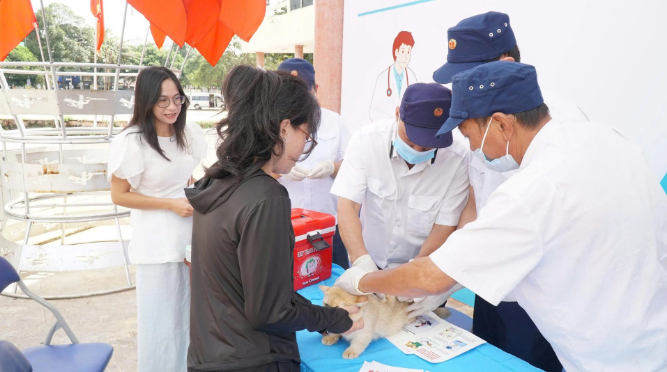
Viet Nam has set a goal of zero human deaths from dog-mediated rabies by 2030. The 2026-2030 period is critical for accelerating progress towards this goal by increasing vaccination coverage among dogs and cats, strengthening pet management, controlling the transportation and quarantine of dogs and cats, raising public awareness of rabies risks, and enhancing intersectoral coordination.
The series of activities marking World Rabies Day 2026 reaffirmed the commitment of government agencies, development partners, international organizations, research institutions, social organizations and communities to strengthening collaboration, optimizing resources and promoting effective solutions to prevent, control and ultimately eliminate rabies in Viet Nam.
Phuong Linh