AOLC 2026: Empowering leaders in agroecology
2026 Organic Agriculture Leadership Course (AOLC 2026) concluded with the recognition of four outstanding project proposals.
Launched on May 7, AOLC selected 27 participants from nearly 70 applications nationwide. The participants came from businesses, government agencies and non-governmental organizations, bringing diverse experiences and perspectives on production, markets and community development in agroecology.
Throughout the program, participants took part in two in-person training sessions, four online thematic sessions and completed six assignments. Developing a project proposal was a core component throughout the course, enabling each participant to apply the knowledge gained to a specific issue within their organization, locality or community.
The featured projects focused on applying Participatory Guarantee System (PGS) principles; agroforestry; strengthening “trust infrastructure”; and developing raw material areas and value chains for organic chrysanthemum tea.
President of the Vietnam Organic Agriculture Association (VOAA) Ha Phuc Mich described the course outcomes as a meaningful milestone in the ongoing cooperation on organic agriculture human resource development. Building on a 2017 cooperation agreement between VOAA, IFOAM and the Ministry of Agriculture and Environment (formerly the Ministry of Agriculture and Rural Development), the program demonstrates the partners’ continued commitment to supporting green agriculture.
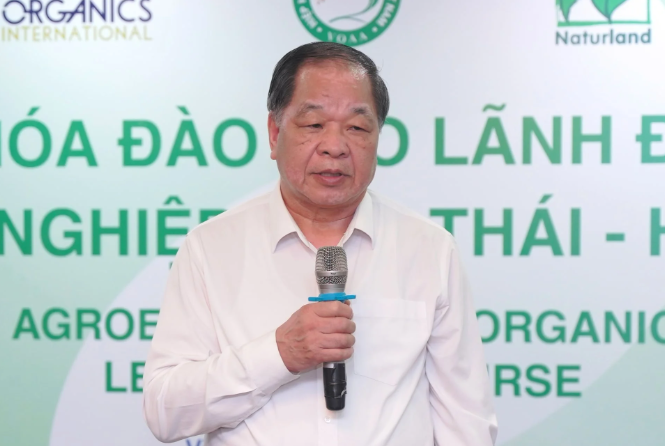
“Each leader should continue to serve as a catalyst for spreading knowledge and promoting ecological and organic farming practices. After the course, I hope the network established will be further strengthened, with members continuing to propose initiatives and projects suited to local needs in coordination with local authorities,” Mr. Mich said.
As emphasized by the VOAA President, the program’s value should be reflected in participants’ ability to apply their knowledge, connect stakeholders, and bring about practical changes. The closing ceremony took place as the Association prepares to celebrate its 15th anniversary, marking a tangible achievement in its efforts to develop leadership capacity and connect the organic agriculture community.
Ms. Patricia Flores, Senior Capacity Development Manager at IFOAM - Organics International Academy, recognized Vietnam’s potential and active role in transforming food systems in Southeast Asia. IFOAM also encouraged participants to further develop their initiatives and prepare presentations for the 2027 Organic World Congress in the Philippines.
The initiatives presented addressed a range of practical issues, from the quality of school meals and consumer trust to the preservation of indigenous knowledge and improved livelihoods for ethnic minority women.
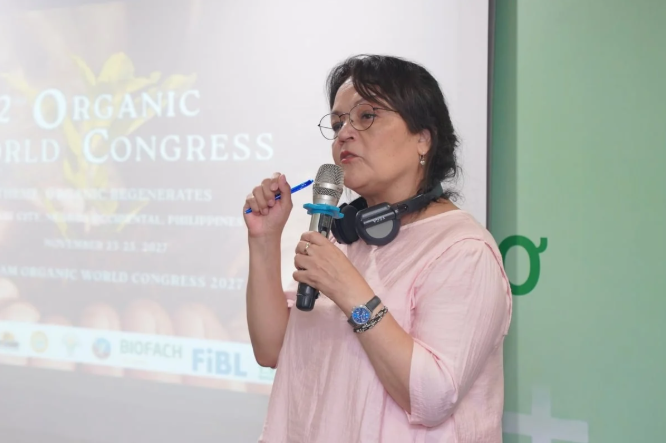
“Across the proposals, the recommendations focused on the essential conditions for implementation: clearly identifying target beneficiaries, developing measurable indicators, calculating resource requirements, establishing market linkages, and preparing plans to sustain activities after the initial support ends. This process also helped participants better understand the gap between a meaningful idea and a plan that can be realistically implemented,” she said.
At the ceremony, the Organizing Committee presented certificates of completion to the participants and expressed its appreciation to the instructors and partner organizations.
As the 2026 AOLC journey came to an end, the 27 participants took with them refined project proposals shaped by feedback, along with new networks of collaborators. The next step is to gradually put these plans into practice, turning knowledge gained in the classroom into tangible contributions to ecological and organic agriculture.
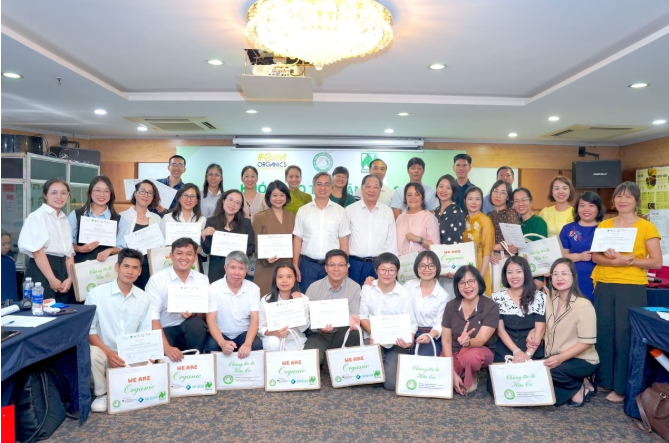
The program also recognized four participants whose development proposals were assessed by the class as outstanding. They received project support gifts from VOAA and Naturland, providing additional motivation for implementing their initiatives after the course.
During the technical session held ahead of the closing ceremony, the proposals were assessed in terms of feasibility, implementation capacity, development pathways, and their potential impacts on nutrition, livelihoods, and resilience. The assessment involved the entire class, while instructors provided in-depth feedback to help participants further refine their plans.
Kieu Chi