Indonesian students explore Viet Nam’s vegetable value chain
As part of a joint training program with Viet Nam National University of Agriculture, students from IPB University (Indonesia) gained hands-on experience in the production, processing, distribution of fruits and vegetables in Bac Ninh.
Students from IPB University in Indonesia, currently studying at the Viet Nam National University of Agriculture, recently visited Yen Dung Clean Vegetable Cooperative in Canh Thuy Ward, Bac Ninh Province, for a field-based learning trip. The visit was part of an academic cooperation programme between the two universities, helping students connect classroom knowledge with the realities of commercial agricultural production.
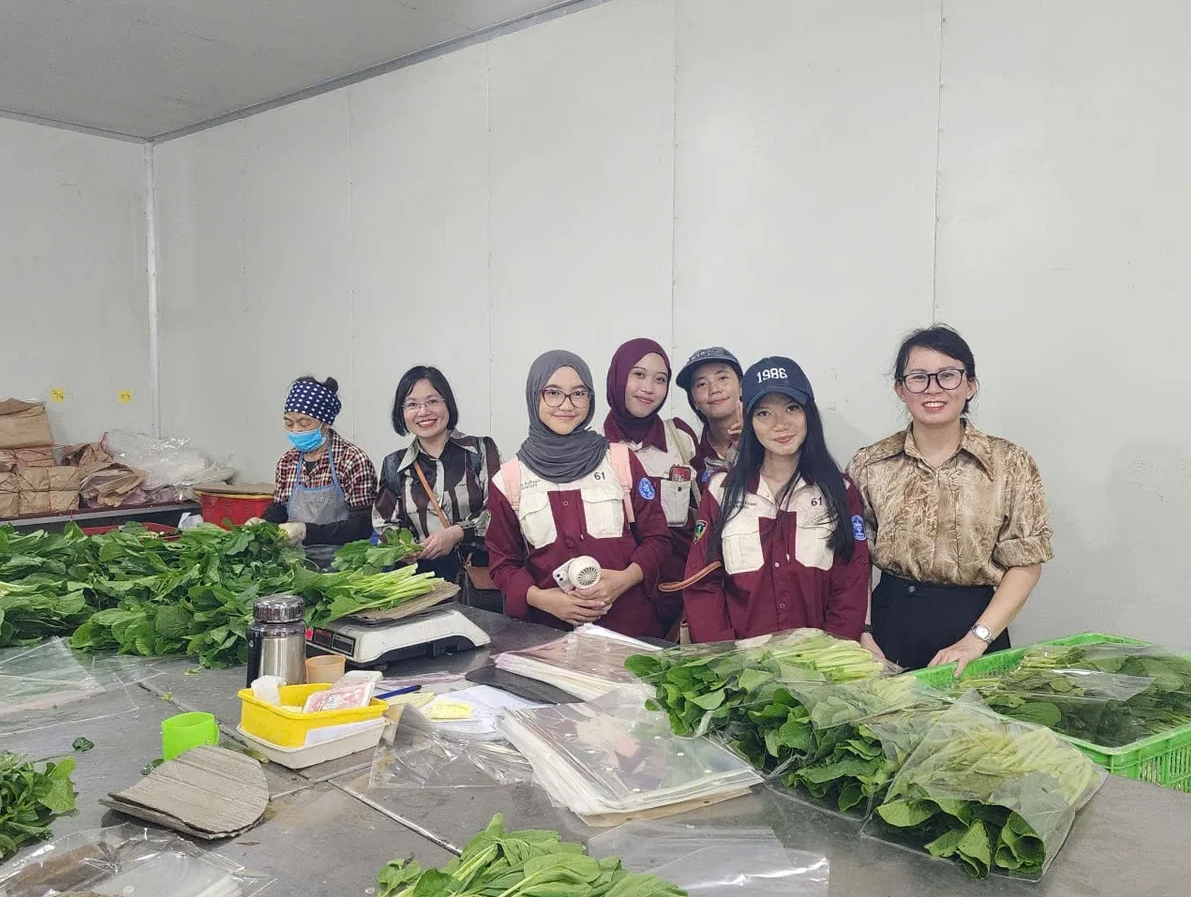
Three lecturers from the Faculty of Agronomy guided the field trip: Dr. Nguyen Thi Ngoc Dinh, Dr. Nguyen Hong Hanh, and Dr. Bui The Khuynh. At the cooperative, technical staff introduced students to production organization, growing-area management, quality standards, seasonal production plans and the product distribution system under VietGAP standards.
Through direct discussions, students learned how a safe vegetable and fruit production chain operates, with cultivation, quality control, and product distribution viewed as interconnected stages.
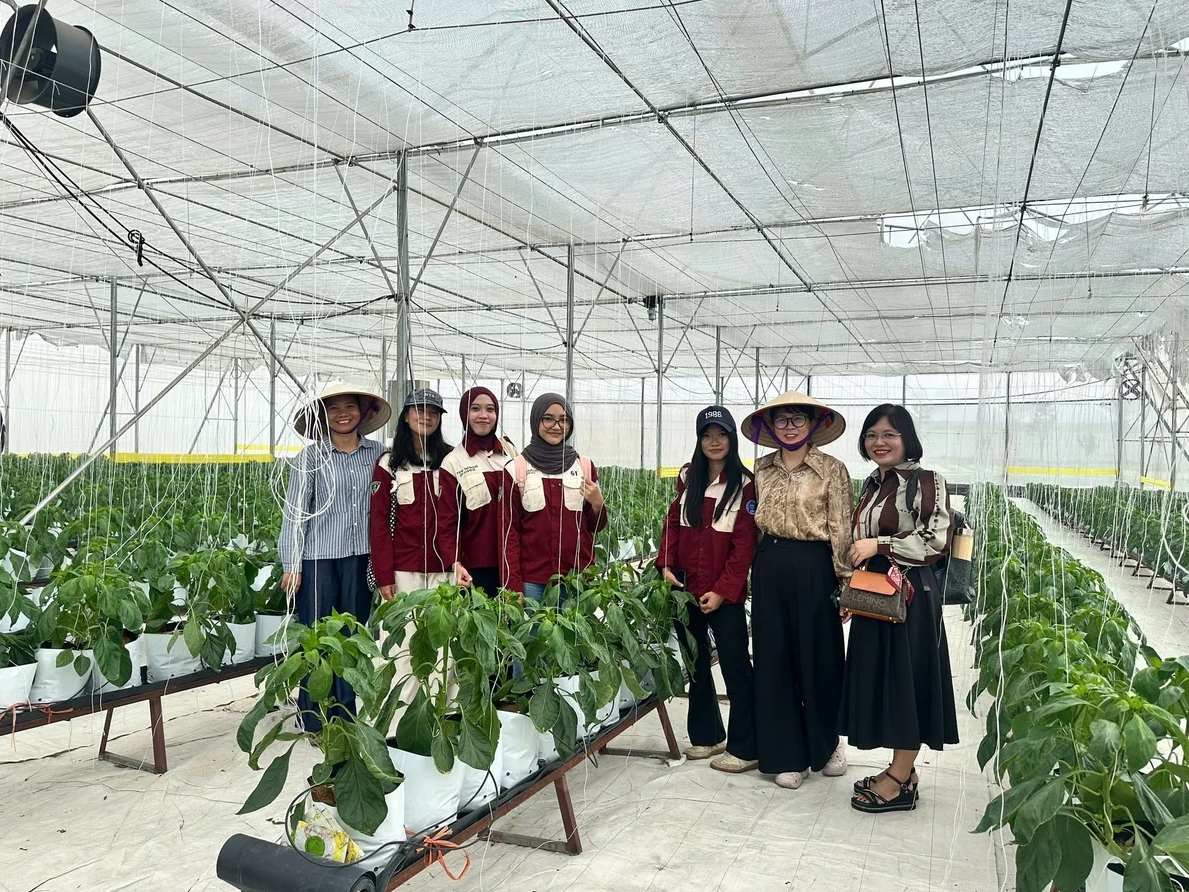
A highlight of the program was hands-on learning in a high-tech greenhouse production area. Students were introduced to cultivation practices for high-value crops such as sweet peppers, bell peppers, cherry tomatoes, cucumbers, Korean melons and netted melons.
For each crop group, technical staff discussed variety selection, crop care, trellising, leaf pruning, nutrient management, irrigation and pest and disease control. The group also introduced harvesting requirements and quality control practices in greenhouse and net-house conditions, giving students a clearer understanding of the specific tasks involved in the production process.
The group also observed cultivation models in open-sided greenhouses and open fields, growing cucumbers, tomatoes, asparagus, baby corn, leafy vegetables and grapes. Exposure to different production systems allowed students to compare cultivation techniques, the ability to control external conditions, labour organization and quality management requirements.
The learning programme also covered post-harvest handling, a critical link that determines the quality and commercial value of agricultural products. Students were introduced to and guided through proper harvesting at the appropriate stage of ripeness, sorting, cleaning, pre-processing, packaging, labelling and storage.
The group also explored the marketing, branding, transportation, distribution and sales of vegetables and fruits. These activities gave students a more comprehensive understanding of the agricultural value chain and helped them see the connection between cultivation techniques and market requirements.
The field trip put into practice the Faculty of Agronomy and the Viet Nam National University of Agriculture’s approach of linking theory with hands-on learning. Through direct experience at the production site, international students strengthened their knowledge of crop science, while developing skills in observation, professional discussion and value-chain thinking. The activity also contributed to academic exchange and educational cooperation between the two universities, while giving Indonesian students a closer look at agricultural practices in Viet Nam.
Lan Chi