Prospects for conserving Japan’s ancient Oga lotus variety in Da Nang
After 5 years of trial cultivation in Da Nang, Japan’s ancient Oga lotus has produced its first bloom, opening up prospects for conserving, propagating and developing this rare lotus variety.
According to the People's Committee of Dien Ban Tay Commune in Da Nang City, a project to conserve and propagate the Oga lotus was launched in March 2021 on a 500m² plot owned by Mai Chi Cong in Nong Son 1 Village. From the initial lotus tubers, the plants quickly adapted to local conditions, grew vigorously and spread across the entire cultivation area. After years of dedicated care, the project has recorded its first Oga lotus bloom.
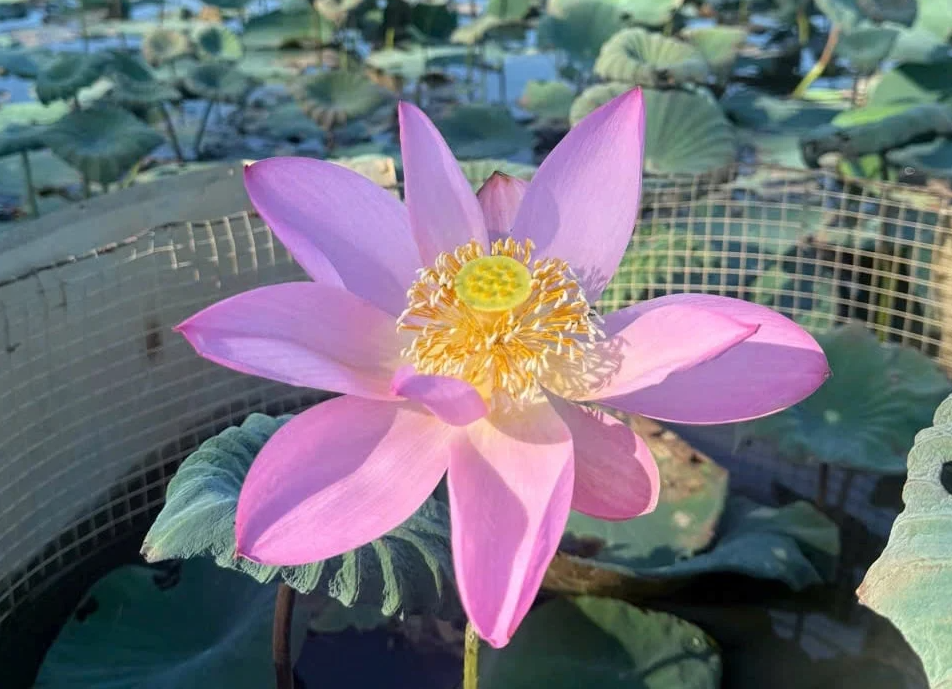
Monitoring results show that the Oga lotus variety has demonstrated stable growth, strong regeneration capacity and greater tolerance to waterlogging than native lotus varieties under trial conditions. However, its slow flowering remains a challenge, requiring further research and adjustments to cultivation practices to suit local climatic and soil conditions.
Recently, a delegation from the Consulate-General of Japan in Da Nang, led by Consul-General Mori Takero, visited Dien Ban Tay Commune to assess the development of the Oga lotus. Representatives of the Consulate-General welcomed the initial results and praised the local authorities' commitment and the efforts of Mai Chi Cong's family to preserve this rare lotus variety. They expressed hope that the Oga lotus garden would become a cultural exchange destination and a symbol of friendship between Viet Nam and Japan, attracting visitors, particularly students, to learn about and experience Japanese culture.
To further conserve and develop the Oga lotus variety, the Dien Ban Tay Commune People's Committee has requested the Sub-Department of Plant Production and Protection to provide specific technical guidance on water management, fertilization, planting density, soil improvement and measures to promote flowering. The commune has also proposed assigning technical staff to conduct regular monitoring and assessments.
In the short term, the locality will maintain the lotus field in Nong Son Village as a site to conserve the original variety. The commune's Economic Division and Public Service Delivery Center will coordinate with the grower to care for the plants and maintain growth records, providing a basis for assessing adaptability and refining propagation techniques.
The locality also plans to propagate and transplant some Oga lotus plants to other trial sites with suitable soil and microclimatic conditions to compare their growth and flowering performance. This approach also aims to reduce the risks of conserving the variety at a single location.
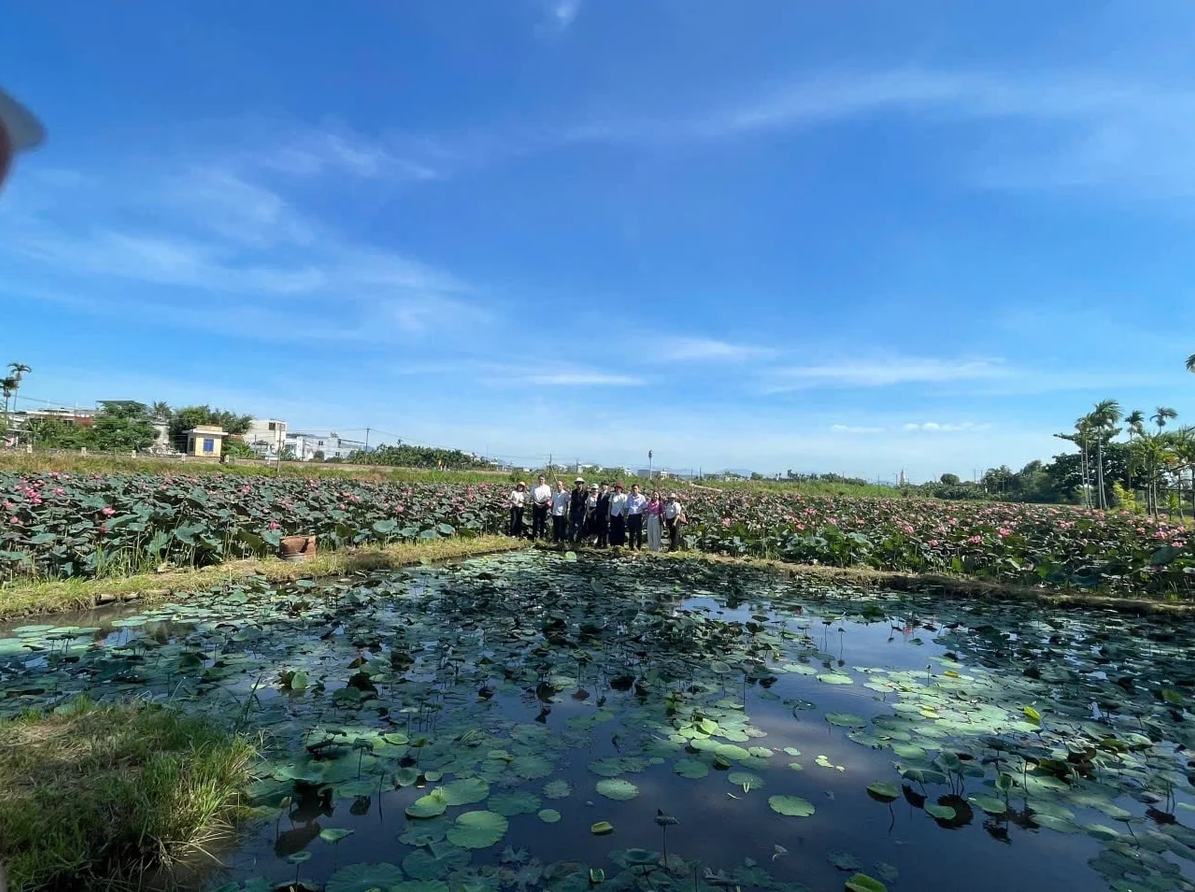
The Japanese government presented the Oga lotus to the Vietnamese government during a Viet Nam-Japan cultural exchange event held in 2020 in the former Quang Nam Province. After the handover, the potted lotus plants were moved to Dien Ban Town in the former Quang Nam Province for care and conservation before a field-based propagation trial began.
The variety is named after Japanese botanist Ichiro Oga, who discovered ancient lotus seeds dating back approximately 2,000 years and successfully germinated them.
The Oga lotus's flowering after years of trial cultivation is a positive sign for efforts to conserve valuable genetic resources in Da Nang. However, expanding its cultivation requires further assessment, particularly flowering consistency and growth performance under different cultivation conditions.
Lan Anh