Viet Nam, China exchange ideas on flower breeding
Flower breeding should go beyond appearance and yield, taking into account the intended use of each variety, its processing potential and market demand.
This was one of the key directions discussed at an international scientific workshop on innovation in flower breeding and sustainable urban agriculture, recently held in Hanoi.
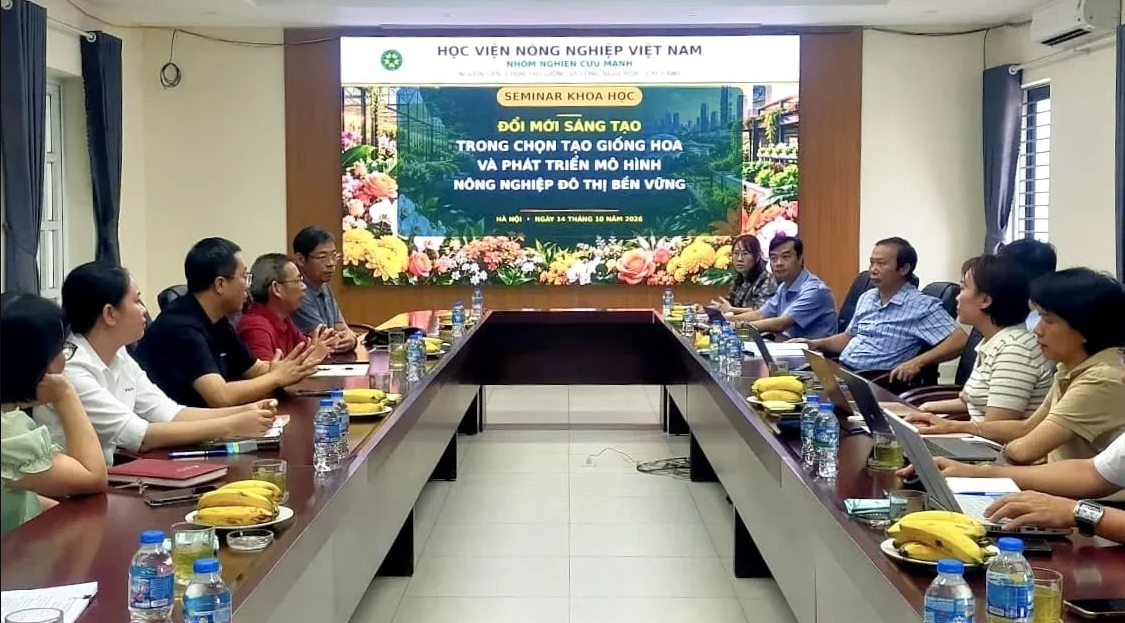
Vietnamese and Chinese scientists shared research findings on genetic resources, flower breeding, product development and production models in controlled environments at the workshop, titled “Innovation in Flower Breeding and the Development of Sustainable Urban Agriculture Models”. The event was organised by the Fruit and Vegetable Research Institute as part of the activities of the Research Group on Genetic Resources, Breeding and Floriculture Technology at Viet Nam National University of Agriculture.
According to Assoc. Prof. Dr. Dang Van Dong, Deputy Director of the Fruit and Vegetable Research Institute and head of the research group, the workshop provided an opportunity to connect scientific research with practical production needs, exchange expertise and expand international cooperation in floriculture and ornamental plants. Scientists highlighted the importance of making effective use of genetic resources, developing new varieties and organising production in ways that suit urban and peri-urban conditions.
Prof. Dr. Huang Conglin from the Beijing Academy of Agriculture and Forestry Sciences in China presented approaches to developing chrysanthemum varieties for a range of uses, including food, tea and medicinal ingredients. He noted that breeding should begin with the specific requirements of each product category, rather than focusing solely on physical characteristics and ornamental value.
Building a value chain requires coordinated efforts across genetic resource conservation, genetic trait evaluation, breeding, cultivation techniques, processing and market access. Technology, branding and local cultural identity can also help increase the value of flower products.
A model combining edible chrysanthemum cultivation with experiential tourism and food services in Xibadian Village, Beijing, was among the examples shared at the workshop. This experience offers potential avenues for research in Viet Nam into chrysanthemum varieties for tea, food and processed products, while linking agricultural production with services and tourism.
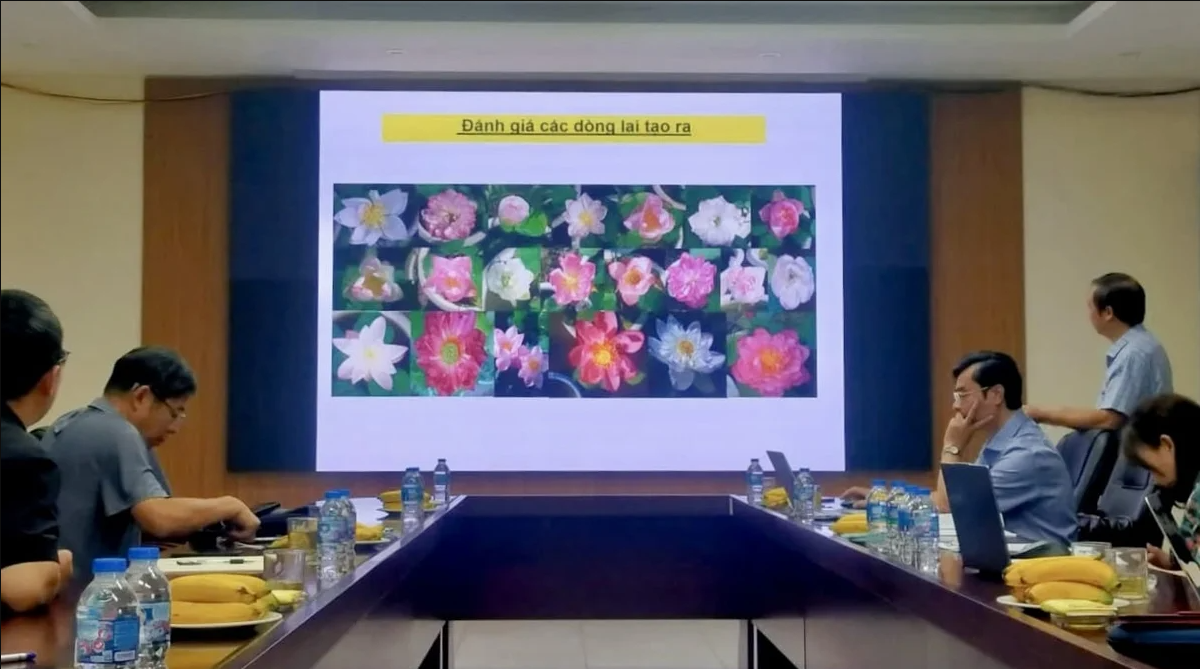
Regarding amaryllis, Assoc. Prof. Dr. Pham Thi Minh Phuong of Viet Nam National University of Agriculture said research on the flower had been underway since 2009. After surveying and collecting domestic genetic resources and introducing varieties from abroad, the research team crossbred and evaluated more than 10,000 hybrid plants, selecting 200 promising lines.
Many of these hybrids feature double flowers in a wide range of colours, shapes and sizes, opening up opportunities to develop more diverse ornamental flower products. The presentation also introduced the Hong Van amaryllis variety and research findings on propagation, cultivation and flowering control, providing a basis for refining commercial production techniques.
During the technical discussions, participants also explored the use of QR codes to support the identification, management and retrieval of genetic resource information. This was highlighted as a potential area for future research cooperation.
Beyond flower breeding, the workshop introduced the plant factory model, which makes use of industrial buildings and underutilised spaces to grow plants in controlled environments. LED lighting and systems for regulating temperature, humidity and nutrient supply can support year-round production, improve space utilisation and save water under suitable conditions.
For Viet Nam, this approach offers a useful reference for areas where land for agricultural production is limited. However, before expanding the model, it is necessary to select crops with clear market demand and thoroughly assess initial investment, energy costs, operational requirements and economic returns.
Assoc. Prof. Dr. Dang Van Dong said innovation in floriculture and ornamental plants should be approached across the entire value chain, from genetic resources and breeding to production technology, processing, trade and services. When research is closely aligned with market demand, the value of flowers can extend beyond ornamental products into a broader range of economic activities.
Mai Dan