Japan supports Da Nang to use AI to achieve carbon neutrality
Da Nang is advancing a Japan-funded project that uses AI and urban data to reduce carbon emission and promote sustainable urban development.
Da Nang City People’s Committee Office announced that the city is expediting procedures to implement the project “Developing a Healthy and Carbon-Neutral City Based on AI-Powered Smart Mobility.” The project is part of the Science and Technology Research Partnership for Sustainable Development (SATREPS), funded by the Japan International Cooperation Agency (JICA).
The project is expected to run for five years in Da Nang. It aims to develop a data-driven policy planning platform to help the city assess and forecast greenhouse gas emissions from the transport sector. The project is also expected to support carbon emission reduction policies, improve residents’ quality of life, address population ageing, and promote sustainable urban development.
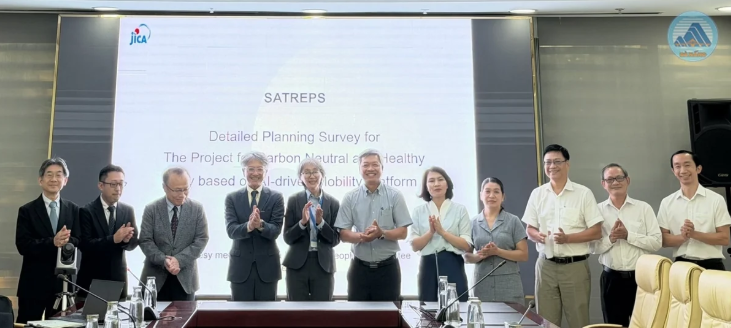
The project focuses on developing an AI-powered smart mobility platform that integrates urban traffic data with digital twin technology. The platform will estimate CO₂ emissions from transport activities, assess their impacts on urban health, and simulate future development scenarios, enabling authorities to evaluate the effectiveness of policies before implementing them in practice.
The project also aims to develop an AI-powered system for monitoring and analyzing urban indicators, a city-wide simulation model, and a digital policy testing environment. It will also focus on workforce training and strengthening capacity in traffic management and urban development.
To implement the project, the parties are discussing the establishment of a Joint Coordinating Committee (JCC), the development of coordination mechanisms among municipal departments and agencies, and access to relevant data on transport, healthcare, the environment, urban development, and carbon neutrality. JICA has also raised the possibility of mobilizing private-sector participation in the project.
Da Nang City Vice Chairman Ho Quang Buu affirmed that the city is ready to work closely with Japanese partners throughout the project’s implementation. Da Nang expects the research findings, particularly those involving AI applications and the use of urban and transport data, to be translated into practical tools for policymaking and urban management. He also called on all parties to continue coordinating closely and complete the necessary procedures soon to ensure the project proceeds smoothly and in compliance with regulations.
In recent years, Japan has been an active partner in supporting Da Nang in environmental protection and sustainable urban development. Through cooperation programs, aid and technology transfer, numerous Japanese organizations, businesses and local authorities have participated in projects to improve water quality, treat wastewater and solid waste, promote energy efficiency, and develop low-carbon cities.
Notable partners include JICA, Nippon Koei, Metawater, the University of Kitakyushu, JFE Group, and several Japanese local authorities. The latest initiative to advance an AI-powered project further expands cooperation between Da Nang and Japan, particularly in digital technology, smart traffic management and greenhouse gas emission reduction.
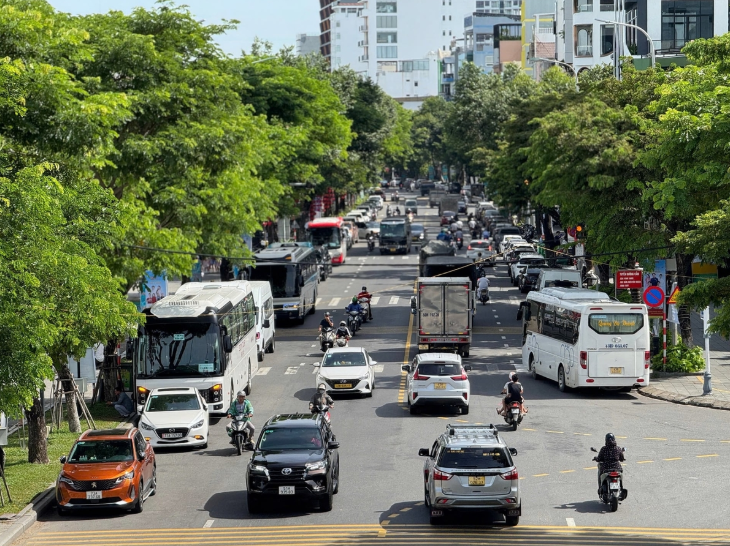
By September 2026, Da Nang had completed the conversion of 99 fossil-fuel-powered buses to electric buses, helping promote green transport and reduce carbon emissions.
Lan Anh