Australia promote local women's role in agriculture
Viet Nam and Australia are working to strengthen women's leadership in agriculture, support cooperatives and improve market access.
On October 27 in Ha Noi, the Australian Embassy in Viet Nam hosted the “Women in Agriculture: Australia-Viet Nam” event, bringing together more than 90 representatives from government agencies, international organizations, research institutes, businesses and cooperatives.
The event provided a platform to share experiences, showcase practical models, and discuss ways to strengthen women's roles in agricultural production, management, and business, with the aim of building a more sustainable and inclusive agricultural sector.
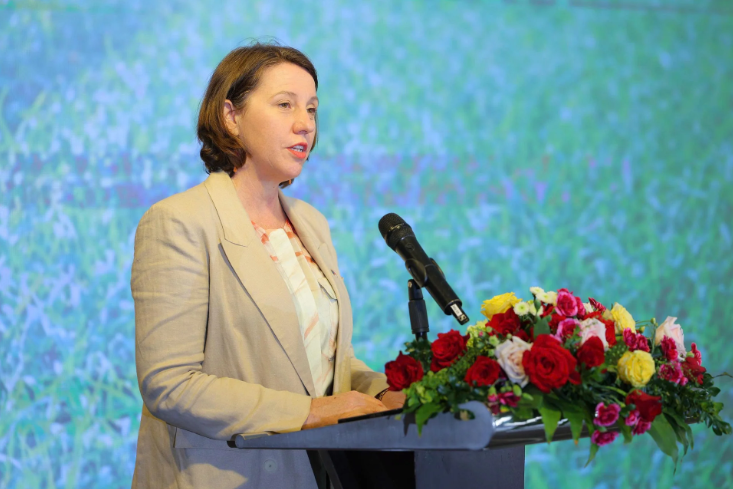
In her opening remarks, Ms. Renee Deschamps, Chargé d'Affaires at the Australian Embassy in Viet Nam, emphasised that women play a vital role in food production, natural resource management, innovation and sustaining rural livelihoods. However, their contributions are not always fully recognised, as women continue to face barriers to accessing finance, technology, training, markets and leadership positions.
Women account for around 40% of the global workforce in agriculture and food systems. As the sector faces mounting challenges from climate change, environmental pressures and growing food demand, expanding opportunities for women is not only essential for gender equality but also helps improve productivity, resilience and economic performance.
To unlock this potential, Ms. Deschamps stressed the need to invest more in education, skills training and leadership development, while building support networks. Women should also have greater opportunities to contribute to policymaking and decision-making.
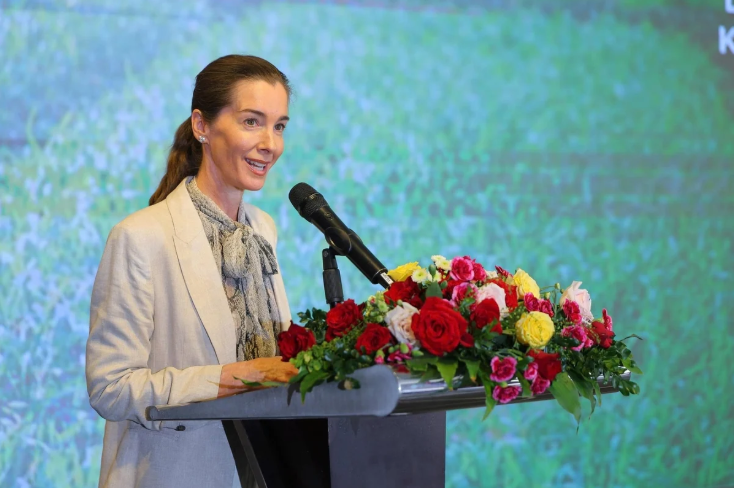
Drawing on Australia's experience, Ms. Cressida Cains, President of Australian Women in Agriculture (AWiA), said women's participation should be measured not simply by how many women are represented in organisations, but also by their ability to voice opinions and influence decisions on production and business.
Based on her experience building Pecora Dairy, a handcrafted cheese business, Ms. Cains noted that producing a high-quality agricultural product is only the first step. Running a sustainable business also requires management skills, access to technology, effective branding and the ability to develop markets.
She said programmes supporting women should combine skills training with opportunities to take part in management and leadership. Farmers should also be involved in research, testing and technology adoption to ensure scientific solutions address their practical needs.
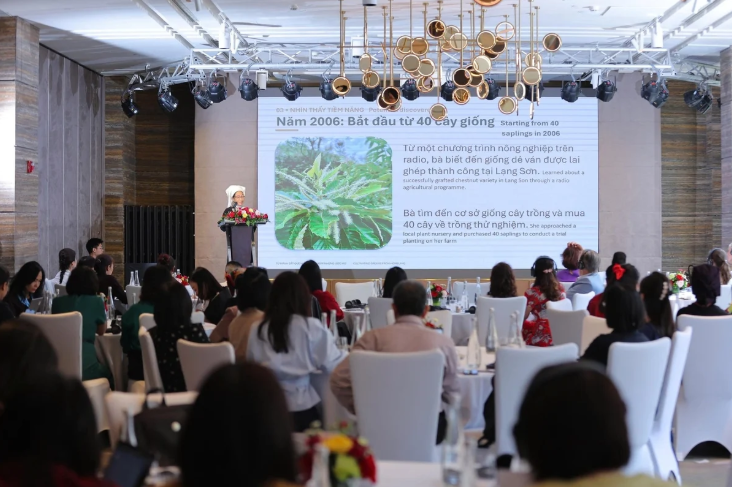
In Viet Nam, Ms. Ban Thi Ngan, Director of Hop Phat Organic Agriculture Cooperative, shared how she had built an agricultural business around chestnuts, linking production with farmer cooperation and efforts to increase the value of local produce.
She began by planting 40 chestnut trees on a trial basis in 2006 and recognized their potential as a commercial crop. To encourage local farmers to change their cultivation practices, she took households to the model farm to learn its techniques and economic benefits. Gradually, farmers began working together, laying the foundations for the development of Hop Phat Cooperative.
Rather than relying solely on fresh chestnut sales, the cooperative has gradually improved cultivation practices, focused on raw material quality, invested in preliminary processing and storage, and developed processed products to add value and reach wider markets.
However, rural women, particularly those from ethnic minority communities, continue to face challenges in accessing finance, management knowledge, processing technology and markets. These barriers make it difficult to scale up production and increase the value of agricultural products.
Drawing on these experiences, Ms. Ngan highlighted the need for stronger links between cooperatives, businesses and scientists to address challenges in product storage, processing and marketing. She also proposed establishing a network of women working in agriculture across Viet Nam to facilitate knowledge-sharing, improve access to technical expertise, connect with potential partners and develop sustainable livelihoods.
The experiences shared at the event showed that strengthening women's role in agriculture requires both individual capacity-building and better access to resources, technology and markets. In particular, giving women greater opportunities to manage cooperatives, organize production and make business decisions can improve the performance of rural economic models.
By facilitating the exchange of experience and connecting practical initiatives, the event helped strengthen cooperation between Viet Nam and Australia on gender equality, cooperative development and sustainable agriculture. It also highlighted the importance of enabling women to move beyond production roles and take on leadership positions and create value throughout agricultural supply chains.
Thanh Trang - Phuong Linh