Viet Nam's 3 priorities for agriculture, forestry cooperation at AMAF48
At AMAF 48, Viet Nam proposed 3 priorities: strengthening food security and agricultural supply chain resilience, promoting innovation, digital transformation.
On the sidelines of the 48th ASEAN Ministers on Agriculture and Forestry (AMAF) Meeting, held in Singapore on October 29, Deputy Minister of Agriculture and Environment Dang Ngoc Diep attended and delivered remarks on strengthening food security, promoting sustainable agriculture, and accelerating digital transformation across the region.
The 48th ASEAN Ministers on Agriculture and Forestry (AMAF 48) Meeting was hosted by the Government of Singapore. The meeting reaffirmed the central role of food, agriculture and forestry in ensuring food security, safeguarding public health, sustaining livelihoods, promoting trade, strengthening climate resilience, and securing the region’s long-term prosperity.
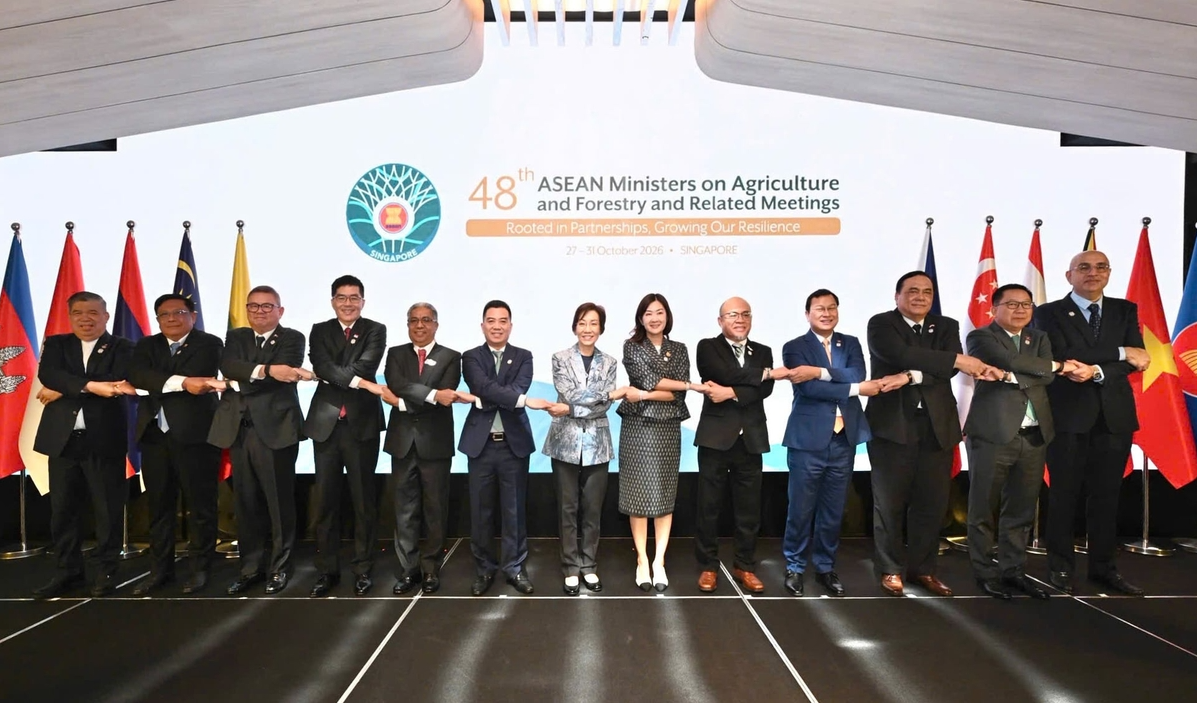
At the meeting, Viet Nam highly appreciated the report and recommendations of the Chair of the ASEAN Senior Officials Meeting on Agriculture and Forestry (SOM-AMAF), and acknowledged the efforts of Member States, the ASEAN Secretariat and relevant sectoral bodies in promoting cooperation in food, agriculture and forestry.
According to Deputy Minister Dang Ngoc Diep, the progress achieved in food security, sustainable agricultural development, digital transformation and climate change response provides an important foundation for implementing cooperation priorities in the new period. The ASEAN Food, Agriculture and Forestry Sectoral Plan 2026–2030 provides a framework for translating the sector’s vision towards 2045 into concrete actions. To ensure effective implementation, Viet Nam highlighted three priorities.
First, strengthening regional food security and agricultural supply chain resilience.
Viet Nam supports improving the effectiveness of the ASEAN Food Security Information System (AFSIS) and the ASEAN Plus Three Emergency Rice Reserve (APTERR), while enhancing coordination among existing mechanisms. Viet Nam also proposed expanding information exchange on fertilizers, animal feed and other essential agricultural inputs. These efforts would help improve forecasting, enable proactive responses to risks and maintain production amid potential disruptions to supply chains caused by external factors.
Second, accelerating the transition towards sustainable, low-emission and climate-resilient agriculture
The Ministry of Agriculture and Environment welcomed the ASEAN Regenerative and Climate-Adaptive Agriculture Implementation Plan 2026–2030, together with the AMAF Declaration on Promoting Regenerative and Climate-Adaptive Agriculture for a Sustainable ASEAN and Ensuring Food Security.
Deputy Minister Dang Ngoc Diep emphasized that priority actions should include improving soil health, using water efficiently, developing low-emission rice production and promoting the circular use of agricultural by-products. Experience sharing, technology transfer and capacity building should be linked to scalable models that deliver tangible benefits to farmers.
In forestry, Viet Nam supported the draft ASEAN Leaders’ Declaration on the One Billion Trees Initiative and its implementation plan, proposing stronger cooperation in forest landscape restoration, sustainable forest management, forest fire prevention and control, and biodiversity conservation.
To implement these priorities, ASEAN countries need to work with development partners, international financial institutions and the private sector to mobilize climate finance, concessional funding and investment in sustainable agriculture and forestry. Resource mobilization should also ensure that smallholder farmers, cooperatives and local communities can access and benefit from these resources.
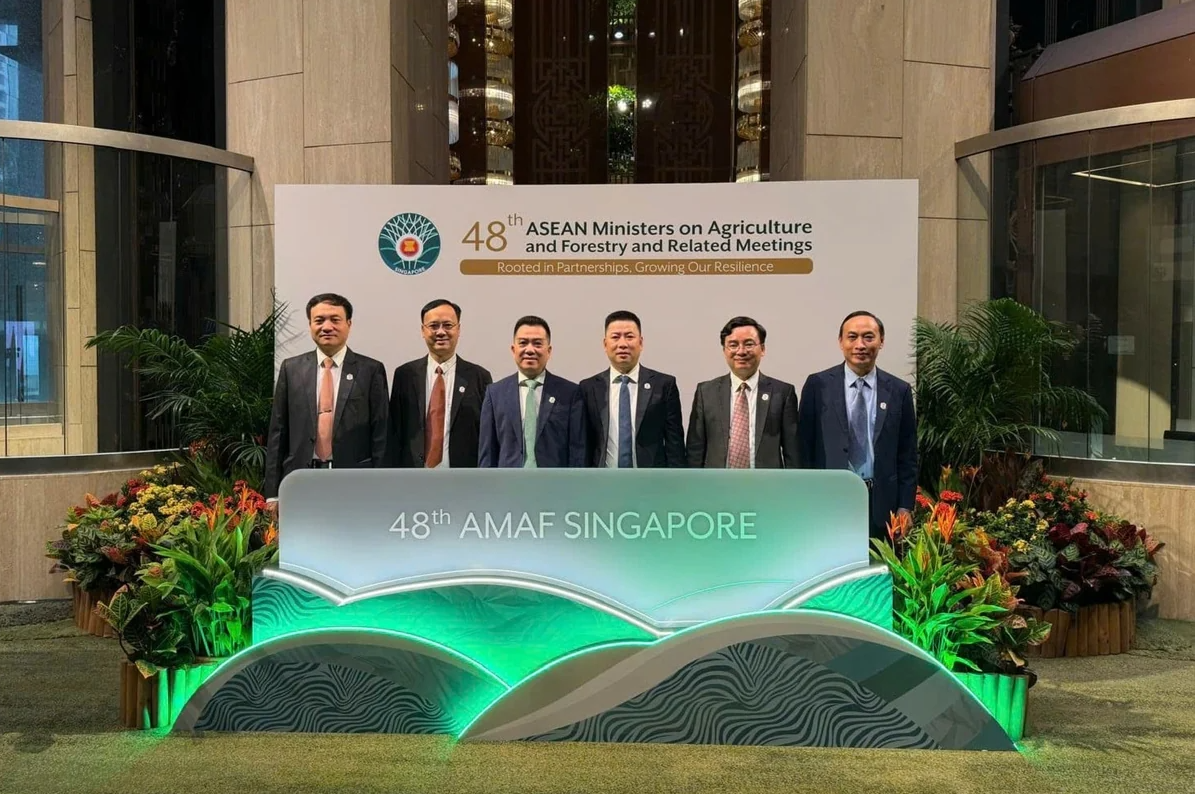
Third, promoting digital transformation, innovation and regional agricultural value chain linkages
Viet Nam proposed strengthening cooperation in research, technology application and digital transformation to increase productivity, reduce production costs, ensure food safety and enhance competitiveness. Technologies should be suited to local production conditions and accompanied by training, agricultural extension services, and the participation of cooperatives and businesses to help farmers adopt them effectively.
In addition, Viet Nam called for promoting traceability, electronic certification and cooperation on science-based sanitary and phytosanitary measures, in line with international standards, to facilitate regional agricultural trade.
Viet Nam welcomed Singapore’s proposal to establish a regional centre for smallholder solutions. Viet Nam expressed its interest in continuing discussions on data-driven solutions and appropriate financing mechanisms, based on responsible data governance and the practical needs of farmers.
During the high-level discussion at AMAF 48, agriculture leaders from ASEAN countries agreed to accelerate the implementation of the ASEAN Community Vision 2045, the ASEAN Economic Community Strategic Plan 2026–2030, the ASEAN Food, Agriculture and Forestry Sector Vision 2045, and the ASEAN Food, Agriculture and Forestry Sectoral Plan 2026–2030.
Deputy Minister of Agriculture and Environment Dang Ngoc Diep stated: “The effectiveness of cooperation should be reflected in tangible improvements in productivity, income, resource use and producers’ resilience. These outcomes also provide a basis for assessing progress towards shared goals and ensuring that cooperation programmes address the practical needs of each country and the people of the region.”
Kieu Chi