Technology and innovation integrated into ASEAN+3
ASEAN Plus Three Cooperation Strategy on Food, Agriculture and Forestry for 2026-2035 will be implemented in close alignment with regional needs.
A delegation from Ministry of Agriculture and Environment, led by Deputy Minister Dang Ngoc Diep, attended the 26th ASEAN Plus Three Ministers Meeting on Agriculture and Forestry (AMAF+3).
Grace Fu, Singapore’s Minister for Sustainability and the Environment and Minister-in-charge of Trade Relations, chaired the meeting. Ministers and heads of delegations from ASEAN Member States, China, Japan and the Republic of Korea, as well as the Secretary-General of ASEAN, attended.
At the meeting, Viet Nam acknowledged the continued partnership and support of the three dialogue partners: China, Japan and the Republic of Korea for ASEAN’s development priorities. These include China’s experience in agricultural infrastructure, mechanization, post-harvest processing, and the control of transboundary animal and plant diseases and pests; Japan’s expertise in low-emission agriculture, biomass utilization, advanced technologies and sustainable fisheries; and the Republic of Korea’s contributions to smart and precision agriculture, vegetable, flower and fruit production, value chain modernization, and forest fire management.
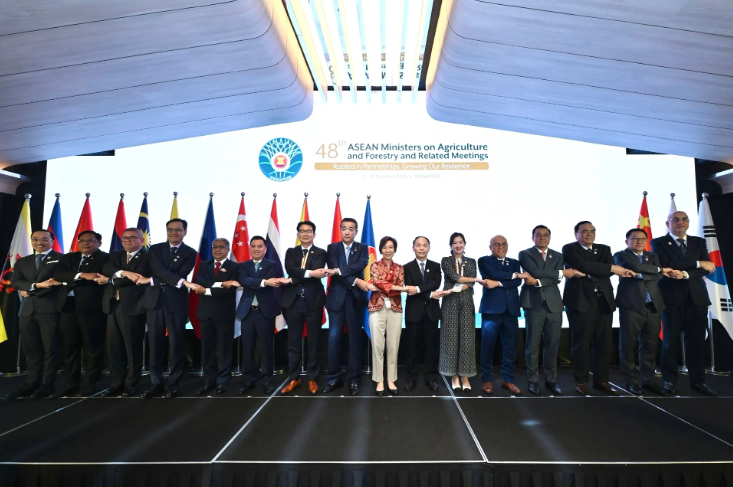
Building on this, Deputy Minister Dang Ngoc Diep emphasized that the implementation of the ASEAN Plus Three Cooperation Strategy on Food, Agriculture and Forestry for 2026 - 2035 should remain closely aligned with regional needs, strengthen coordination and focus on delivering tangible results.
On strengthening food security and responding to emergencies, Viet Nam highlighted the role of the ASEAN Plus Three Emergency Rice Reserve (APTERR) in supporting countries affected by emergency situations. Viet Nam also expressed its support for improving the mechanism's operational effectiveness, maintaining pre-positioned rice reserves and making greater use of existing reserve mechanisms.
Regarding the ASEAN Food Security Information System (AFSIS), the Ministry of Agriculture and Environment welcomed progress in agricultural statistics, market information provision and early warning systems. It also called on China, Japan and the Republic of Korea to continue supporting improvements in data quality, timeliness and usability, while gradually expanding information coverage to include fertilizers, animal feed and other essential agricultural inputs.
According to Deputy Minister Dang Ngoc Diep, closer coordination among AFSIS, APTERR and related mechanisms would help the region respond more proactively to risks, particularly situations that could affect food supplies.
In addition, the Deputy Minister proposed scaling up sustainable, low-emission and climate-resilient technologies and production models. Viet Nam called for priority to be given to technologies with proven effectiveness and practical applicability under ASEAN's production conditions, particularly water management in rice cultivation, greenhouse gas emissions reduction, and the use of biomass and agricultural by-products.
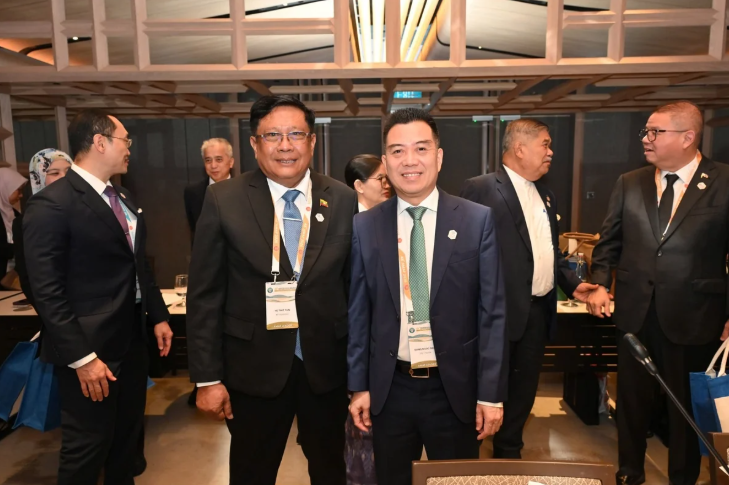
Technology transfer should go hand in hand with training, support services and assessments of economic and environmental effectiveness, enabling farmers to access and sustain the adoption of new technologies. In the fisheries and forestry sectors, cooperation should continue in climate-resilient aquaculture, combating illegal, unreported and unregulated (IUU) fishing, reducing marine plastic pollution, sustainable forest management, and forest fire prevention and control.
To promote innovation, digital transformation and capacity building for producers, the Deputy Minister encouraged all parties to strengthen cooperation in precision agriculture, remote sensing, climate information, traceability and value chain modernization. To expand the adoption of these technologies, investment in infrastructure and data, capacity building for agricultural extension services and cooperatives, and the development of services suited to smallholder farmers are also needed.
Strengthening cooperation with FAO on agrifood systems transformation
On the sidelines of AMAF+3, Deputy Minister Dang Ngoc Diep held a bilateral meeting with Alue Dohong, FAO Assistant Director-General and Regional Representative for Asia and the Pacific.
At the meeting, Deputy Minister Dang Ngoc Diep praised FAO's role in promoting regional cooperation, particularly within the framework of AMAF+3 and the ASEAN Sectoral Plan on Food, Agriculture and Forestry for 2026 - 2030.
Viet Nam stands ready to work with FAO to share practical experience in developing high-quality, low-emission and climate-resilient rice production, as well as in promoting South-South Cooperation.
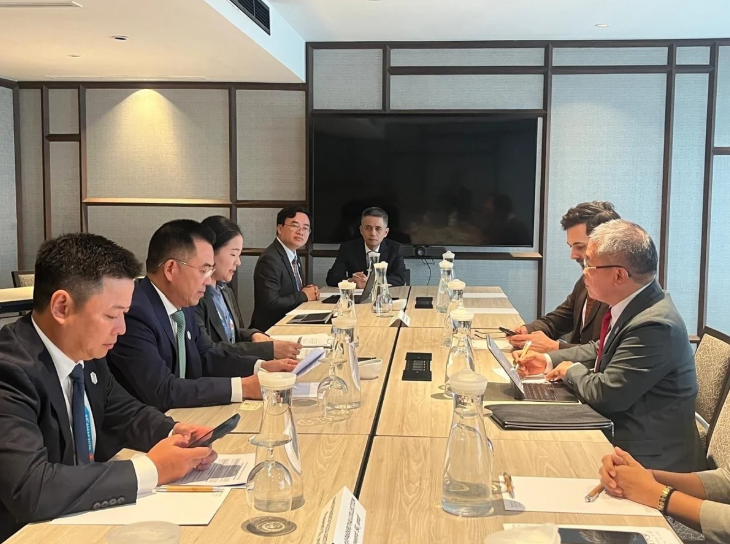
The Deputy Minister expressed his appreciation for FAO's continued partnership and support in providing policy advice, technical assistance, capacity building and mobilizing development resources. The two sides discussed directions for cooperation in transforming agrifood systems towards greater sustainability and resilience.
Viet Nam acknowledged FAO's support in developing and implementing the National Action Plan on Transforming the Food System towards Transparency, Responsibility and Sustainability by 2030.
In addition, the Deputy Minister called on FAO to continue supporting the implementation of the one-million-hectare project on high-quality, low-emission rice cultivation in the Mekong Delta. Viet Nam hopes that FAO will provide further assistance not only in transferring technical solutions but also in developing implementation mechanisms and mobilizing financial resources to scale up the project.
Accordingly, the two sides agreed to identify priority investment proposals, initially focusing on developing low-emission rice value chains and climate-resilient agriculture.
Preparing for GREEN EXPO 2027 with Japan
Also on October 30, Deputy Minister Dang Ngoc Diep held a bilateral meeting with Fujiki Shinya, Japan's State Minister of Agriculture, Forestry and Fisheries.
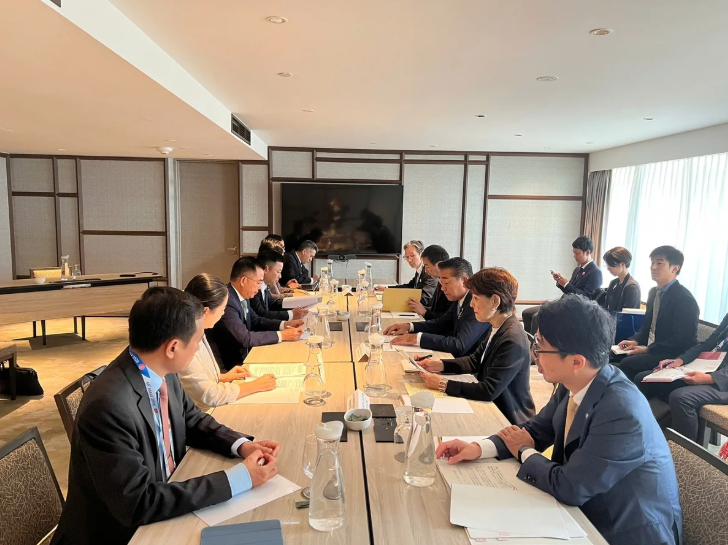
Affirming that the Viet Nam - Japan Comprehensive Strategic Partnership is progressing positively, Deputy Minister Dang Ngoc Diep highly appreciated Japan's effective cooperation and support in technology transfer, sustainable agricultural development, environmental protection and climate change response.
Building on the strong foundation of bilateral cooperation and Japan's strengths, Viet Nam respectfully invited Japan to consider joining the P-CRAFT initiative at COP31 as a founding partner.
Regarding the International Horticultural Expo 2027 (GREENEXPO 2027), to be held in Yokohama, Japan, Deputy Minister Dang Ngoc Diep said the Ministry of Agriculture and Environment of Viet Nam is actively preparing to participate in the event. Through the exhibition, Viet Nam hopes to showcase its country and people, achievements in agricultural development, and green transition initiatives to the international community.
The event will also provide an opportunity for Viet Nam and Japan to strengthen connections among research institutions, businesses and relevant organizations, while expanding cooperation opportunities in technology, investment and green agriculture.
Kieu Chi