Quang Ninh explores turning waste into fuel for cement production
Quang Ninh is exploring a model for processing municipal solid waste in cement kilns, thereby utilizing it as a resource.
On October 30, in Ha Long Ward (Quang Ninh Province), the Department of Agriculture and Environment partnered with UNDP in Viet Nam to convene the Inception Workshop for the project "Promoting Circular Economy in Integrated Municipal Solid Waste Management through Pilot Co-Processing in Cement Kilns." The event drew representatives from regulatory agencies, international organizations, specialists, and cement enterprises.
Supported by the Norwegian Government and international partners, the project aims to explore additional municipal solid waste (MSW) treatment options, integrating source segregation with the recovery of recyclables and valorizing suitable waste fractions as alternative fuels.
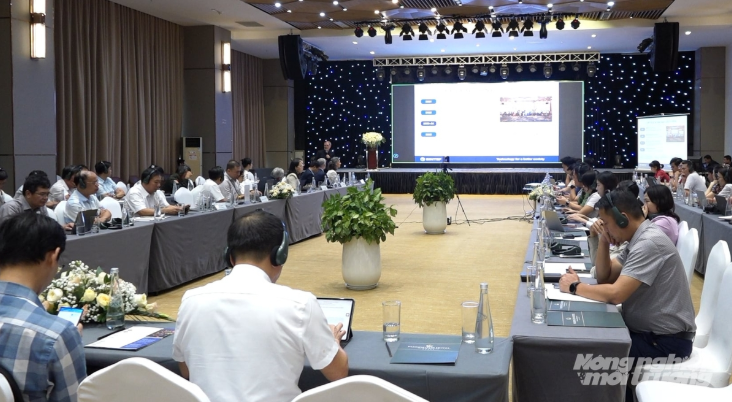
From source segregation to alternative fuel utilization
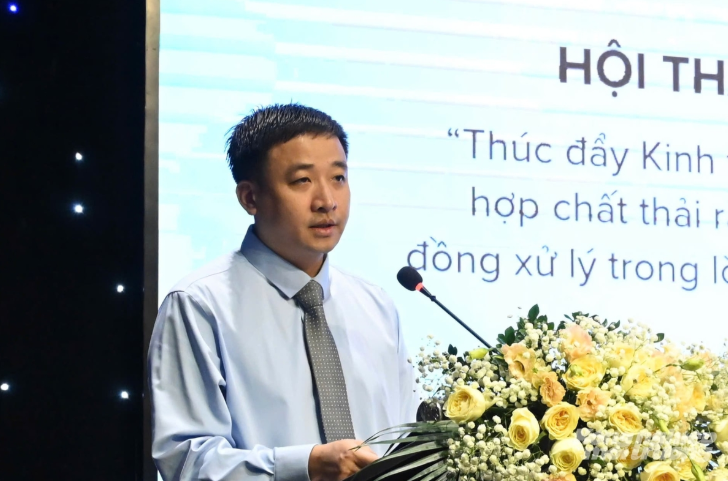
Opening the workshop, Mr. Nguyen Nhu Hanh, Deputy Director of the Quang Ninh Department of Agriculture and Environment, noted that socio-economic growth and rapid urbanization impose mounting demands on MSW management. Beyond collection and disposal, the locality must emphasize waste minimization, source separation, enhanced reuse and recycling, and the rational utilization of embedded resources.
The project centers on three core task packages: rolling out source-level MSW segregation in Uong Bi, Yen Tu, and Hiep Hoa wards; researching a sorting station model linked to co-processing suitable fractions in cement kilns; and supporting the formulation of Quang Ninh’s MSW management plan for 2026-2030.
From UNDP in Viet Nam, specialist Hoang Thi Dieu Linh noted the initiative comprises three components. Beyond supporting source separation and surveying waste composition and volume across three pilot wards, the project will help develop sorting stations, material recovery facilities (MRFs), and co-processing mechanisms. The project will analyze technical parameters, service norms, unit pricing, and public–private partnership (PPP) frameworks to inform the city-wide 2026-2030 MSW management roadmap.
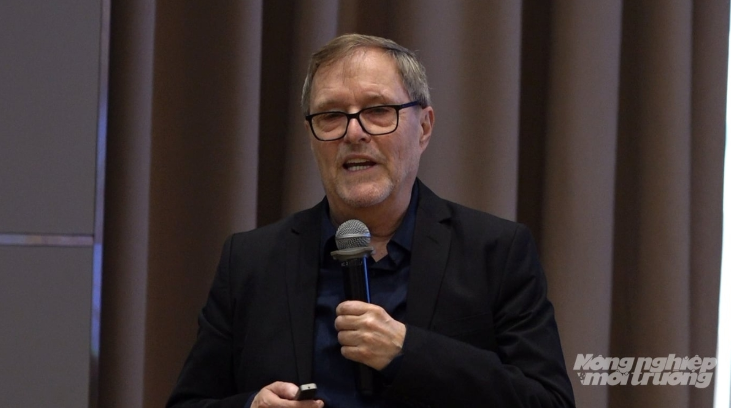
According to Dr. Kåre Helge Karstensen, Senior Specialist at the Foundation for Scientific and Industrial Research of Norway (SINTEF), co-processing leverages existing industrial cement kilns to recover energy and material value from discards. However, this does not mean unsorted municipal waste can be fed directly into kilns.
Waste co-processing in cement kilns integrates cement manufacturing with waste treatment; waste serves as alternative fuel or raw material, or undergoes destruction via high kiln temperatures. In this pilot, the focus is utilizing post-sorting residues unsuitable for mechanical recycling that satisfy alternative fuel specifications.
Municipal refuse must be segregated to recover recyclables, isolate organic food waste, and eliminate unsuitable fractions. Energy-recoverable waste undergoes pre-processing into refuse-derived fuel (RDF) meeting facility acceptance standards. Parameters including composition, moisture content, calorific value, and particle size must be rigorously controlled prior to kiln feeding.
Under appropriate operational conditions, high thermal regimes and kiln technology facilitate complete waste treatment while incorporating mineral residues into clinker. However, this does not eliminate secondary waste or emissions risks; monitoring flue gases, particulate matter, and secondary residue streams remains mandatory under statutory environmental standards.
A representative of Quang Ninh Cement and Construction JSC noted the enterprise possesses operational experience co-processing ordinary industrial waste in clinker kilns. To accept MSW-derived streams, rigorous pre-sorting and pre-treatment are critical to govern moisture, remove hazardous contaminants, and satisfy all technical and regulatory thresholds.
Nguyen Thanh - Cuong Vu