Prospects from forest restoration cooperation in Da Nang
Forest restoration initiatives are yielding positive results, contributing to the conservation of biodiversity and the securing of livelihoods.
Forest restoration and biodiversity conservation
After more than two years of implementation, the project "Forest Restoration and Livelihoods Development in Da Nang City - Phase 1" has restored 282 hectares of forest across the city's western mountainous territory, improving forest quality and rehabilitating natural ecosystems.
Financed by the VELUX Group through WWF-Denmark and implemented by WWF-Viet Nam alongside line agencies across nine western mountainous communes from 2024 through 2030, the project commands total funding exceeding 155.7 billion VND.
The intervention aims to increase forest carbon stocks, supporting Viet Nam's Nationally Determined Contribution (NDC) mitigation targets, by restoring and managing over 150,638 hectares of approved natural forest, conserving biodiversity, and scaling sustainable livelihood models that link community economics with forest stewardship.
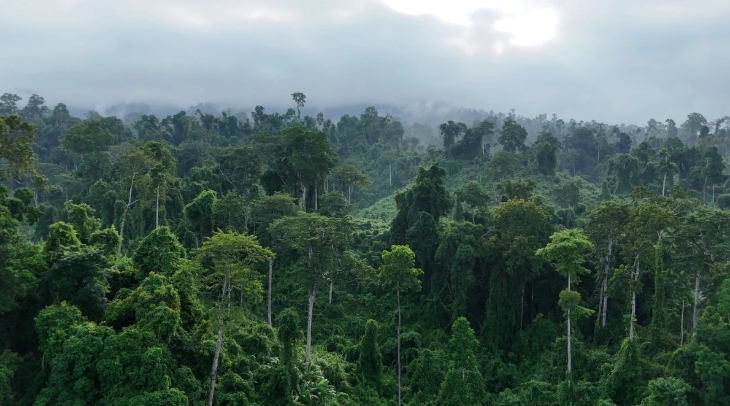
According to Mr. Tran Ut, Deputy Director of the Department of Agriculture and Environment and Director of the Da Nang Project Management Board, the restored acreage uses varied methods, including planting native tree species on barren land and supporting natural regeneration across high-potential zones to progressively rehabilitate natural habitats.
Notably, the project supported the establishment of a 30-hectare nationally certified seed stand conversion model, featuring over 549 superior "plus trees" tagged with QR codes for origin traceability of verified indigenous germplasm. Furthermore, establishing and upgrading three native nurseries secures reliable local seedling supplies for sustained regional ecological restoration.
Concurrently, forest protection capabilities were enhanced through specialized equipment provision, patrol skills training, and deployment of SMART (Spatial Monitoring and Reporting Tool). Crucially, camera traps deployed across nine stations in the converted seed stand recorded multiple wildlife species, including Northern red muntjac, lesser mouse-deer, common palm civet, and pig-tailed macaque, providing empiric data for biodiversity monitoring.
Expanding community livelihoods
The project prioritizes sustainable livelihood development to curb extractive pressures while encouraging proactive community engagement in forest protection.
To date, nine community development boards operate actively, empowering residents to select and implement production models aligned with local realities.
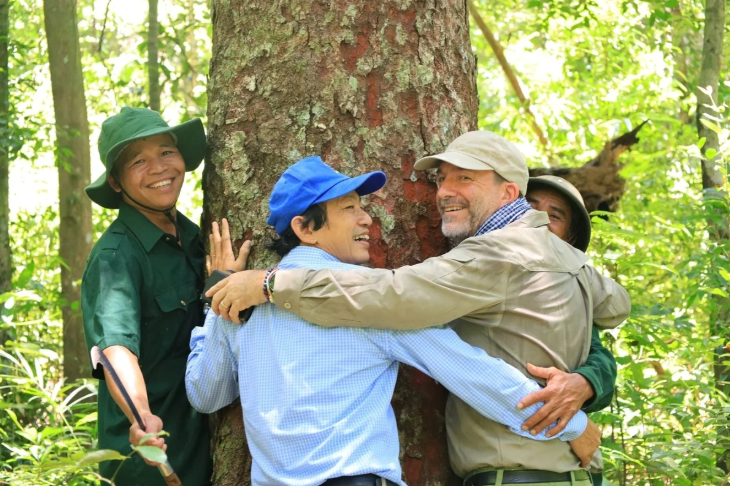
Based on community consultations, the project rolled out multiple livelihood initiatives: transitioning free-grazing livestock out of forests into confined pens, breeding white sows, free-range chicken farming, and sustainable under-canopy harvesting of Homalomena occulta medicinal herbs. Supported by technical assistance, these interventions change husbandry practices, increase incomes, and reduce ecosystem degradation.
Additionally, the project fostered technical exchanges on forest carbon credits among central ministries, line sectors, and Da Nang City, opening new pathways for natural resource management and climate adaptation.
Mr. Duong Duy Khanh, Project Manager at WWF-Viet Nam, noted that the project will sustain forest tending, replicate community livelihood models, enhance SMART patrol capabilities, and accelerate forest carbon cooperation to secure durable financing mechanisms.
"Harmonizing ecosystem restoration and biodiversity conservation with livelihood development yields durable dividends for nature and communities, reinforcing climate resilience and sustainable growth across western Da Nang," Mr. Khanh affirmed.
Lan Anh