Agri-forestry-aquatic trade surplus hits 19 billion USD
In the first 10 months of 2026, the country’s exports of agricultural, forestry, and aquatic products reached $63.02 billion.
Across the first 10 months of 2026, agricultural, forestry, and aquatic exports maintained sustained upward momentum, with total turnover estimated at 63.02 billion USD, expanding 8% year-on-year. Notably, fruits and vegetables, aquatic products, and livestock commodities registered substantial gains, counterbalancing headwinds confronting key traditional exports such as rice, coffee, and natural rubber.
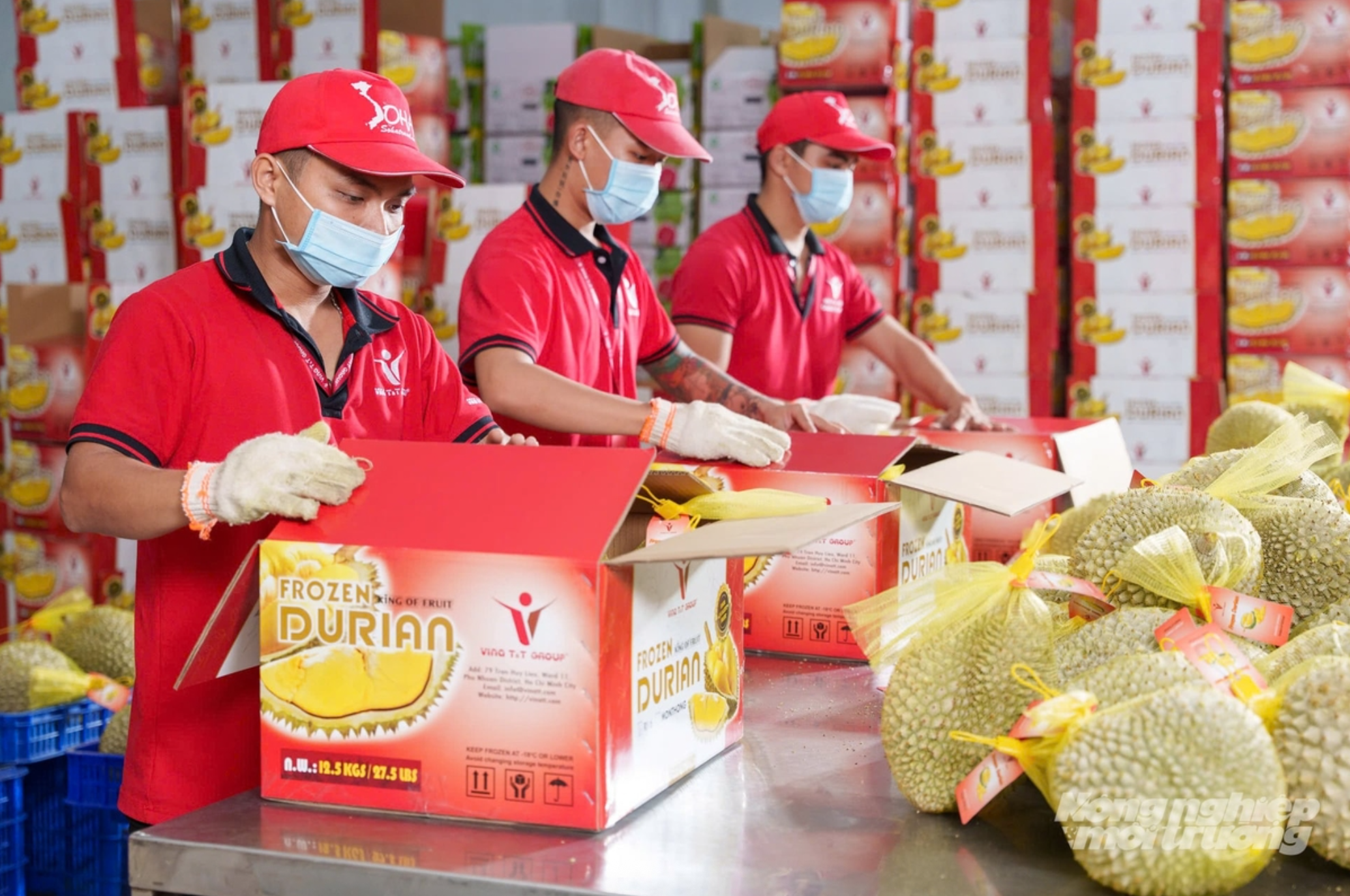
Per figures from the Ministry of Agriculture and Environment, agricultural commodities maintained the dominant share in the 10-month export structure at 32.65 billion USD, up 3.9% year-on-year. Forestry products followed at 16.13 billion USD (up 7.3%); aquatic products reached 10.44 billion USD (up 11.7%). Livestock products posted a remarkable jump to 642.7 million USD, up 25.1%.
Total bilateral agri-forestry-fishery trade turnover was estimated at 107.14 billion USD, climbing 8.3% compared to the identical period in 2025. The trade balance sustained an 18.91 billion USD surplus, up 6.4%. By commodity, fruits and vegetables remained the standout performer, generating 8.32 billion USD in export revenue, an increase of 17.8% year-on-year.
Vietnam’s prominent markets
China solidified its position as the largest buyer, commanding 64.8% of Vietnam's aggregate fruit and vegetable export earnings. Concurrently, shipments to the United States and South Korea posted positive expansion, rising 19.2% and 11.1%, respectively.
These trade metrics indicate sustained demand for Vietnamese produce across primary destinations. Market diversification, quality upgrades, and strict compliance with phytosanitary and traceability mandates remain vital to safeguarding sector growth momentum.
Several other staple crops posted positive value metrics. Pepper exports reached 1.58 billion USD, rising 13.1% driven by a 17.5% surge in export volume, despite average export prices dipping 3.8%. Cashews generated 4.38 billion USD, edging up 2.2% year-on-year as a 4.3% uptick in average export prices offset modest volume contractions.
Conversely, coffee shipments exhibited sharp divergence between volume and value. Ten-month export volume climbed to 1.6 million tons, up 18.7%, yet revenue contracted 5% year-on-year to 7.09 billion USD.
This divergence stemmed primarily from average export prices falling nearly 20% to roughly 4,528 USD/ton. This pattern demonstrates that despite aggressive volume gains, international price swings dictate total value capture in the coffee sector.
Meanwhile, double-digit upticks in average export prices mitigated revenue drops for natural rubber, with export value touching 2.54 billion USD (down 2.5%). In the rice sector, outbound shipments totaled 6.8 million tons valued at 3.31 billion USD, contracting 4.6% in volume and 9.7% in value year-on-year. Average rice export prices dropped 5.4% to approximately 484 USD/ton.
Geographically, China anchored its lead as the largest importer of Vietnamese agri-forestry-fishery products, followed by the United States and Japan. Export turnover to China expanded 19% year-on-year. Across fruits and vegetables, cashews, coffee, and rice, China remained the pivotal consumption market, recording double-digit export value gains across all four segments.
Kieu Chi