Viet Nam, South Korea cooperation in agrifood preservation
Bio-nanocoating technology unlocks collaborative potential in agricultural residue valorization, produce preservation and technology transfer.
Viet Nam is one of two key target markets for Ecogear Company (South Korea), the enterprise's bio-nanocoating technology opens up prospects for collaboration with the Viet Nam National University of Agriculture, spanning domestic feedstock research to practical post-harvest produce preservation.
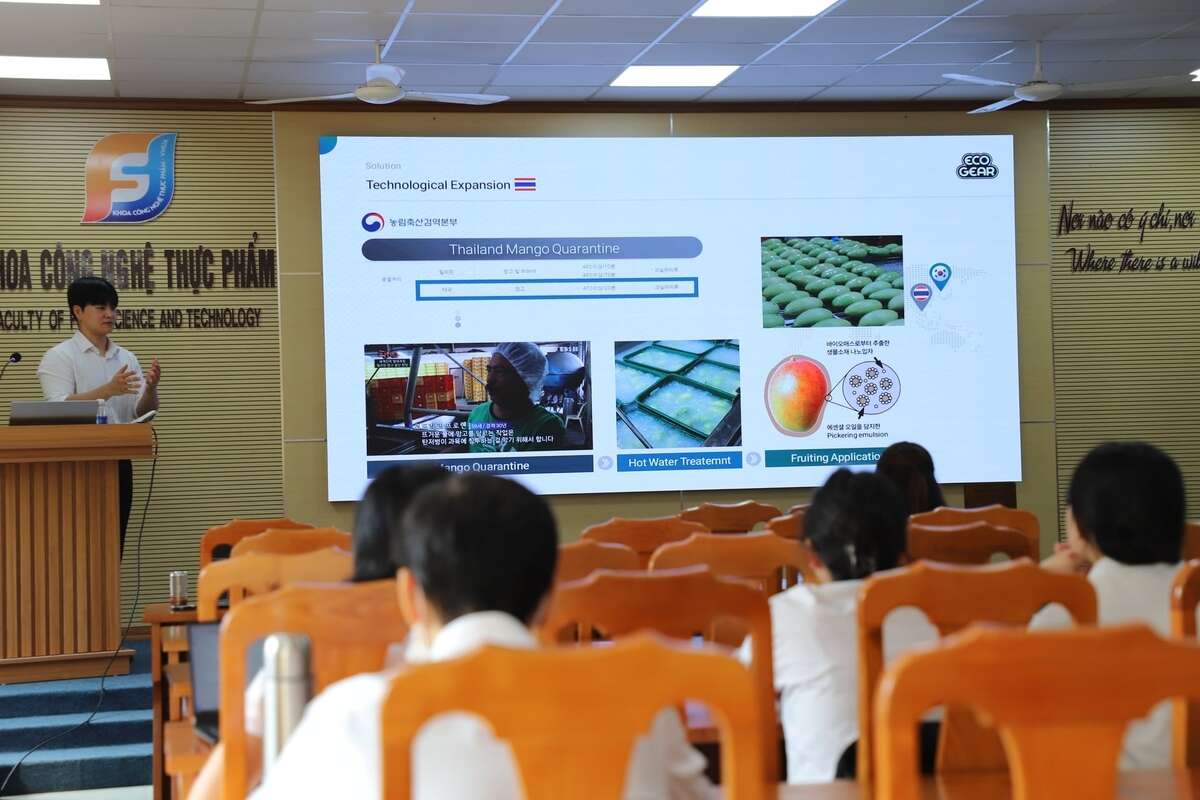
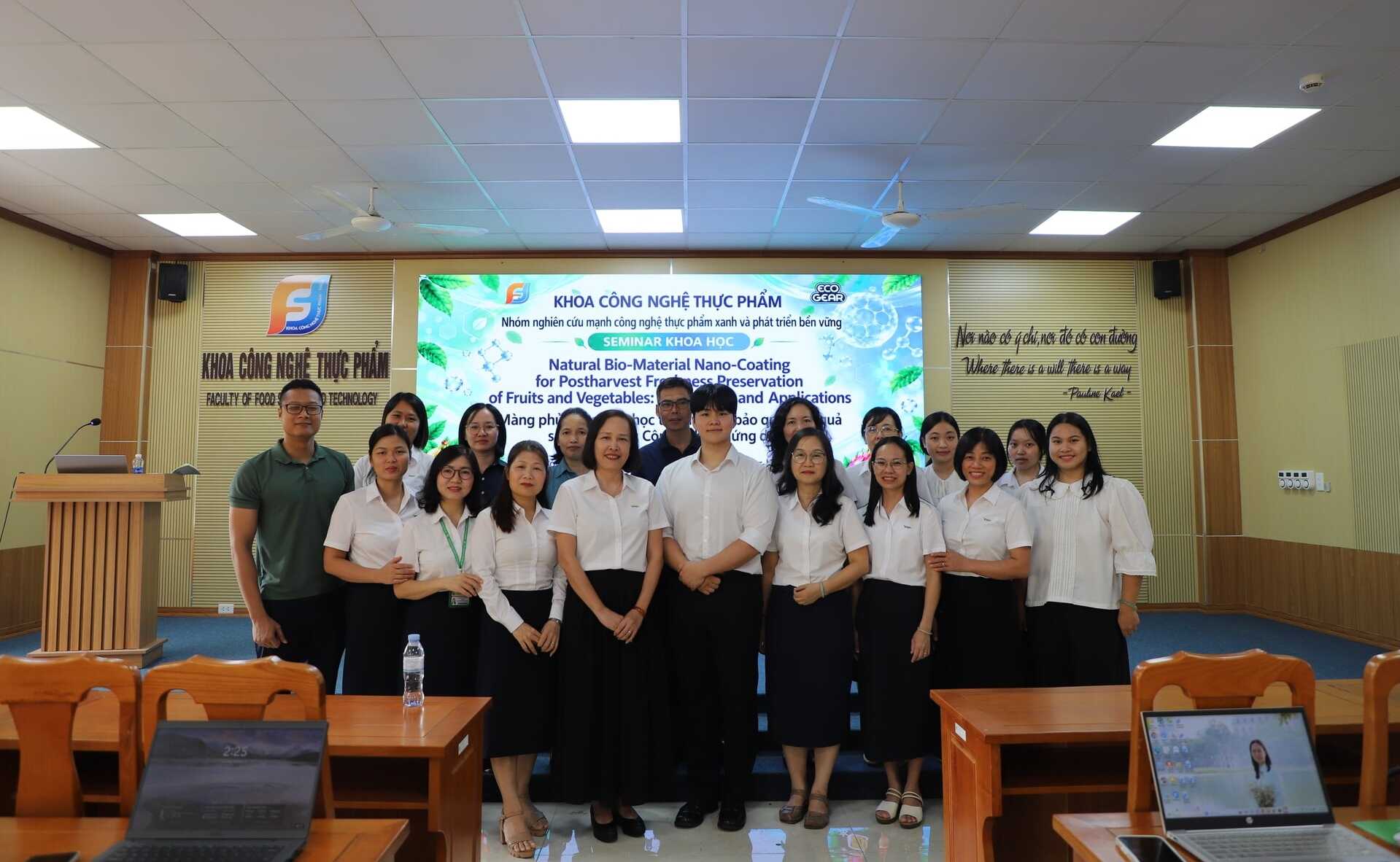
These collaborative orientations were exchanged during the International Scientific Workshop titled "Natural Bio-Nanocoatings for Post-Harvest Fruit and Vegetable Preservation: Technology and Applications," convened at the Viet Nam National University of Agriculture.
The program was organized by the High-Performing Research Group on Green Food Technology and Sustainable Development.
The research findings outline three collaborative pathways between Ecogear Company and the Viet Nam National University of Agriculture: valorizing domestic agricultural by-products as extraction feedstocks; providing academic training and internships for undergraduate and postgraduate students; and transferring commercialized technologies to cooperatives and export enterprises.
Among these, utilizing agro-residues as raw feedstocks aligns research directly with domestic input endowments. Coupled with post-harvest preservation technology, this trajectory promises to elevate agrifood added value while promoting the efficient valorization of biomass resources.
Academic training and internship initiatives offer high connective potential between Ecogear Company and research teams from the Faculty of Food Science and Technology at VNUA. Alongside laboratory research, transferring technological solutions to agricultural cooperatives and exporters was highlighted to bring preservation innovations closer to commercial production realities.
The new coating technology
At the workshop, Mr. Sang-il Bae, representative of Ecogear Company, presented an edible coating technology measuring under 100 nanometers in thickness formulated from three natural biomaterial groups: microbial carbohydrates, plant polyphenols, and animal proteins, supported by a track record of 14 SCI-indexed scientific papers and 5 registered patents in South Korea.
He detailed two foundational core technologies: subcritical water extraction (SWE) and high-pressure nano-emulsification. The subcritical water extraction methodology generates zero hazardous effluents, accelerates extraction timelines, and enhances active compound yields from cinnamon, almond shells, and matcha. Concurrently, high-pressure nano-emulsification disperses biomaterials into nanoscale dimensions, boosting coating uniformity, barrier efficacy, and colloidal solution stability.
The formulated coating solution can be directly atomized onto conveyor belts or roller arrays within post-harvest packinghouse and sorting facilities. This represents an operationally viable feature when integrating into commercial pack-line workflows.
Ecogear Company has commercialized the product line "Fruiting," applied across citrus fruits including oranges and tangerines. With the "Grooting" product line, the enterprise partnered with South Korea's National Institute of Crop Science to evaluate sweet potato preservation, executing pilot export shipments to Thailand. Concurrently, the firm has piloted protective coatings across bananas, strawberries, tomatoes, and cut roses, extending post-harvest vase and shelf life.
The shared empirical milestones furnish a solid baseline to foster research partnerships and field deployment in Viet Nam, working toward augmenting produce value and sharpening export competitiveness.
Mai Dan